Key Clinical Issue
What are the effectiveness, benefits, and harms of management strategies for hypertensive disorders of pregnancy during the postpartum period?
Evidence-Based Answer
Home blood pressure (BP) monitoring likely doubles the number of people who have their BP checked at recommended intervals (number needed to treat [NNT] = 2). (Strength of Recommendation [SOR]: C, disease-oriented evidence.) Patient satisfaction is high with home BP monitoring. (SOR: C, disease-oriented evidence.) Home BP monitoring likely reduces hypertension-related readmissions (NNT = 28). (SOR: B, inconsistent or limited-quality patient-oriented evidence.) Home BP monitoring likely reduces the disparity in recommended BP monitoring by one-half between non-Black and Black patients. (SOR: C, disease-oriented evidence.) Oral furosemide may shorten the duration of postpartum hypertension (adjusted risk ratio = 0.40; CI, 0.20 to 0.81). (SOR: B, inconsistent or limited-quality patient-oriented evidence.) There is insufficient evidence on the benefits and harms of other antihypertensive medications in the postpartum period. Shorter duration magnesium sulfate (MgSO4) leads to a shorter time from delivery to contact with the infant (mean difference = −5.4 hours; 95% CI, −10.0 to −0.80). (SOR: B, inconsistent or limited-quality patient-oriented evidence.) Loading dose–only MgSO4 increases the risk of recurrent seizures in patients with eclampsia (odds ratio [OR] = 2.09; 95% CI, 1.21 to 3.63). (SOR: B, inconsistent or limited-quality patient-oriented evidence.) Lower doses of MgSO4 decrease the risk of reduced deep tendon reflexes (OR = 0.16; 95% CI, 0.09 to 0.28).1 (SOR: B, inconsistent or limited-quality patient-oriented evidence.)
Practice Pointers
Hypertensive disorders of pregnancy, which include chronic hypertension and pregnancy-associated hypertension, have steadily increased in prevalence to 15.9% of hospital deliveries in 2019.2 The prevalence of these disorders identified post-partum in patients who were normotensive during pregnancy is estimated to be 3% to 12%.3 Because of the increasing prevalence of hypertensive disorders of pregnancy and their frequency during the postpartum period, even family physicians who do not provide perinatal care will likely find themselves diagnosing and initiating the management of hypertensive disorders of pregnancy.
This Agency for Healthcare Research and Quality (AHRQ) review assessed the evidence of monitoring and managing hypertensive disorders of pregnancy in the postpartum period. The review identified 13 studies, including three randomized controlled trials (RCTs), two nonrandomized comparative studies, and eight single-arm studies that examined home BP monitoring. Home BP monitoring increased the number of people adhering to BP-monitoring recommendations from about 44% to 60% to about 92% to 94% (NNT = 2) and may reduce the number of hospital readmissions for hypertension (NNT = 28).1 Home BP monitoring reduced the racial disparity in adherence to BP checks between Black and non-Black patients, with one study showing this gap decreasing from 24.6% to 0.4% with home BP monitoring.1
Many family physicians are already familiar with home BP monitoring in their patients. For their nonpregnant patients, home BP monitoring is more sensitive and specific for identifying elevated BP; this practice is also recommended by the U.S. Preventive Services Task Force and the American College of Cardiology/American Heart Association. A previous American Family Physician article describes home BP monitoring in detail.4
This AHRQ review included 17 RCTs that compared pharmacologic treatments for postpartum hypertension. One RCT from 2021 that compared oral furosemide, 20 mg once per day for five days, with placebo, once per day for five days, starting 24 hours after delivery, found that furosemide may shorten the duration of postpartum hypertension (NNT = 13).1,5 A 2013 Cochrane review also found that when given postpartum, furosemide may be beneficial, but more information is needed to make a formal recommendation.3 There was insufficient evidence on the benefits and harms of other antihypertensives, including extended-release nifedipine, labetalol, captopril, clonidine, diltiazem, enal-april, hydralazine, losartan, methyldopa, and metoprolol.1
There were 21 RCTs that assessed the duration of MgSO4 use. One RCT found that a shorter duration of MgSO4 leads to a shorter time from delivery to contact with the infant (mean difference = −5.4 hours; 95% CI, −10.0 to −0.80). A shorter duration of MgSO4 might also decrease urinary catheterization time (four RCTs), time to ambulation (two RCTs), and time to initiate breastfeeding (two RCTs). Six RCTs compared lower vs. higher doses of MgSO4. Lower doses are associated with a lower risk of reduced deep tendon reflexes, which is an early sign of magnesium toxicity (five RCTs; OR = 0.16; 95% CI, 0.09 to 0.28). There was insufficient evidence regarding the effects of MgSO4 duration or dose on morbidity and mortality because these outcomes are sufficiently rare; despite many RCTs, conclusions could not be made.1
In 2016, the U.S. Food and Drug Administration changed the drug classification of MgSO4 from category A to D. The American College of Obstetricians and Gynecologists and the Society for Maternal-Fetal Medicine released a statement on this change, noting that short-term use (usually less than 48 hours) is still appropriate and recommended care for many patients, including for the prevention and treatment of eclampsia and neuroprotection in early preterm deliveries (less than 32 weeks' gestation).6 This AHRQ review provides further evidence that shorter duration and lower doses of MgSO4 are likely as effective and have less harms than longer duration and higher doses of MgSO4.1
Family physicians should be aware of the prevalence of postpartum hypertensive disorders of pregnancy and be prepared to identify and initiate the management of these disorders. Physicians should support home BP monitoring, particularly during and immediately after pregnancy, and teach patients how to accurately check their BP at home.4 Family physicians might consider furosemide as a reasonable option for the management of elevated BP during the immediate postpartum period.
CLINICAL BOTTOM LINE
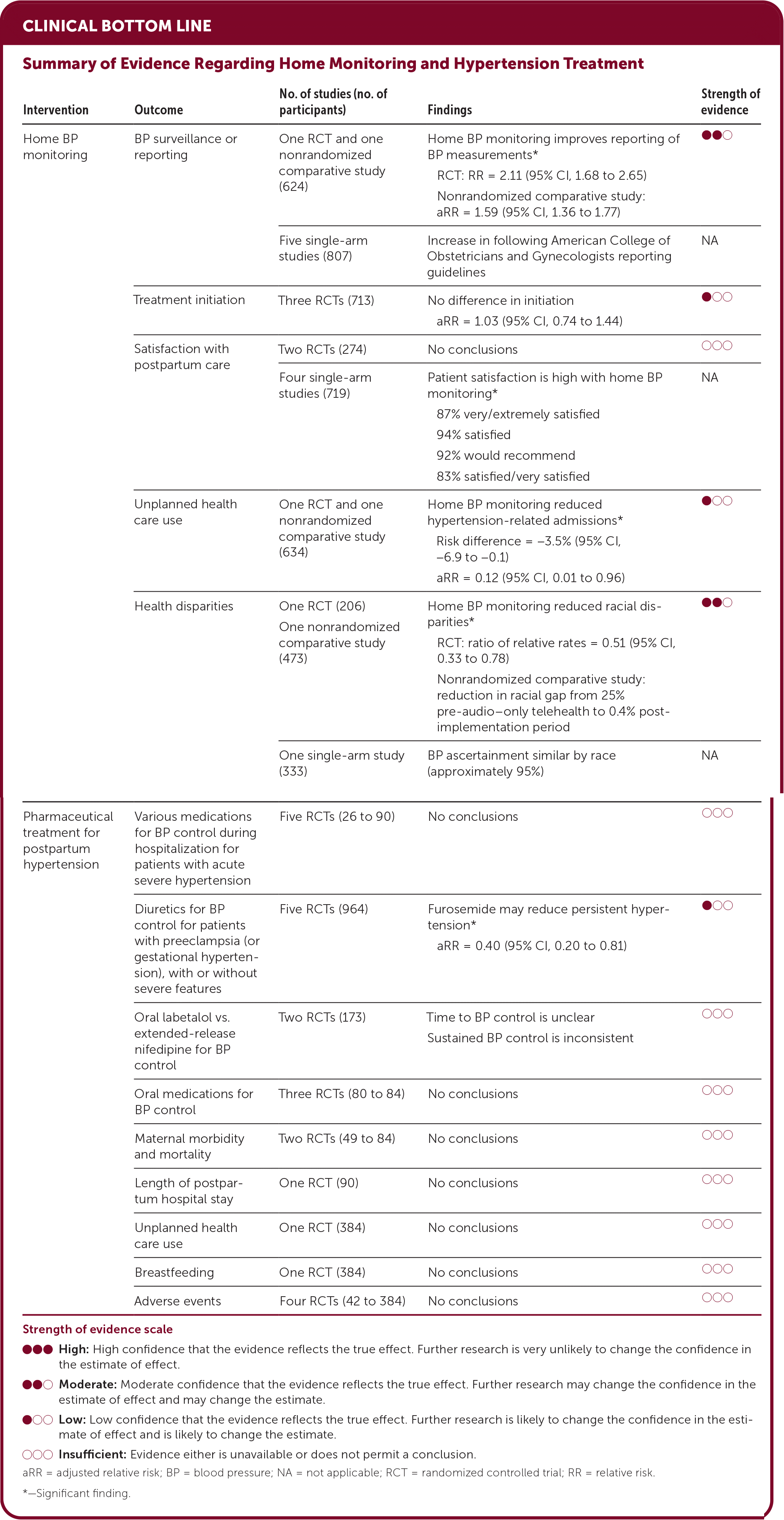
| Intervention | Outcome | No. of studies (no. of participants) | Findings | Strength of evidence |
|---|---|---|---|---|
| Home BP monitoring | BP surveillance or reporting | One RCT and one nonrandomized comparative study (624) | Home BP monitoring improves reporting of BP measurements* RCT: RR = 2.11 (95% CI, 1.68 to 2.65) Nonrandomized comparative study: aRR = 1.59 (95% CI, 1.36 to 1.77) | ••○ |
| Five single-arm studies (807) | Increase in following American College of Obstetricians and Gynecologists reporting guidelines | NA | ||
| Treatment initiation | Three RCTs (713) | No difference in initiation aRR = 1.03 (95% CI, 0.74 to 1.44) | •○○ | |
| Satisfaction with postpartum care | Two RCTs (274) | No conclusions | ○○○ | |
| Four single-arm studies (719) | Patient satisfaction is high with home BP monitoring* 87% very/extremely satisfied 94% satisfied 92% would recommend 83% satisfied/very satisfied | NA | ||
| Unplanned health care use | One RCT and one nonrandomized comparative study (634) | Home BP monitoring reduced hypertension-related admissions* Risk difference = −3.5% (95% CI, −6.9 to −0.1) aRR = 0.12 (95% CI, 0.01 to 0.96) | •○○ | |
| Health disparities | One RCT (206) One nonrandomized comparative study (473) | Home BP monitoring reduced racial disparities* RCT: ratio of relative rates = 0.51 (95% CI, 0.33 to 0.78) Nonrandomized comparative study: reduction in racial gap from 25% pre-audio–only telehealth to 0.4% postimplementation period | ••○ | |
| One single-arm study (333) | BP ascertainment similar by race (approximately 95%) | NA | ||
| Pharmaceutical treatment for postpartum hypertension | Various medications for BP control during hospitalization for patients with acute severe hypertension | Five RCTs (26 to 90) | No conclusions | ○○○ |
| Diuretics for BP control for patients with preeclampsia (or gestational hypertension), with or without severe features | Five RCTs (964) | Furosemide may reduce persistent hypertension* aRR = 0.40 (95% CI, 0.20 to 0.81) | •○○ | |
| Oral labetalol vs. extended-release nifedipine for BP control | Two RCTs (173) | Time to BP control is unclear Sustained BP control is inconsistent | ○○○ | |
| Oral medications for BP control | Three RCTs (80 to 84) | No conclusions | ○○○ | |
| Maternal morbidity and mortality | Two RCTs (49 to 84) | No conclusions | ○○○ | |
| Length of postpartum hospital stay | One RCT (90) | No conclusions | ○○○ | |
| Unplanned health care use | One RCT (384) | No conclusions | ○○○ | |
| Breastfeeding | One RCT (384) | No conclusions | ○○○ | |
| Adverse events | Four RCTs (42 to 384) | No conclusions | ○○○ |
Strength of evidence scale
•••High: High confidence that the evidence reflects the true effect. Further research is very unlikely to change the confidence in the estimate of effect.
••○Moderate: Moderate confidence that the evidence reflects the true effect. Further research may change the confidence in the estimate of effect and may change the estimate.
•○○Low: Low confidence that the evidence reflects the true effect. Further research is likely to change the confidence in the estimate of effect and is likely to change the estimate.
○○○Insufficient: Evidence either is unavailable or does not permit a conclusion.
aRR = adjusted relative risk; BP = blood pressure; NA = not applicable; RCT = randomized controlled trial; RR = relative risk.
*—Significant finding.
CLINICAL BOTTOM LINE
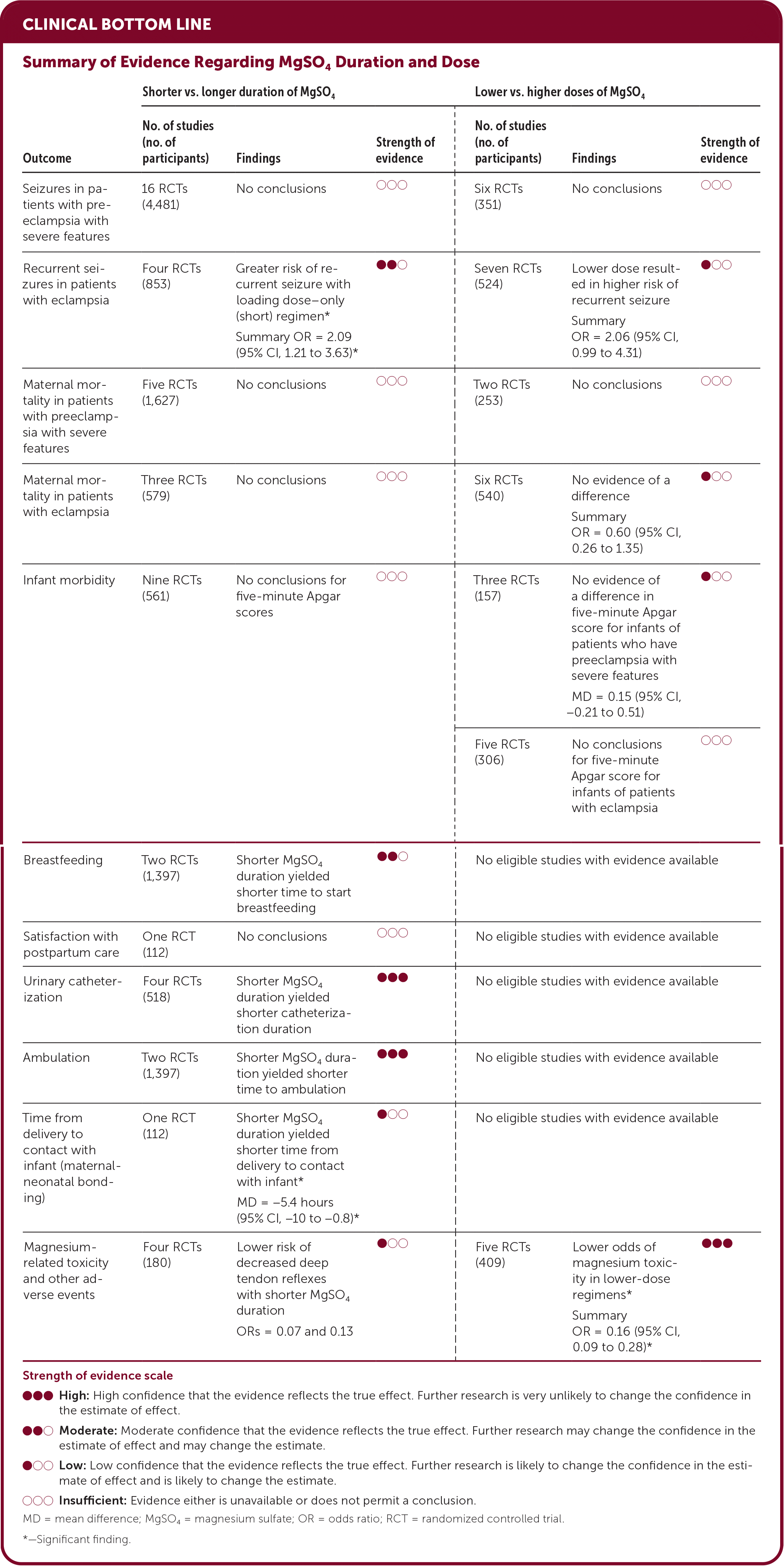
| Outcome | Shorter vs. longer duration of MgSO4 | Lower vs. higher doses of MgSO4 | ||||
|---|---|---|---|---|---|---|
| No. of studies (no. of participants) | Findings | Strength of evidence | No. of studies (no. of participants) | Findings | Strength of evidence | |
| Seizures in patients with preeclampsia with severe features | 16 RCTs (4,481) | No conclusions | ○○○ | Six RCTs (351) | No conclusions | ○○○ |
| Recurrent seizures in patients with eclampsia | Four RCTs (853) | Greater risk of recurrent seizure with loading dose–only (short) regimen* Summary OR = 2.09 (95% CI, 1.21 to 3.63)* | ••○ | Seven RCTs (524) | Lower dose resulted in higher risk of recurrent seizure Summary OR = 2.06 (95% CI, 0.99 to 4.31) | •○○ |
| Maternal mortality in patients with preeclampsia with severe features | Five RCTs (1,627) | No conclusions | ○○○ | Two RCTs (253) | No conclusions | ○○○ |
| Maternal mortality in patients with eclampsia | Three RCTs (579) | No conclusions | ○○○ | Six RCTs (540) | No evidence of a difference Summary OR = 0.60 (95% CI, 0.26 to 1.35) | •○○ |
| Infant morbidity | Nine RCTs (561) | No conclusions for five-minute Apgar scores | ○○○ | Three RCTs (157) | No evidence of a difference in five-minute Apgar score for infants of patients who have preeclampsia with severe features MD = 0.15 (95% CI, −0.21 to 0.51) | •○○ |
| Five RCTs (306) | No conclusions for five-minute Apgar score for infants of patients with eclampsia | ○○○ | ||||
| Breastfeeding | Two RCTs (1,397) | Shorter MgSO4 duration yielded shorter time to start breastfeeding | ••○ | No eligible studies with evidence available | ||
| Satisfaction with postpartum care | One RCT (112) | No conclusions | ○○○ | No eligible studies with evidence available | ||
| Urinary catheterization | Four RCTs (518) | Shorter MgSO4 duration yielded shorter catheterization duration | ••• | No eligible studies with evidence available | ||
| Ambulation | Two RCTs (1,397) | Shorter MgSO4 duration yielded shorter time to ambulation | ••• | No eligible studies with evidence available | ||
| Time from delivery to contact with infant (maternal-neonatal bonding) | One RCT (112) | Shorter MgSO4 duration yielded shorter time from delivery to contact with infant* MD = −5.4 hours (95% CI, −10 to −0.8)* | •○○ | No eligible studies with evidence available | ||
| Magnesium-related toxicity and other adverse events | Four RCTs (180) | Lower risk of decreased deep tendon reflexes with shorter MgSO4 duration ORs = 0.07 and 0.13 | •○○ | Five RCTs (409) | Lower odds of magnesium toxicity in lower-dose regimens* Summary OR = 0.16 (95% CI, 0.09 to 0.28)* | ••• |
Strength of evidence scale
•••High: High confidence that the evidence reflects the true effect. Further research is very unlikely to change the confidence in the estimate of effect.
••○Moderate: Moderate confidence that the evidence reflects the true effect. Further research may change the confidence in the estimate of effect and may change the estimate.
•○○Low: Low confidence that the evidence reflects the true effect. Further research is likely to change the confidence in the estimate of effect and is likely to change the estimate.
○○○Insufficient: Evidence either is unavailable or does not permit a conclusion.
MD = mean difference; MgSO4 = magnesium sulfate; OR = odds ratio; RCT = randomized controlled trial.
*—Significant finding.