

In the United States, colorectal cancer is the third most commonly diagnosed cancer and the second most common cause of cancer death. The annual incidence has decreased since the 1980s. However, in the past 25 years, the incidence in adults 40 to 49 years of age, although low, has increased by 15%. The US Preventive Services Task Force recommends that adults with average risk and no signs or symptoms of colorectal cancer undergo periodic screening from 45 to 75 years of age. Starting screening or surveillance at an earlier age should be considered in patients with a prior diagnosis of adenomatous polyps or inflammatory bowel disease, a history of radiation to the abdomen or pelvis to treat a prior cancer, any genetic disorder that predisposes the patient to a high lifetime risk of cancer, or a first-degree relative with colorectal cancer or adenomatous polyps. Recommended screening modalities include stool-based fecal immunochemical tests, which can also include DNA analysis, and direct visualization via computed tomography colonography, flexible sigmoidoscopy, or colonoscopy. Blood-based testing has low sensitivity and high cost and is therefore a second-line screening option performed only when the patient declines all first-line tests. Physicians should emphasize to patients that regular screening is a powerful tool for preventing colorectal cancer and highlight modifiable risk factors, which include staying at a healthy weight; performing moderate to vigorous physical activity; eating a diet high in fruits, vegetables, and whole grains and low in red and processed meats; not drinking alcohol; and not smoking.
In the United States, colorectal cancer (CRC) is the third most commonly diagnosed cancer and the second most common cause of cancer death, with an estimated 155,000 new cases in 2025.1,2 CRC incidence is lowest among Asian and Hispanic Americans (28.6 and 32.5 annual cases per 100,000 people, respectively) and highest in people who are Alaska Native, American Indian, or Black with 88.5, 46.0, and 41.7 annual cases per 100,000 people, respectively. The incidence in White people is 35.7 annual cases per 100,000 people, and the overall incidence is 35.9 annual cases per 100,000 people.1,3 People who are Alaska Native, American Indian, or Black have similar disparities in mortality with 35.9, 17.5, and 17.6 annual deaths per 100,000 people, respectively, compared with the overall mortality rate of 13.1 annual deaths per 100,000 people.1,3 The reasons for these disparities are unclear. Research is needed to guide screening in low-resource communities and interventions to reduce time to diagnosis for vulnerable and minority populations.4,5
SORT: KEY RECOMMENDATIONS FOR PRACTICE
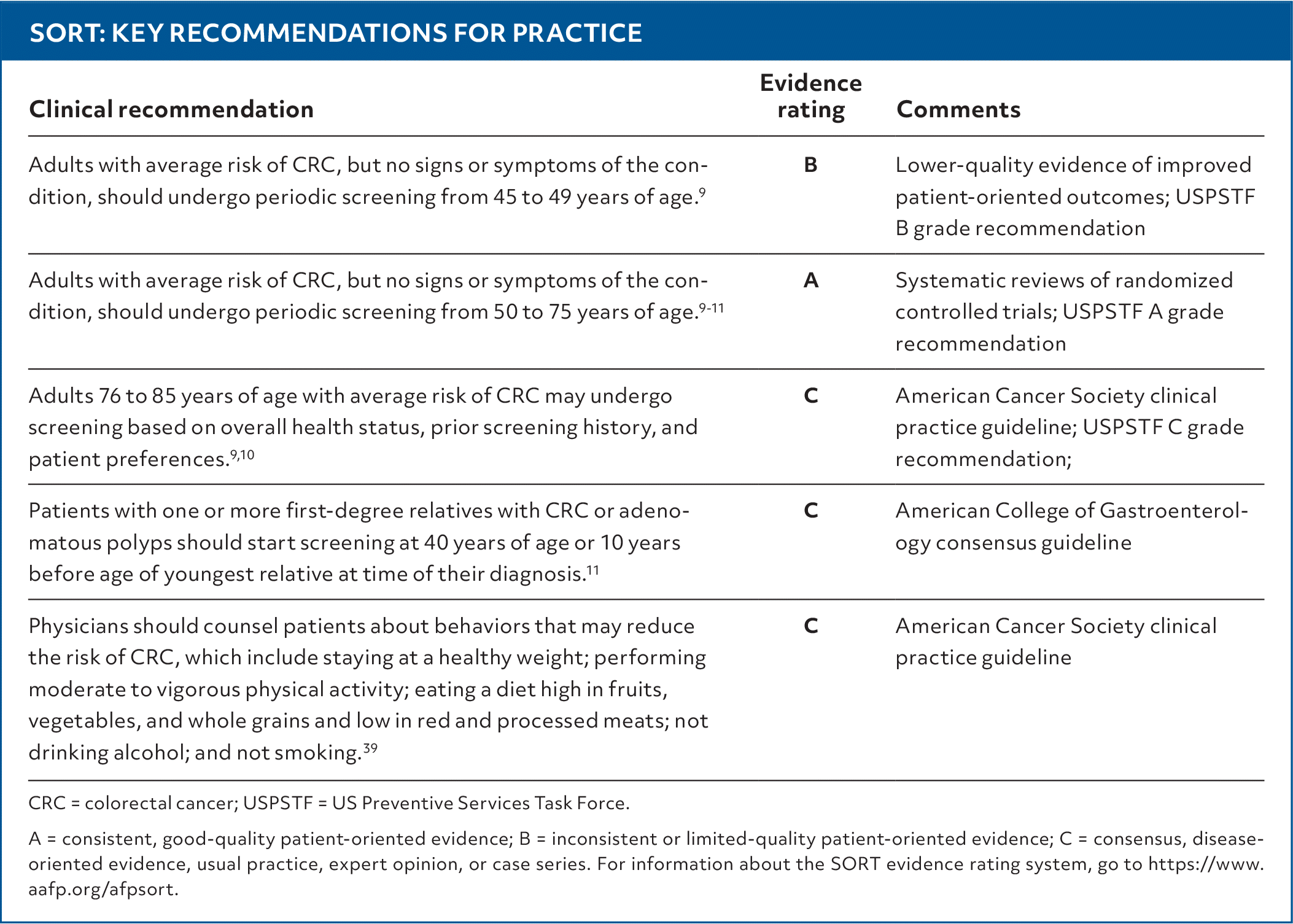
| Clinical recommendation | Evidence rating | Comments |
|---|---|---|
| Adults with average risk of CRC, but no signs or symptoms of the condition, should undergo periodic screening from 45 to 49 years of age.9 | B | Lower-quality evidence of improved patient-oriented outcomes; USPSTF B grade recommendation |
| Adults with average risk of CRC, but no signs or symptoms of the condition, should undergo periodic screening from 50 to 75 years of age.9–11 | A | Systematic reviews of randomized controlled trials; USPSTF A grade recommendation |
| Adults 76 to 85 years of age with average risk of CRC may undergo screening based on overall health status, prior screening history, and patient preferences.9,10 | C | American Cancer Society clinical practice guideline; USPSTF C grade recommendation; |
| Patients with one or more first-degree relatives with CRC or adenomatous polyps should start screening at 40 years of age or 10 years before age of youngest relative at time of their diagnosis.11 | C | American College of Gastroenterology consensus guideline |
| Physicians should counsel patients about behaviors that may reduce the risk of CRC, which include staying at a healthy weight; performing moderate to vigorous physical activity; eating a diet high in fruits, vegetables, and whole grains and low in red and processed meats; not drinking alcohol; and not smoking.39 | C | American Cancer Society clinical practice guideline |
CRC = colorectal cancer; USPSTF = US Preventive Services Task Force.
A = consistent, good-quality patient-oriented evidence; B = inconsistent or limited-quality patient-oriented evidence; C = consensus, disease-oriented evidence, usual practice, expert opinion, or case series. For information about the SORT evidence rating system, go to https://www.aafp.org/afpsort.
Read the full article
Get immediate access, anytime, anywhere.
Choose a single article, issue, or full-access subscription.
Earn up to 14 CME credits per issue.
