

Tinea infections (often called ringworm) are caused by dermatophyte fungi and classified by the body site involved. Tinea corporis and tinea capitis are most common in prepubertal children, and tinea cruris, tinea pedis, and tinea unguium (most common type of onychomycosis) are more likely in adolescents and adults. Clinical diagnosis without testing may be unreliable because other conditions can resemble tinea infections (eg, tinea corporis can be confused with eczema, and onychomycosis with dystrophic toenails from repeated low-level trauma or psoriasis). Tinea corporis, tinea cruris, and tinea pedis generally respond to inexpensive topical antifungal agents, but oral antifungal agents may be indicated for patients with extensive disease, lack of response to topical treatment, immunocompromise, or hair follicle involvement (eg, tinea capitis). Oral terbinafine is considered first-line therapy for tinea capitis and onychomycosis because it is well tolerated, effective, and inexpensive. Emerging tinea infections may be more severe than classic tinea infections and generally do not improve with first-line topical or oral antifungals. These infections may require prolonged oral antifungal therapy and specialized diagnostic testing. Antifungal stewardship, including avoiding the use of combination antifungal-corticosteroids, should be emphasized to optimize outcomes and help prevent resistance.
Tinea infections (often called ringworm) are common superficial fungal infections caused by dermatophyte molds1,2 (Table 11). The word tinea is usually followed by a Latin term to indicate the body site involved, such as tinea corporis or tinea pedis. Onychomycosis is a general term for fungal nail infections, which are most often caused by dermatophytes (tinea unguium) but may be caused by yeasts or non-dermatophyte molds.3,4 The most common dermatophytes that cause human infections are from the genera Trichophyton, Microsporum, and Epidermophyton.3–7
WHAT'S NEW ON THIS TOPIC
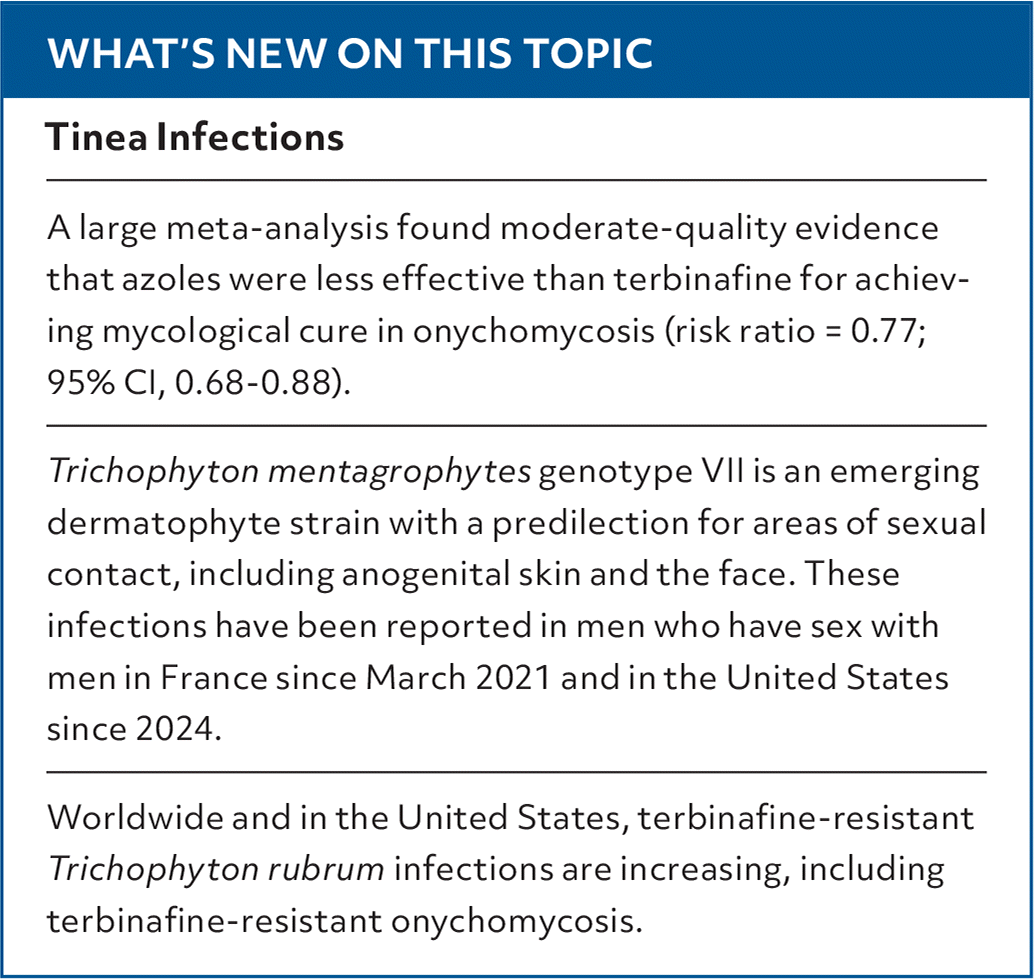
| A large meta-analysis found moderate-quality evidence that azoles were less effective than terbinafine for achieving mycological cure in onychomycosis (risk ratio = 0.77; 95% CI, 0.68–0.88). |
| Trichophyton mentagrophytes genotype VII is an emerging dermatophyte strain with a predilection for areas of sexual contact, including anogenital skin and the face. These infections have been reported in men who have sex with men in France since March 2021 and in the United States since 2024. |
| Worldwide and in the United States, terbinafine-resistant Trichophyton rubrum infections are increasing, including terbinafine-resistant onychomycosis. |
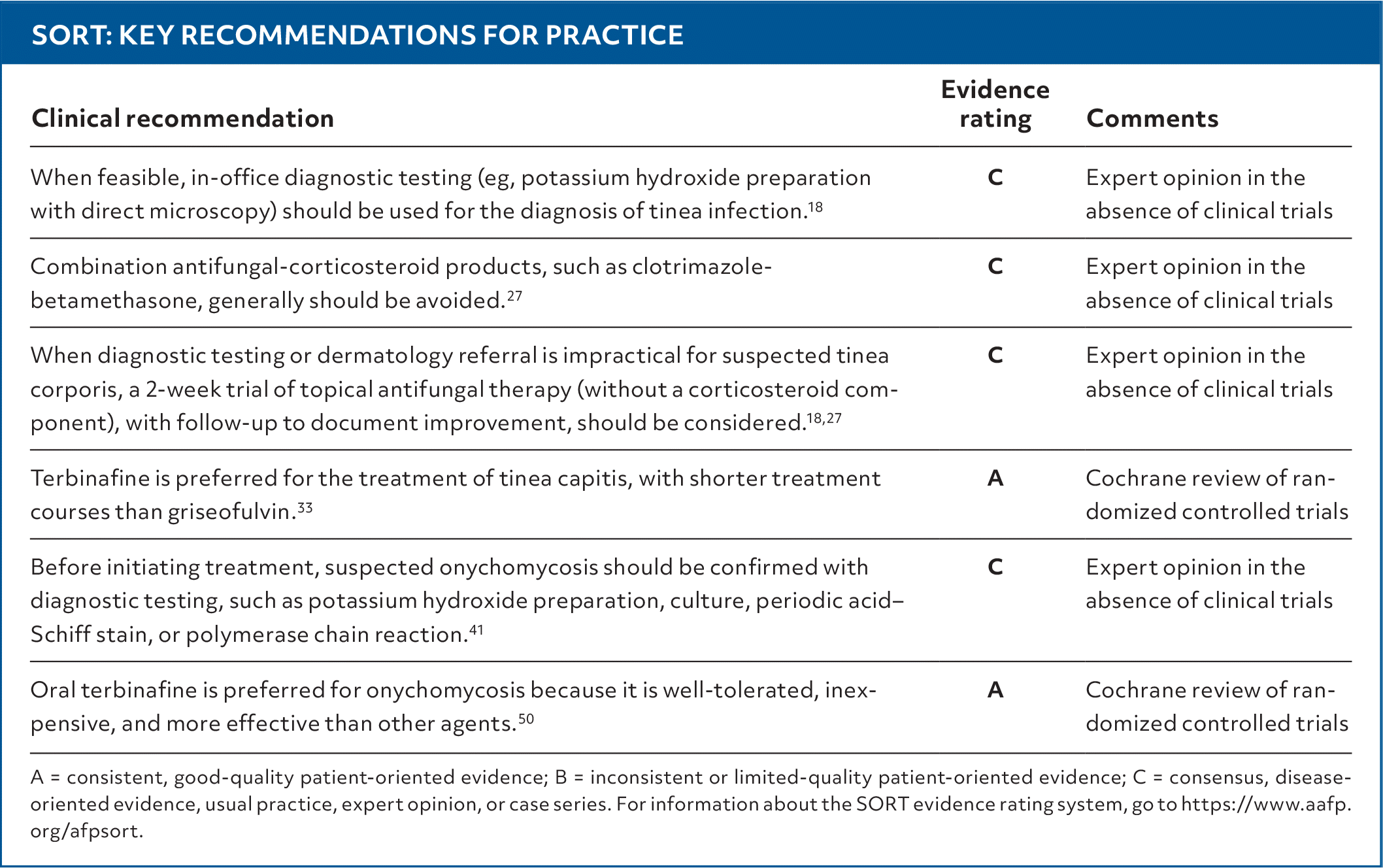
SORT: KEY RECOMMENDATIONS FOR PRACTICE
| Clinical recommendation | Evidence rating | Comments |
|---|---|---|
| When feasible, in-office diagnostic testing (eg, potassium hydroxide preparation with direct microscopy) should be used for the diagnosis of tinea infection.18 | C | Expert opinion in the absence of clinical trials |
| Combination antifungal-corticosteroid products, such as clotrimazole-betamethasone, generally should be avoided.27 | C | Expert opinion in the absence of clinical trials |
| When diagnostic testing or dermatology referral is impractical for suspected tinea corporis, a 2-week trial of topical antifungal therapy (without a corticosteroid component), with follow-up to document improvement, should be considered.18,27 | C | Expert opinion in the absence of clinical trials |
| Terbinafine is preferred for the treatment of tinea capitis, with shorter treatment courses than griseofulvin.33 | A | Cochrane review of randomized controlled trials |
| Before initiating treatment, suspected onychomycosis should be confirmed with diagnostic testing, such as potassium hydroxide preparation, culture, periodic acid–Schiff stain, or polymerase chain reaction.41 | C | Expert opinion in the absence of clinical trials |
| Oral terbinafine is preferred for onychomycosis because it is well-tolerated, inexpensive, and more effective than other agents.50 | A | Cochrane review of randomized controlled trials |
A = consistent, good-quality patient-oriented evidence; B = inconsistent or limited-quality patient-oriented evidence; C = consensus, disease-oriented evidence, usual practice, expert opinion, or case series. For information about the SORT evidence rating system, go to https://www.aafp.org/afpsort.
Read the full article
Get immediate access, anytime, anywhere.
Choose a single article, issue, or full-access subscription.
Earn up to 14 CME credits per issue.
