

Cancer screening guidelines for older adults are increasingly recommending individualized decision-making rather than relying on age cutoffs. This is in large part due to the individual complexity of aging, such as functional differences, risks of diagnostic procedures, remaining life expectancy, perceived quality of life, and goals of care. The US Preventive Services Task Force (USPSTF) recommends screening for breast cancer until 74 years of age, whereas the American Cancer Society suggests screening as long as the patient is in good health or has a life expectancy of at least 10 years. The USPSTF recommends that men 55 to 69 years of age discuss the potential benefits and harms of prostate-specific antigen screening with their doctor before making an individual decision; for men 70 years and older, the USPSTF and the American Urological Association do not recommend routine screening. Most guidelines recommend that cervical cancer screening should stop at 65 years of age in patients who have adequate prior screening results and do not have high risk. The USPSTF and the American Cancer Society recommend routine colorectal cancer screening until 75 years of age, after which individualized screening can occur based on shared decision-making until 85 years of age. Guidelines recommend lung cancer screening for patients who are 50 to 80 years of age, have at least a 20-pack-year smoking history, and are able and willing to have curative surgery.
For many patients, cancer screening can prevent or improve illness, but it may also cause harms.1 However, most randomized controlled trials of cancer screening tests have not included adults older than 75 years.2,3 It is not always clear whether screening for cancer in older adults leads to net benefit (improved quantity or quality of life), and it may cause more harm in some patients.1 As a result, the screening guidelines of many leading medical societies incorporate individualized decision-making rather than relying on age cutoffs. When discussing cancer screening with older adults, clinicians should consider medical comorbidities, functional status, values and preferences, remaining life expectancy, and goals of care.4
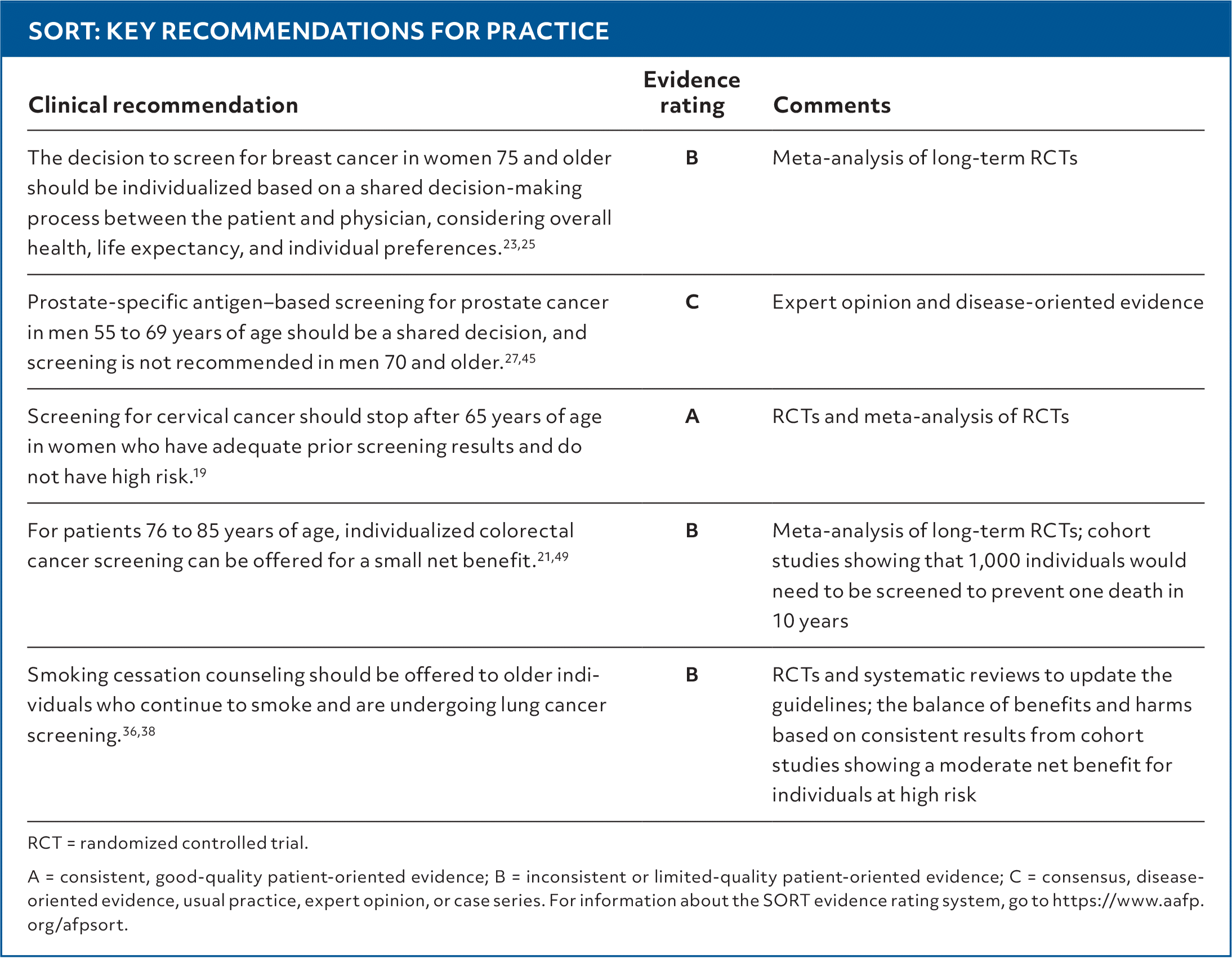
SORT: KEY RECOMMENDATIONS FOR PRACTICE
| Clinical recommendation | Evidence rating | Comments |
|---|---|---|
| The decision to screen for breast cancer in women 75 and older should be individualized based on a shared decision-making process between the patient and physician, considering overall health, life expectancy, and individual preferences.23,25 | B | Meta-analysis of long-term RCTs |
| Prostate-specific antigen–based screening for prostate cancer in men 55 to 69 years of age should be a shared decision, and screening is not recommended in men 70 and older.27,45 | C | Expert opinion and disease-oriented evidence |
| Screening for cervical cancer should stop after 65 years of age in women who have adequate prior screening results and do not have high risk.19 | A | RCTs and meta-analysis of RCTs |
| For patients 76 to 85 years of age, individualized colorectal cancer screening can be offered for a small net benefit.21,49 | B | Meta-analysis of long-term RCTs; cohort studies showing that 1,000 individuals would need to be screened to prevent one death in 10 years |
| Smoking cessation counseling should be offered to older individuals who continue to smoke and are undergoing lung cancer screening.36,38 | B | RCTs and systematic reviews to update the guidelines; the balance of benefits and harms based on consistent results from cohort studies showing a moderate net benefit for individuals at high risk |
RCT = randomized controlled trial.
A = consistent, good-quality patient-oriented evidence; B = inconsistent or limited-quality patient-oriented evidence; C = consensus, disease-oriented evidence, usual practice, expert opinion, or case series. For information about the SORT evidence rating system, go to https://www.aafp.org/afpsort.
Read the full article
Get immediate access, anytime, anywhere.
Choose a single article, issue, or full-access subscription.
Earn up to 14 CME credits per issue.
