Late pregnancy bleeding, any vaginal bleeding that occurs after 20 weeks' gestation, can be due to obstetric emergencies or benign etiologies. The amount of blood loss does not always correlate with seriousness of the etiology, and the source of bleeding is often not immediately obvious. Even small amounts of blood loss should be evaluated carefully because this may be the initial symptom of emergent bleeding. Emergent obstetric etiologies include placental abruption, placenta previa, vasa previa, and uterine rupture. Placental abruption rarely presents with the classic triad of vaginal bleeding, pain, and uterine hypertonicity; vaginal bleeding with abnormal fetal heart rate is more common. Placenta previa is usually diagnosed on ultrasonography but can present with intermittent painless vaginal bleeding. A digital cervical examination should be avoided in patients with placenta previa, but a sterile speculum examination and transvaginal ultrasonography are safe regardless of placental location. Vasa previa, the presence of unprotected vessels outside the placenta running through membranes over or near the cervix, can cause rapidly emergent fetal bleeding. Uterine rupture is an immediate threat to the fetus that requires urgent cesarean delivery. Causes of bleeding that are not emergent include bloody show from labor, bleeding ectropion, cervical polyp, cervicitis, and vaginal infections. Performing ultrasonography to locate the placenta is key in making a diagnosis in patients with late pregnancy bleeding. Frequent vital signs, fetal monitoring, and serial laboratory tests will help identify those at high risk for complications.
Late pregnancy bleeding, any vaginal bleeding after 20 weeks' gestation, is associated with increased risk of cesarean delivery, preterm birth, neonatal intensive care unit admission, and intrauterine fetal demise.1 Causes of late pregnancy bleeding range from benign to emergent, including bloody show from labor, cervical cancer, sexually transmitted infections, vaginitis, trauma, postcoital bleeding, placental abruption, placenta previa, vasa previa, and uterine rupture1–5 (Table 12–5).
WHAT'S NEW ON THIS TOPIC
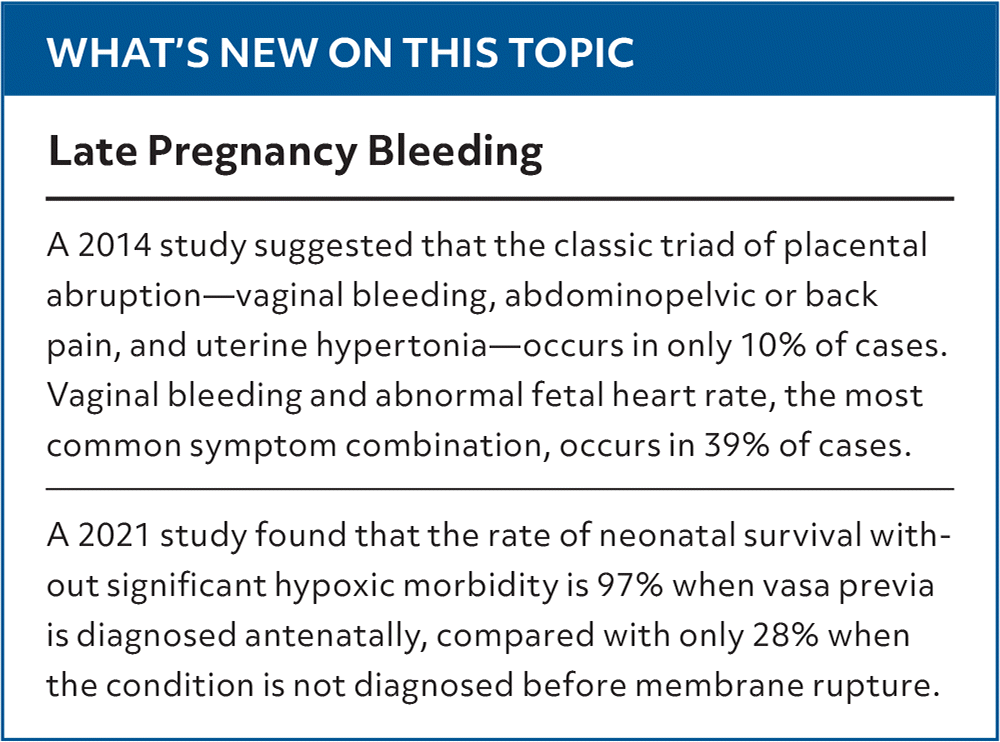
| A 2014 study suggested that the classic triad of placental abruption—vaginal bleeding, abdominopelvic or back pain, and uterine hypertonia—occurs in only 10% of cases. Vaginal bleeding and abnormal fetal heart rate, the most common symptom combination, occurs in 39% of cases. |
| A 2021 study found that the rate of neonatal survival without significant hypoxic morbidity is 97% when vasa previa is diagnosed antenatally, compared with only 28% when the condition is not diagnosed before membrane rupture. |
SORT: KEY RECOMMENDATIONS FOR PRACTICE
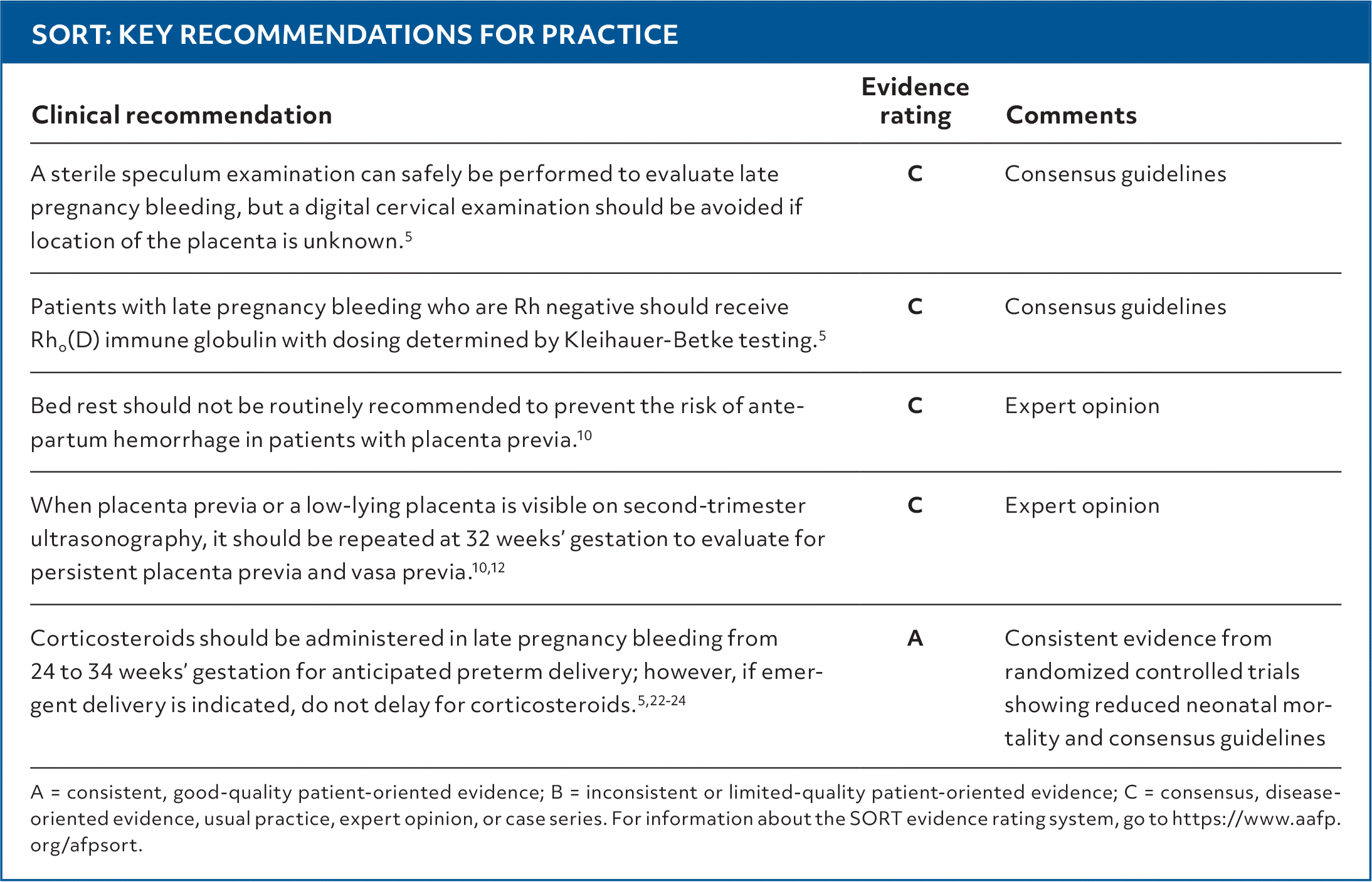
| Clinical recommendation | Evidence rating | Comments |
|---|---|---|
| A sterile speculum examination can safely be performed to evaluate late pregnancy bleeding, but a digital cervical examination should be avoided if location of the placenta is unknown.5 | C | Consensus guidelines |
| Patients with late pregnancy bleeding who are Rh negative should receive Rho(D) immune globulin with dosing determined by Kleihauer-Betke testing.5 | C | Consensus guidelines |
| Bed rest should not be routinely recommended to prevent the risk of antepartum hemorrhage in patients with placenta previa.10 | C | Expert opinion |
| When placenta previa or a low-lying placenta is visible on second-trimester ultrasonography, it should be repeated at 32 weeks' gestation to evaluate for persistent placenta previa and vasa previa.10,12 | C | Expert opinion |
| Corticosteroids should be administered in late pregnancy bleeding from 24 to 34 weeks' gestation for anticipated preterm delivery; however, if emergent delivery is indicated, do not delay for corticosteroids.5,22–24 | A | Consistent evidence from randomized controlled trials showing reduced neonatal mortality and consensus guidelines |
A = consistent, good-quality patient-oriented evidence; B = inconsistent or limited-quality patient-oriented evidence; C = consensus, disease-oriented evidence, usual practice, expert opinion, or case series. For information about the SORT evidence rating system, go to https://www.aafp.org/afpsort.
Read the full article
Get immediate access, anytime, anywhere.
Choose a single article, issue, or full-access subscription.
Earn up to 14 CME credits per issue.