Neutropenia: Evaluation and Management in the Primary Care Setting

Michael J. Kim, MD
Chloe Forlini, MD
Kaleb Kremsreiter, MD

American Family Physician. 2025;112(6):618-628.

Author disclosure: No relevant financial relationships.

This clinical content conforms to AAFP criteria for CME.

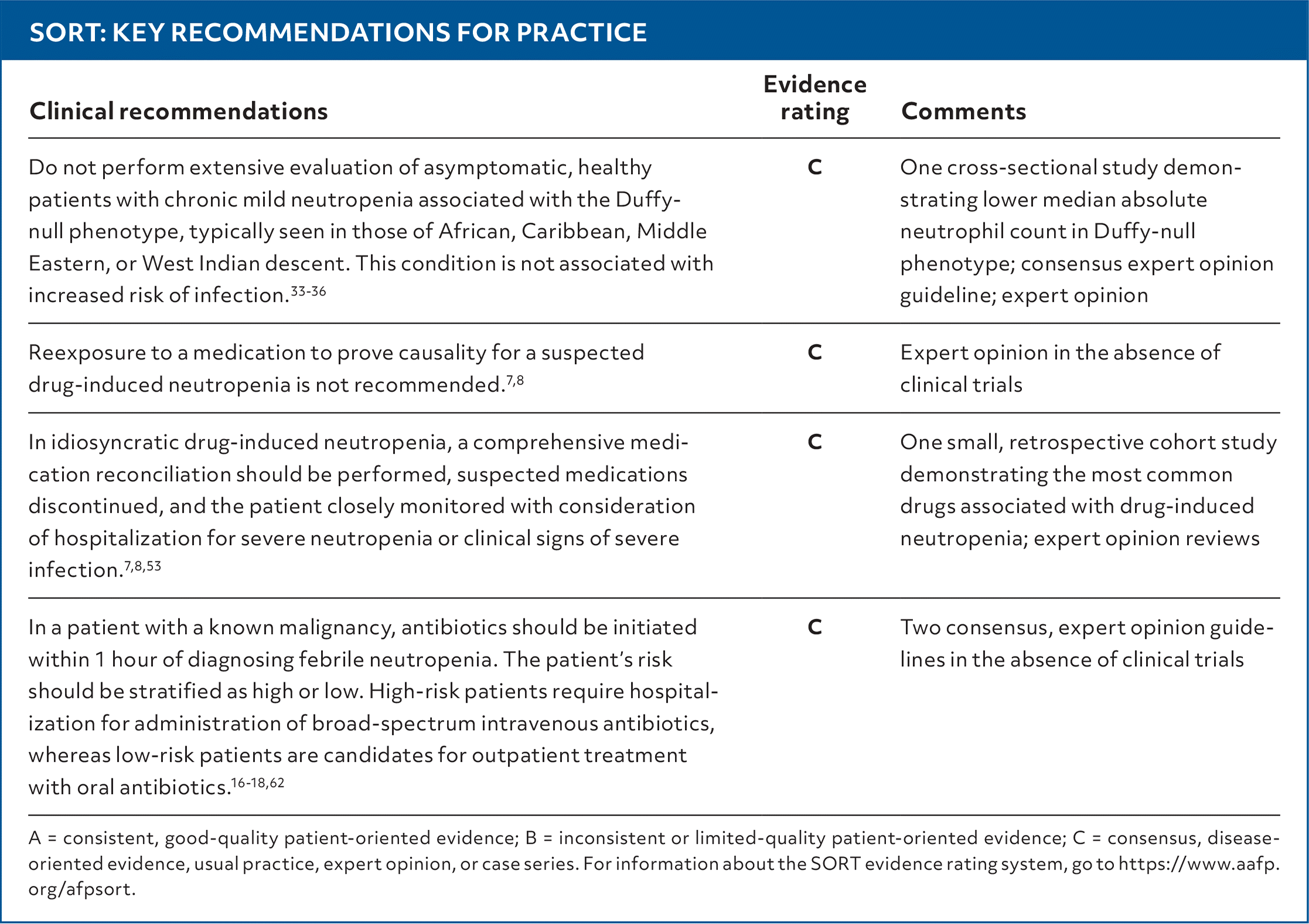
Neutropenia is defined as an absolute neutrophil count of less than 1,500 per μL in adults and children older than 1 year, and less than 1,000 per μL in infants. Neutropenia can be acquired or inherited. It is classified as mild (1,000–1,500 per μL), moderate (500–999 per μL), or severe (less than 500 per μL). Patient presentation can range from asymptomatic to severe illness requiring hospitalization. Acquired neutropenias and their causes include autoimmune neutropenia, chronic idiopathic neutropenia, chemotherapy-induced neutropenia, febrile neutropenia, hematologic malignancy, idiosyncratic drug-induced neutropenia, infection-related neutropenia, and nutritional deficiency (ie, vitamin B12, folate, and copper). Inherited neutropenias and their causes include bone marrow failure, cyclic neutropenia, and severe congenital neutropenia. Genetic testing may be required for diagnosis. Acquired neutropenias are treated by addressing the underlying etiologies. Some patients experiencing recurrent severe infections may benefit from granulocyte colony-stimulating factor. Most inherited neutropenias are treated with granulocyte colony-stimulating factor. Febrile neutropenia is an oncologic emergency. It is defined as a single oral temperature of 101°F or greater or a temperature of 100.4°F or greater sustained for 1 hour with an absolute neutrophil count of less than 500 per μL. Febrile neutropenia warrants emergent evaluation, but low-risk patients with a malignancy who meet strict criteria can be treated as outpatients.

MICHAEL J. KIM, MD, FAAFP, is an assistant professor in the Department of Family Medicine in the F. Edward Hébert School of Medicine at the Uniformed Services University, Bethesda, Maryland, and associate program director of the Travis Air Force Base Family Medicine Residency at David Grant Medical Center, Travis Air Force Base, California.

CHLOE FORLINI, MD, is a faculty physician in the Travis Air Force Base Family Medicine Residency at David Grant Medical Center.

KALEB KREMSREITER, MD, is a resident physician in the Travis Air Force Base Family Medicine Residency at David Grant Medical Center.

Address correspondence to Michael J. Kim, MD, FAAFP, at drmichaeljkim@gmail.com.

Author disclosure: No relevant financial relationships.

  1. 1.Frater JL. How I investigate neutropenia. Int J Lab Hematol. 2020;42(suppl 1):121-132.
  2. 2.Afzal W, Owlia MB, Hasni S, et al. Autoimmune neutropenia updates: etiology, pathology, and treatment. South Med J. 2017;110(4):300-307.
  3. 3.Sekeres MA, Taylor J. Diagnosis and treatment of myelodysplastic syndromes: a review. JAMA. 2022;328(9):872-880.
  4. 4.Spoor J, Farajifard H, Rezaei N. Congenital neutropenia and primary immunodeficiency diseases. Crit Rev Oncol Hematol. 2019;133:149-162.
  5. 5.Skokowa J, Dale DC, Touw IP, et al. Severe congenital neutropenias. Nat Rev Dis Primers. 2017;3:17032.
  6. 6.Dokal I, Tummala H, Vulliamy T. Inherited bone marrow failure in the pediatric patient. Blood. 2022;140(6):556-570.
  7. 7.Pick AM, Nystrom KK. Nonchemotherapy drug-induced neutropenia and agranulocytosis: could medications be the culprit? J Pharm Pract. 2014;27(5):447-452.
  8. 8.Andrès E, Villalba NL, Zulfiqar AA, et al. State of art of idiosyncratic drug-induced neutropenia or agranulocytosis, with a focus on biotherapies. J Clin Med. 2019;8(9):1351.
  9. 9.Autrel-Moignet A, Lamy T. Autoimmune neutropenia. Presse Med. 2014;43(4 pt 2):e105-e118.
  10. 10.Villarreal M. Neutropenia: a brief review. Pediatr Ann. 2023;52(6):e238-e241.
  11. 11.Shi X, Sims MD, Hanna MM, et al. Neutropenia during HIV infection: adverse consequences and remedies. Int Rev Immunol. 2014;33(6):511-536.
  12. 12.Sheehan VA, Weir A, Waters B. Hepatitis C and neutropenia. Curr Opin Hematol. 2014;21(1):58-63.
  13. 13.Zon RL, Berliner N. How I manage inpatient consultations for quantitative neutrophil abnormalities in adults. Blood. 2023;142(9):786-793.
  14. 14.Lazarchick J. Update on anemia and neutropenia in copper deficiency. Curr Opin Hematol. 2012;19(1):58-60.
  15. 15.Rohr O, Priou S, Chatellier G, et al.; Assistance Publique–Hôpitaux de Paris (AP-HP) Cancer Group, a CRAB* project. Prevalence and risks of intravenous chemotherapy-induced severe neutropenia in solid cancers: a multicenter retrospective cohort study on real-life data. Support Care Cancer. 2024;32(10):657.
  16. 16.Zimmer AJ, Freifeld AG. Optimal management of neutropenic fever in patients with cancer. J Oncol Pract. 2019;15(1):19-24.
  17. 17.Taplitz RA, Kennedy EB, Bow EJ, et al. Outpatient management of fever and neutropenia in adults treated for malignancy: American Society of Clinical Oncology and Infectious Diseases Society of America clinical practice guideline update. J Clin Oncol. 2018;36(14):1443-1453.
  18. 18.Freifeld AG, Bow EJ, Sepkowitz KA, et al. Clinical practice guideline for the use of antimicrobial agents in neutropenic patients with cancer: 2010 update by the Infectious Diseases Society Of America. Clin Infect Dis. 2011;52(4):e56-e93.
  19. 19.Smith TJ, Bohlke K, Lyman GH, et al. Recommendations for the use of WBC growth factors: American Society of Clinical Oncology clinical practice guideline update. J Clin Oncol. 2015;33(28):3199-3212.
  20. 20.Khoury JD, Solary E, Abla O, et al. The 5th edition of the World Health Organization classification of haematolymphoid tumours: myeloid and histiocytic/dendritic neoplasms. Leukemia. 2022;36(7):1703.
  21. 21.Moignet A, Lamy T. Latest advances in the diagnosis and treatment of large granular lymphocytic leukemia. Am Soc Clin Oncol Educ Book. 2018(38):616-625.
  22. 22.Fioredda F, Skokowa J, Tamary H, et al. The European guidelines on diagnosis and management of neutropenia in adults and children: a consensus between the European Hematology Association and the EuNet-INNOCHRON COST Action. HemaSphere. 2023;7(4):e872.
  23. 23.Newburger PE, Dale DC. Evaluation and management of patients with isolated neutropenia. Semin Hematol. 2013;50(3):198-206.
  24. 24.Dale DC. How I diagnose and treat neutropenia. Curr Opin Hematol. 2016;23(1):1-4.
  25. 25.Zhou J, Zhou N, Liu Q, et al. Prevalence of neutropenia in US residents: a population based analysis of NHANES 2011–2018. BMC Public Health. 2023;23(1):1254.
  26. 26.Newburger PE. Autoimmune and other acquired neutropenias. Hematology (Am Soc Hematol Educ Program). 2016;2016(1):38-42.
  27. 27.Dale DC, Bolyard AA, Schwinzer BG, et al. The Severe Chronic Neutropenia International Registry: 10-year follow-up report. Support Cancer Ther. 2006;3(4):220-231.
  28. 28.Yeshareem L, Yacobovich J, Lebel A, et al. Genetic backgrounds and clinical characteristics of congenital neutropenias in Israel. Eur J Haematol. 2024;113(2):146-162.
  29. 29.Donadieu J, Beaupain B, Mahlaoui N, et al. Epidemiology of congenital neutropenia. Hematol Oncol Clin North Am. 2013;27(1):1-17.
  30. 30.Boccia R, Glaspy J, Crawford J, et al. Chemotherapy-induced neutropenia and febrile neutropenia in the US: a beast of burden that needs to be tamed? Oncologist. 2022;27(8):625-636.
  31. 31.Dale DC, Bolyard AA. An update on the diagnosis and treatment of chronic idiopathic neutropenia. Curr Opin Hematol. 2017;24(1):46-53.
  32. 32.Rasmy A, Amal A, Fotih S, et al. Febrile neutropenia in cancer patient: epidemiology, microbiology, pathophysiology and management. J Cancer Prev Curr Res. 2016;5(3):273-278.
  33. 33.Atallah-Yunes SA, Ready A, Newburger PE. Benign ethnic neutropenia. Blood Rev. 2019;37:100586.
  34. 34.Merz LE, Story CM, Osei MA, et al. Absolute neutrophil count by Duffy status among healthy Black and African American adults. Blood Adv. 2023;7(3):317-320.
  35. 35.Palmblad J, Höglund P. Ethnic benign neutropenia: a phenomenon finds an explanation. Pediatr Blood Cancer. 2018;65(12):e27361.
  36. 36.Choosing Wisely recommendations: don’t perform an extensive workup in otherwise healthy neutropenic patients of African or Middle Eastern ancestry prior to Duffy-null phenotype testing. Am Fam Physician. Accessed August 12, 2025. https://www.aafp.org/pubs/afp/collections/choosing-wisely/526.html
  37. 37.Gibson C, Berliner N. How we evaluate and treat neutropenia in adults. Blood. 2014;124(8):1251-1258.
  38. 38.Connelly JA, Walkovich K. Diagnosis and therapeutic decision-making for the neutropenic patient. Hematology (Am Soc Hematol Educ Program). 2021(1):492-503.
  39. 39.Dale DC, Welte K. Cyclic and chronic neutropenia. Cancer Treat Res. 2011;157:97-108.
  40. 40.Lima CSP, Paula EV, Takahashi T, et al. Causes of incidental neutropenia in adulthood. Ann Hematol. 2006;85(10):705-709.
  41. 41.Kruszka P, O’Brian RJ. Diagnosis and management of Sjögren syndrome. Am Fam Physician. 2009;79(6):465-470.
  42. 42.Lam NCV, Brown JA, Sharma R. Systemic lupus erythematosus: diagnosis and treatment. Am Fam Physician. 2009;79(6):465-470.
  43. 43.Peterson E, Gallagher MK, Wilbur J. Rheumatoid arthritis: diagnosis and management for the family physician. Am Fam Physician. 2024;110(5):515-526.
  44. 44.Sella R, Flomenblit L, Goldstein I, et al. Detection of anti-neutrophil antibodies in autoimmune neutropenia of infancy: a multicenter study. Isr Med Assoc J. 2010;12(2):91-96.
  45. 45.Ito T, Taniuchi S, Tsuji S, et al. Diagnosis of autoimmune neutropenia by neutrophil-bound IgG and IgM antibodies. J Pediatr Hematol Oncol. 2011;33(7):552-555.
  46. 46.Gorodetskiy V, Sidorova Y, Biderman B, et al. Prevalence of STAT3 mutations in patients with rheumatoid arthritis-associated T-cell large granular lymphocytic leukaemia and Felty syndrome. Clin Exp Rheumatol. 2024;42(1):48-55.
  47. 47.Corey SJ, Oyarbide U. New monogenic disorders identify more pathways to neutropenia: from the clinic to next-generation sequencing. Hematology (Am Soc Hematol Educ Program). 2017(1):172-180.
  48. 48.Culakova E, Thota R, Poniewierski MS, et al. Patterns of chemotherapy-associated toxicity and supportive care in US oncology practice: a nationwide prospective cohort study. Cancer Med. 2014;3(2):434-444.
  49. 49.Klastersky J, Paesmans M, Rubenstein EB, et al. The Multinational Association for Supportive Care in Cancer risk index: a multinational scoring system for identifying low-risk febrile neutropenic cancer patients. J Clin Oncol. 2000;18(16):3038-3051.
  50. 50.Talcott JA, Siegel RD, Finberg R, et al. Risk assessment in cancer patients with fever and neutropenia: a prospective, two-center validation of a prediction rule. J Clin Oncol. 1992;10(2):316-322.
  51. 51.Carmona-Bayonas A, Gómez J, González-Billalabeitia E, et al. Prognostic evaluation of febrile neutropenia in apparently stable adult cancer patients. Br J Cancer. 2011;105(5):612-617.
  52. 52.de Haas V, Ismaila N, Advani A, et al. Initial diagnostic work-up of acute leukemia: ASCO clinical practice guideline endorsement of the College of American Pathologists and American Society of Hematology guideline. J Clin Oncol. 2019;37(3):239-253.
  53. 53.Andrès E, Mourot-Cottet R, Maloisel F, et al. Idiosyncratic drug-induced neutropenia & agranulocytosis. QJM. 2017;110(5):299-305.
  54. 54.Curtis BR. Non-chemotherapy drug-induced neutropenia: key points to manage the challenges. Hematology (Am Soc Hematol Educ Program). 2017(1):187-193.
  55. 55.Andersohn F, Konzen C, Garbe E. Systematic review: agranulocytosis induced by nonchemotherapy drugs. Ann Intern Med. 2007;146(9):657-665.
  56. 56.David O, Fruchtman Y, Sergienko R, et al. The infectious and noninfectious etiology, clinical picture and outcome of neutropenia in immunocompetent hospitalized children. Pediatr Infect Dis J. 2018;37(6):570-575.
  57. 57.Socha DS, DeSouza SI, Flagg A, et al. Severe megaloblastic anemia: vitamin deficiency and other causes. Cleve Clin J Med. 2020;87(3):153-164.
  58. 58.Peake JD, Noguchi E. Fanconi anemia: current insights regarding epidemiology, cancer, and DNA repair. Hum Genet. 2022;141(12):1811-1836.
  59. 59.Parisi X, Bledsoe JR. Discerning clinicopathological features of congenital neutropenia syndromes: an approach to diagnostically challenging differential diagnoses. J Clin Pathol. 2024;77(9):586-604.
  60. 60.Dale DC, Makaryan V. ELANE-related neutropenia. GeneReviews. June 17, 2002. Updated August 23, 2018. Accessed October 14, 2024. https://www.ncbi.nlm.nih.gov/books/NBK1533/
  61. 61.Lyman GH, Dale DC, Culakova E, et al. The impact of the granulocyte colony-stimulating factor on chemotherapy dose intensity and cancer survival: a systematic review and meta-analysis of randomized controlled trials. Ann Oncol. 2013;24(10):2475-2484.
  62. 62.Taplitz RA, Kennedy EB, Bow EJ, et al. Antimicrobial prophylaxis for adult patients with cancer-related immunosuppression: ASCO and IDSA clinical practice guideline update. J Clin Oncol. 2018;36(30):3043-3054.
  63. 63.Mhaskar R, Clark OAC, Lyman G, et al. Colony-stimulating factors for chemotherapy-induced febrile neutropenia. Cochrane Database Syst Rev. 2014(10):CD003039.

Copyright © 2026 by the American Academy of Family Physicians.

This content is owned by the AAFP. A person viewing it online may make one printout of the material and may use that printout only for his or her personal, non-commercial reference. This material may not otherwise be downloaded, copied, printed, stored, transmitted or reproduced in any medium, whether now known or later invented, except as authorized in writing by the AAFP. See permissions for copyright questions and/or permission requests.