Acute ankle sprains are a common musculoskeletal injury. As part of the physical examination, a combination of ankle-specific tests should be used to evaluate ligaments. Delaying the examination until 4 to 7 days postinjury increases diagnostic accuracy of sprain severity. In the acute setting, the Ottawa Foot and Ankle rules can help determine when radiography does not need to be ordered to evaluate for fracture. Management of acute ankle sprains should include joint protection, pain control, external ankle supports for 5 to 10 days, early functional activity, and targeted rehabilitation exercises. Oral medications such as acetaminophen, nonsteroidal anti-inflammatory drugs, and opioids are equally effective in managing pain. Recovery includes the use of external ankle supports (eg, semirigid braces) and a targeted neuromuscular rehabilitation program for 8 to 12 weeks. Continuing functional exercises and the use of external ankle support during sport after recovery can aid in the prevention of recurrent ankle sprains. If an ankle sprain does not follow the expected course of recovery, further evaluation with magnetic resonance imaging should be performed to evaluate for other causes of acute lateral ankle injuries, such as talar fractures and peroneal tendon injuries.
Acute ankle sprains, which can occur in a wide range of activities, are one of the most common musculoskeletal injuries.1,2 The estimated incidence rate is up to 7 per 1,000 person-years, and ankle sprains are most often inversion injuries to the lateral ligaments of the ankle.2,3 This article reviews common questions and presents evidence-based answers about managing acute ankle sprains.
SORT: KEY RECOMMENDATIONS FOR PRACTICE
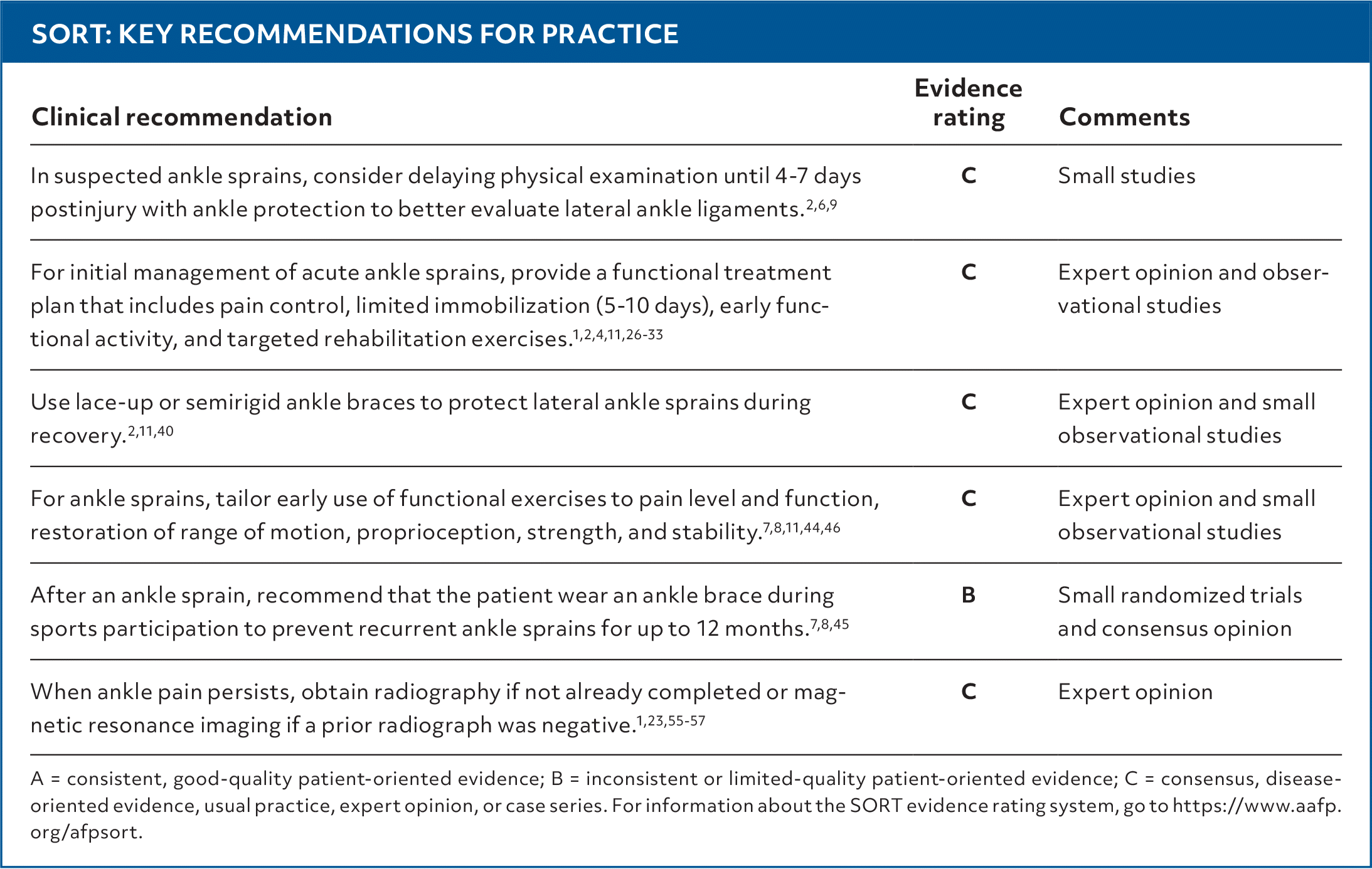
| Clinical recommendation | Evidence rating | Comments |
|---|---|---|
| In suspected ankle sprains, consider delaying physical examination until 4–7 days postinjury with ankle protection to better evaluate lateral ankle ligaments.2,6,9 | C | Small studies |
| For initial management of acute ankle sprains, provide a functional treatment plan that includes pain control, limited immobilization (5–10 days), early functional activity, and targeted rehabilitation exercises.1,2,4,11,26–33 | C | Expert opinion and observational studies |
| Use lace-up or semirigid ankle braces to protect lateral ankle sprains during recovery.2,11,40 | C | Expert opinion and small observational studies |
| For ankle sprains, tailor early use of functional exercises to pain level and function, restoration of range of motion, proprioception, strength, and stability.7,8,11,44,46 | C | Expert opinion and small observational studies |
| After an ankle sprain, recommend that the patient wear an ankle brace during sports participation to prevent recurrent ankle sprains for up to 12 months.7,8,45 | B | Small randomized trials and consensus opinion |
| When ankle pain persists, obtain radiography if not already completed or magnetic resonance imaging if a prior radiograph was negative.1,23,55–57 | C | Expert opinion |
A = consistent, good-quality patient-oriented evidence; B = inconsistent or limited-quality patient-oriented evidence; C = consensus, disease-oriented evidence, usual practice, expert opinion, or case series. For information about the SORT evidence rating system, go to https://www.aafp.org/afpsort.
Read the full article
Get immediate access, anytime, anywhere.
Choose a single article, issue, or full-access subscription.
Earn up to 14 CME credits per issue.