

Neutropenia is defined as an absolute neutrophil count of less than 1,500 per μL in adults and children older than 1 year, and less than 1,000 per μL in infants. Neutropenia can be acquired or inherited. It is classified as mild (1,000–1,500 per μL), moderate (500–999 per μL), or severe (less than 500 per μL). Patient presentation can range from asymptomatic to severe illness requiring hospitalization. Acquired neutropenias and their causes include autoimmune neutropenia, chronic idiopathic neutropenia, chemotherapy-induced neutropenia, febrile neutropenia, hematologic malignancy, idiosyncratic drug-induced neutropenia, infection-related neutropenia, and nutritional deficiency (ie, vitamin B12, folate, and copper). Inherited neutropenias and their causes include bone marrow failure, cyclic neutropenia, and severe congenital neutropenia. Genetic testing may be required for diagnosis. Acquired neutropenias are treated by addressing the underlying etiologies. Some patients experiencing recurrent severe infections may benefit from granulocyte colony-stimulating factor. Most inherited neutropenias are treated with granulocyte colony-stimulating factor. Febrile neutropenia is an oncologic emergency. It is defined as a single oral temperature of 101°F or greater or a temperature of 100.4°F or greater sustained for 1 hour with an absolute neutrophil count of less than 500 per μL. Febrile neutropenia warrants emergent evaluation, but low-risk patients with a malignancy who meet strict criteria can be treated as outpatients.
Neutropenia is a blood cell disorder with implications for infections and malignancies, and can indicate systemic illness. It can affect patients of all ages, and presentations range from asymptomatic to severe illness requiring hospitalization. Neutropenia is broadly categorized into acquired types (eg, autoimmune, chemotherapy-induced, drug-induced) and inherited types(eg, Fanconi anemia, severe congenital neutropenia). Table 1 summarizes the etiologies of neutropenia.1–21
SORT: KEY RECOMMENDATIONS FOR PRACTICE
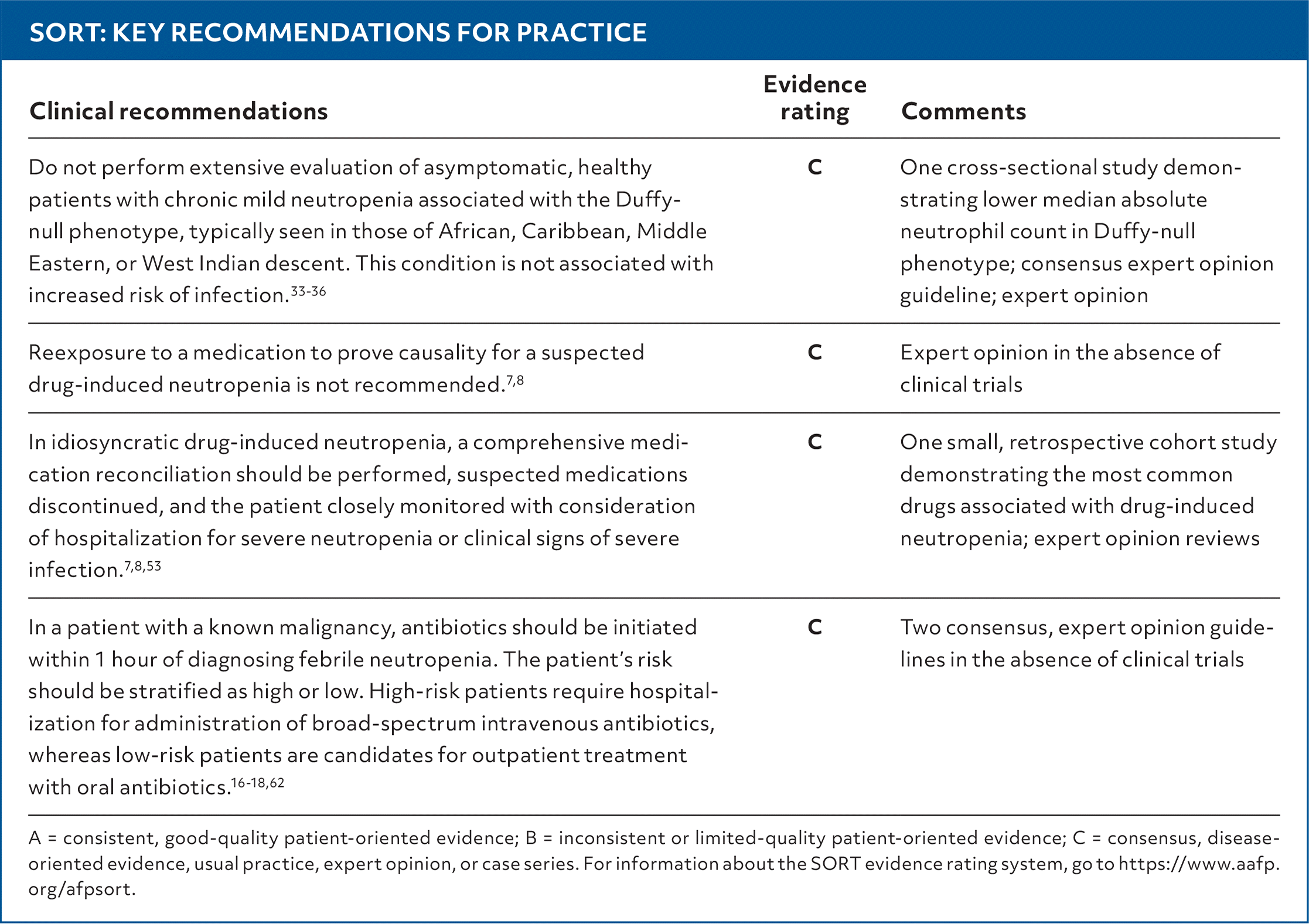
| Clinical recommendations | Evidence rating | Comments |
|---|---|---|
| Do not perform extensive evaluation of asymptomatic, healthy patients with chronic mild neutropenia associated with the Duffy-null phenotype, typically seen in those of African, Caribbean, Middle Eastern, or West Indian descent. This condition is not associated with increased risk of infection.33–36 | C | One cross-sectional study demonstrating lower median absolute neutrophil count in Duffy-null phenotype; consensus expert opinion guideline; expert opinion |
| Reexposure to a medication to prove causality for a suspected drug-induced neutropenia is not recommended.7,8 | C | Expert opinion in the absence of clinical trials |
| In idiosyncratic drug-induced neutropenia, a comprehensive medication reconciliation should be performed, suspected medications discontinued, and the patient closely monitored with consideration of hospitalization for severe neutropenia or clinical signs of severe infection.7,8,53 | C | One small, retrospective cohort study demonstrating the most common drugs associated with drug-induced neutropenia; expert opinion reviews |
| In a patient with a known malignancy, antibiotics should be initiated within 1 hour of diagnosing febrile neutropenia. The patient's risk should be stratified as high or low. High-risk patients require hospitalization for administration of broad-spectrum intravenous antibiotics, whereas low-risk patients are candidates for outpatient treatment with oral antibiotics.16–18,62 | C | Two consensus, expert opinion guidelines in the absence of clinical trials |
A = consistent, good-quality patient-oriented evidence; B = inconsistent or limited-quality patient-oriented evidence; C = consensus, disease-oriented evidence, usual practice, expert opinion, or case series. For information about the SORT evidence rating system, go to https://www.aafp.org/afpsort.
Read the full article
Get immediate access, anytime, anywhere.
Choose a single article, issue, or full-access subscription.
Earn up to 14 CME credits per issue.
