Cancer Screening in Older Adults

Mallory McClester Brown, MD
Christine A. Adams, MD, MS
Karen D. Halpert, MD

American Family Physician. 2025;112(6):629-637.

Author disclosure: No relevant financial relationships.

This clinical content conforms to AAFP criteria for CME.

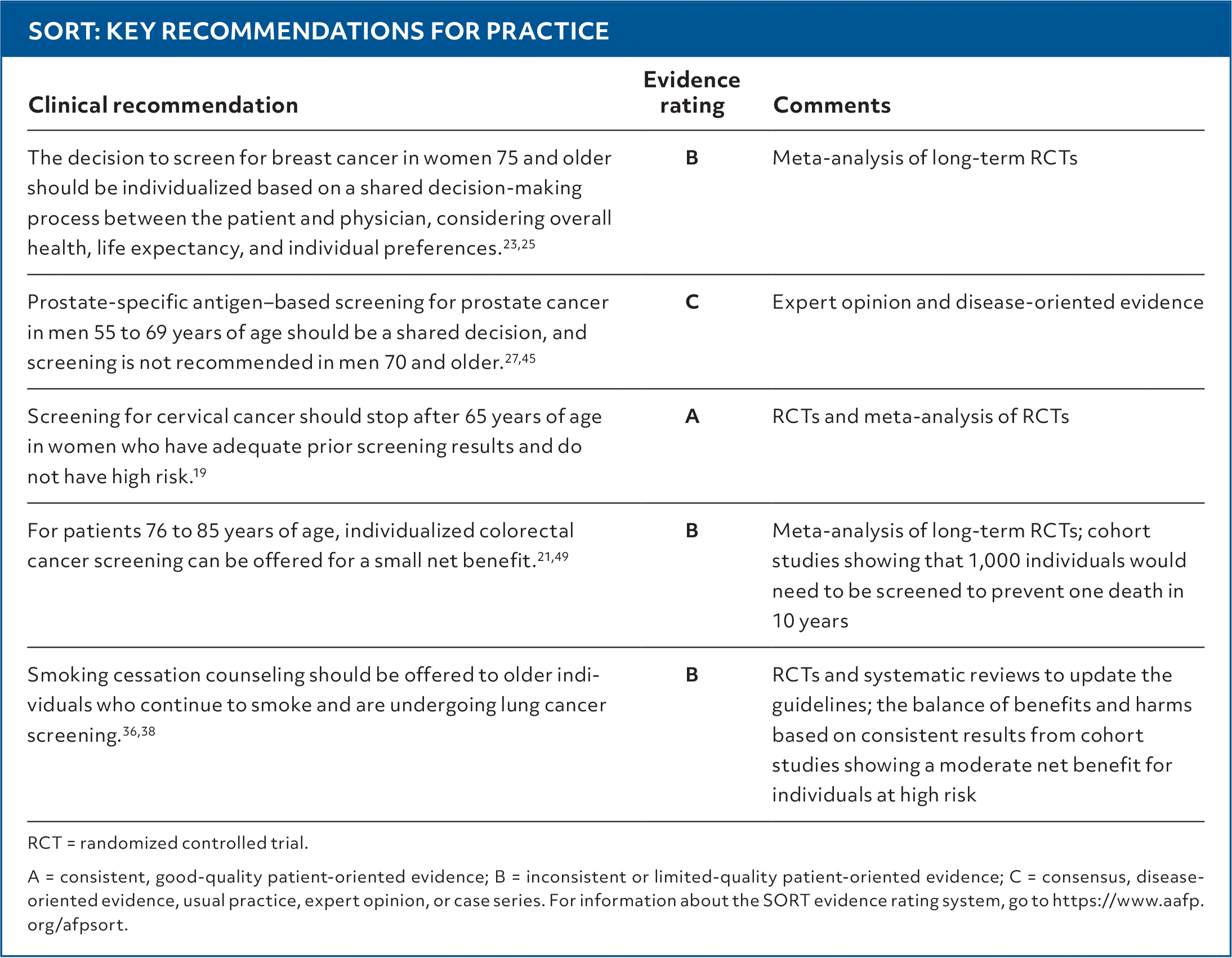
Cancer screening guidelines for older adults are increasingly recommending individualized decision-making rather than relying on age cutoffs. This is in large part due to the individual complexity of aging, such as functional differences, risks of diagnostic procedures, remaining life expectancy, perceived quality of life, and goals of care. The US Preventive Services Task Force (USPSTF) recommends screening for breast cancer until 74 years of age, whereas the American Cancer Society suggests screening as long as the patient is in good health or has a life expectancy of at least 10 years. The USPSTF recommends that men 55 to 69 years of age discuss the potential benefits and harms of prostate-specific antigen screening with their doctor before making an individual decision; for men 70 years and older, the USPSTF and the American Urological Association do not recommend routine screening. Most guidelines recommend that cervical cancer screening should stop at 65 years of age in patients who have adequate prior screening results and do not have high risk. The USPSTF and the American Cancer Society recommend routine colorectal cancer screening until 75 years of age, after which individualized screening can occur based on shared decision-making until 85 years of age. Guidelines recommend lung cancer screening for patients who are 50 to 80 years of age, have at least a 20-pack-year smoking history, and are able and willing to have curative surgery.

MALLORY MCCLESTER BROWN, MD, is an associate professor in the Department of Family Medicine at the University of North Carolina, Chapel Hill.

CHRISTINE A. ADAMS, MD, MS, is an assistant professor in the Department of Family Medicine at the University of North Carolina, Chapel Hill.

KAREN D. HALPERT, MD, is an associate professor in the Department of Family Medicine at the University of North Carolina, Chapel Hill.

Address correspondence to Mallory McClester Brown, MD, at mallory_mcclester@med.unc.edu.

Author disclosure: No relevant financial relationships.

  1. 1.US Preventive Services Task Force. Individualizing cancer screening in older adults. February 2013. Accessed December 1, 2024. https://www.uspreventiveservicestaskforce.org/uspstf/about-uspstf/methods-and-processes/individualizing-cancer-screening-older-adults
  2. 2.Kotwal AA, Walter LC. Cancer screening in older adults: individualized decision-making and communication strategies. Med Clin North Am. 2020;104(6):989-1006.
  3. 3.Leipzig RM, Whitlock EP, Wolff TA, et al.; US Preventive Services Task Force Geriatric Workgroup. Reconsidering the approach to prevention recommendations for older adults. Ann Intern Med. 2010;153(12):809-814.
  4. 4.von Wagner C, Macedo A, Campbell C, et al. Continuing cancer screening later in life: attitudes and intentions among older adults in England. Age Ageing. 2013;42(6):770-775.
  5. 5.Ebell M, Herzstein J. Improving quality by doing less: overscreening [editorial]. Am Fam Physician. 2015;91(1):22-24.
  6. 6.Yourman LC, Lee SJ, Schonberg MA, et al. Prognostic indices for older adults: a systematic review. JAMA. 2012;307(2):182-192.
  7. 7.Torke AM, Schwartz PH, Holtz LR, et al. Older adults and forgoing cancer screening: “I think it would be strange.”. JAMA Intern Med. 2013;173(7):526-531.
  8. 8.Lee SJ, Kim CM. Individualizing prevention for older adults. J Am Geriatr Soc. 2018;66(2):229-234.
  9. 9.Welch HG, Black WC. Overdiagnosis in cancer. J Natl Cancer Inst. 2010;102(9):605-613.
  10. 10.Walter LC, Covinsky KE. Cancer screening in elderly patients: a framework for individualized decision making. JAMA. 2001;285(21):2750-2756.
  11. 11.Lee SJ, Boscardin WJ, Stijacic-Cenzer I, et al. Time lag to benefit after screening for breast and colorectal cancer: meta-analysis of survival data from the United States, Sweden, United Kingdom, and Denmark. BMJ. 2013;346:e8441.
  12. 12.Bretthauer M, Wieszczy P, Løberg M, et al. Estimated lifetime gained with cancer screening tests: a meta-analysis of randomized clinical trials. JAMA Intern Med. 2023;183(11):1196-1203.
  13. 13.Arias E, Xu J, Kochanek K. United States life tables, 2021. Natl Vital Stat Rep. 2023;72(12):1-64.
  14. 14.Salzman B, Beldowksi K, De La Paz A. Cancer screening in older patients. Am Fam Physician. 2016;93(8):659-667.
  15. 15.Walter LC, Eng C, Covinsky KE. Screening mammography for frail older women: what are the burdens? J Gen Intern Med. 2001;16(11):779-784.
  16. 16.Braithwaite D, Zhu W, Hubbard RA, et al.; Breast Cancer Surveillance Consortium. Screening outcomes in older US women undergoing multiple mammograms in community practice: does interval, age, or comorbidity score affect tumor characteristics or false positive rates? J Natl Cancer Inst. 2013;105(5):334-341.
  17. 17.Khan M, Chollet A. Breast cancer screening: common questions and answers. Am Fam Physician. 2021;103(1):33-41.
  18. 18.National Cancer Institute. SEER cancer stat facts: prostate cancer. Accessed December 6, 2024. https://seer.cancer.gov/statfacts/html/prost.html
  19. 19.US Preventive Services Task Force. Cervical cancer: screening. August 21, 2018. Accessed December 1, 2024. https://www.uspreventiveservicestaskforce.org/uspstf/recommendation/cervical-cancer-screening
  20. 20.US Preventive Services Task Force. Colorectal cancer: screening. May 18, 2021. Accessed December 1, 2024. https://www.uspreventiveservicestaskforce.org/uspstf/recommendation/colorectal-cancer-screening
  21. 21.American Academy of Family Physicians. Clinical preventive service recommendation: colorectal cancer screening, adults. Accessed December 1, 2024. https://www.aafp.org/family-physician/patient-care/clinical-recommendations/all-clinical-recommendations/colorectal-cancer-adults.html
  22. 22.de Koning HJ, van der Aalst CM, de Jong PA, et al. Reduced lung-cancer mortality with volume CT screening in a randomized trial. N Engl J Med. 2020;382(6):503-513.
  23. 23.US Preventive Services Task Force. Breast cancer: screening. April 30, 2024. Accessed December 3, 2024. https://www.uspreventiveservicestaskforce.org/uspstf/recommendation/breast-cancer-screening
  24. 24.National Cancer Institute. SEER cancer statistics review, 1975–2009. Updated August 20, 2012. Accessed December 3, 2024. https://seer.cancer.gov/csr/1975_2009_pops09/
  25. 25.American Cancer Society. Recommendations for the early detection of breast cancer. Updated December 19, 2023. Accessed December 3, 2024. https://www.cancer.org/cancer/types/breast-cancer/screening-tests-and-early-detection/american-cancer-society-recommendations-for-the-early-detection-of-breast-cancer.html
  26. 26.American College of Obstetricians and Gynecologists. Breast cancer risk assessment and screening in average risk women. July 2017; reaffirmed 2025. Accessed September 22, 2025. https://www.acog.org/clinical/clinical-guidance/practice-bulletin/articles/2017/07/breast-cancer-risk-assessment-and-screening-in-average-risk-women
  27. 27.US Preventive Services Task Force. Prostate cancer: screening. May 8, 2018. Accessed April 9, 2025. https://www.uspreventiveservicestaskforce.org/uspstf/recommendation/prostate-cancer-screening
  28. 28.American Academy of Family Physicians. Clinical preventive service recommendation: prostate cancer. Accessed December 6, 2024. https://www.aafp.org/family-physician/patient-care/clinical-recommendations/all-clinical-recommendations/prostate-cancer.html
  29. 29.Wei JT, Barocas D, Carlsson S, et al. Early detection of prostate cancer: AUA/SUO guideline part I: prostate cancer screening. J Urol. 2023;210(1):46-53.
  30. 30.Wei JT, Barocas D, Carlsson S, et al. Early detection of prostate cancer: AUA/SUO guideline part II: considerations for a prostate biopsy. J Urol. 2023;210(1):54-63.
  31. 31.Health in Aging. Choosing Wisely: AGS's 10 things physicians and patients should question. Accessed December 1, 2024. https://www.healthinaging.org/choosing-wisely
  32. 32.American Academy of Family Physicians. Clinical preventive service recommendation: cervical cancer. Accessed December 1, 2024. https://www.aafp.org/family-physician/patient-care/clinical-recommendations/all-clinical-recommendations/cervical-cancer.html
  33. 33.American College of Obstetricians and Gynecologists. Cervical cancer screening. Updated March 2025. Accessed September 22, 2025. https://www.acog.org/womens-health/infographics/cervical-cancer-screening
  34. 34.American Cancer Society. Cancer screening guidelines by age: 65 or older. Updated November 5, 2025. Accessed November 13, 2025. https://www.cancer.org/cancer/screening/screening-recommendations-by-age.html#65-or-older
  35. 35.National Cancer Institute. SEER cancer stat facts: cervical cancer. Accessed December 1, 2024. https://seer.cancer.gov/statfacts/html/cervix.html
  36. 36.US Preventive Services Task Force. Lung cancer: screening. March 9, 2021. Accessed December 3, 2024. https://www.uspreventiveservicestaskforce.org/uspstf/recommendation/lung-cancer-screening
  37. 37.American Academy of Family Physicians. Clinical preventive service recommendation: lung cancer. Accessed November 12, 2025. https://www.aafp.org/family-physician/patient-care/clinical-recommendations/all-clinical-recommendations/lung-cancer.html
  38. 38.Wolf AMD, Oeffinger KC, Shih TYC, et al. Screening for lung cancer: 2023 guideline update from the American Cancer Society. CA Cancer J Clin. 2024;74(1):50-81.
  39. 39.Randolph WM, Goodwin JS, Mahnken JD, et al. Regular mammography use is associated with elimination of age-related disparities in size and stage of breast cancer at diagnosis. Ann Intern Med. 2002;137(10):783-790.
  40. 40.Schonberg MA. Decision-making regarding mammography screening for older women. J Am Geriatr Soc. 2016;64(12):2413-2418.
  41. 41.Schrager S, Ovsepyan V, Burnside E. Breast cancer screening in older women: the importance of shared decision making. J Am Board Fam Med. 2020;33(3):473-480.
  42. 42.Walter LC, Schonberg MA. Screening mammography in older women: a review. JAMA. 2014;311(13):1336-1347.
  43. 43.Pinsky PF, Parnes H. Screening for prostate cancer. N Engl J Med. 2023;388(15):1405-1414.
  44. 44.Burns RB, Olumi AF, Owens DK, et al. Would you recommend prostate-specific antigen screening for this patient? Grand rounds discussion from Beth Israel Deaconess Medical Center. Ann Intern Med. 2019;170(11):770-778.
  45. 45.Hamdy FC, Donovan JL, Lane JA, et al.; ProtecT Study Group. Fifteen-year outcomes after monitoring, surgery, or radiotherapy for prostate cancer. N Engl J Med. 2023;388(17):1547-1558.
  46. 46.Xu J, Janisse J, Ruterbusch JJ, et al. Patients’ survival expectations with and without their chosen treatment for prostate cancer. Ann Fam Med. 2016;14(3):208-214.
  47. 47.Wolf AM, Nasser JF, Wolf AM, et al. The impact of informed consent on patient interest in prostate-specific antigen screening. Arch Intern Med. 1996;156(12):1333-1336.
  48. 48.Senkomago V, Greek A, Jackson JE, et al. Learning from cervical cancer survivors: an examination of barriers and facilitators to cervical cancer screening among women in the United States. J Prim Care Community Health. 2021;12 : 21501327211041862.
  49. 49.National Cancer Institute. SEER cancer stat facts: colorectal cancer. Accessed December 1, 2024. https://seer.cancer.gov/statfacts/html/colorect.html
  50. 50.Schonberg MA, Breslau ES, Hamel MB, et al. Colon cancer screening in U.S. adults aged 65 and older according to life expectancy and age. J Am Geriatr Soc. 2015;63(4):750-756.
  51. 51.Day LW, Kwon A, Inadomi JM, et al. Adverse events in older patients undergoing colonoscopy: a systematic review and meta-analysis. Gastrointest Endosc. 2011;74(4):885-896.
  52. 52.Moyer VA. Screening for lung cancer: U.S. Preventive Services Task Force recommendation statement. Ann Intern Med. 2014;160(5):330-338.
  53. 53.Ebell MH, Bentivegna M, Hulme C. Cancer-specific mortality, all-cause mortality, and overdiagnosis in lung cancer screening trials: a meta-analysis. Ann Fam Med. 2020;18(6):545-552.
  54. 54.Lewis CL, Kistler CE, Amick HR, et al. Older adults’ attitudes about continuing cancer screening later in life: a pilot study interviewing residents of two continuing care communities. BMC Geriatr. 2006;6:10.
  55. 55.Zhao YR, Xie X, de Koning HJ, et al. NELSON lung cancer screening study. Cancer Imaging. 2011;11(1A):S79-S84.
  56. 56.Torke AM, Schwartz PH, Holtz LR, et al. Caregiver perspectives on cancer screening for persons with dementia: “Why put them through it?”. J Am Geriatr Soc. 2013;61(8):1309-1314.
  57. 57.Schonberg MA, Walter LC. Talking about stopping cancer screening— not so easy. JAMA Intern Med. 2013;173(7):532-533.
  58. 58.Albert RH, Clark MM. Cancer screening in the older patient. Am Fam Physician. 2008;78(12):1369-1374.

Copyright © 2026 by the American Academy of Family Physicians.

This content is owned by the AAFP. A person viewing it online may make one printout of the material and may use that printout only for his or her personal, non-commercial reference. This material may not otherwise be downloaded, copied, printed, stored, transmitted or reproduced in any medium, whether now known or later invented, except as authorized in writing by the AAFP. See permissions for copyright questions and/or permission requests.