Nicole Yonke, MD, MPH
Francheska Sevy Gurule, MD
Sandra Rosenfeld-O'Tool, MD

American Family Physician. 2025;112(6):638-645.

Author disclosure: Dr. Sandra Rosenfeld-O'Tool disclosed stock and bond holdings for Johnson & Johnson, Merck, and GSK. All relevant financial relationships have been mitigated. All other individuals in a position to control content for this activity have indicated they have no relevant financial relationships to disclose. [corrected]

This clinical content conforms to AAFP criteria for CME.

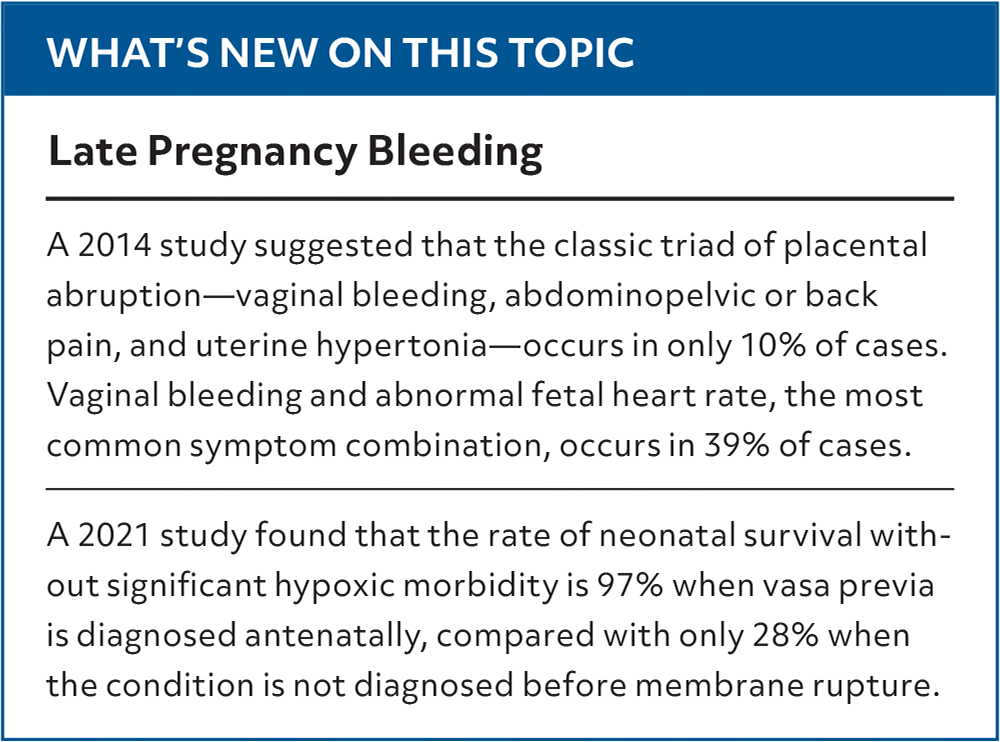
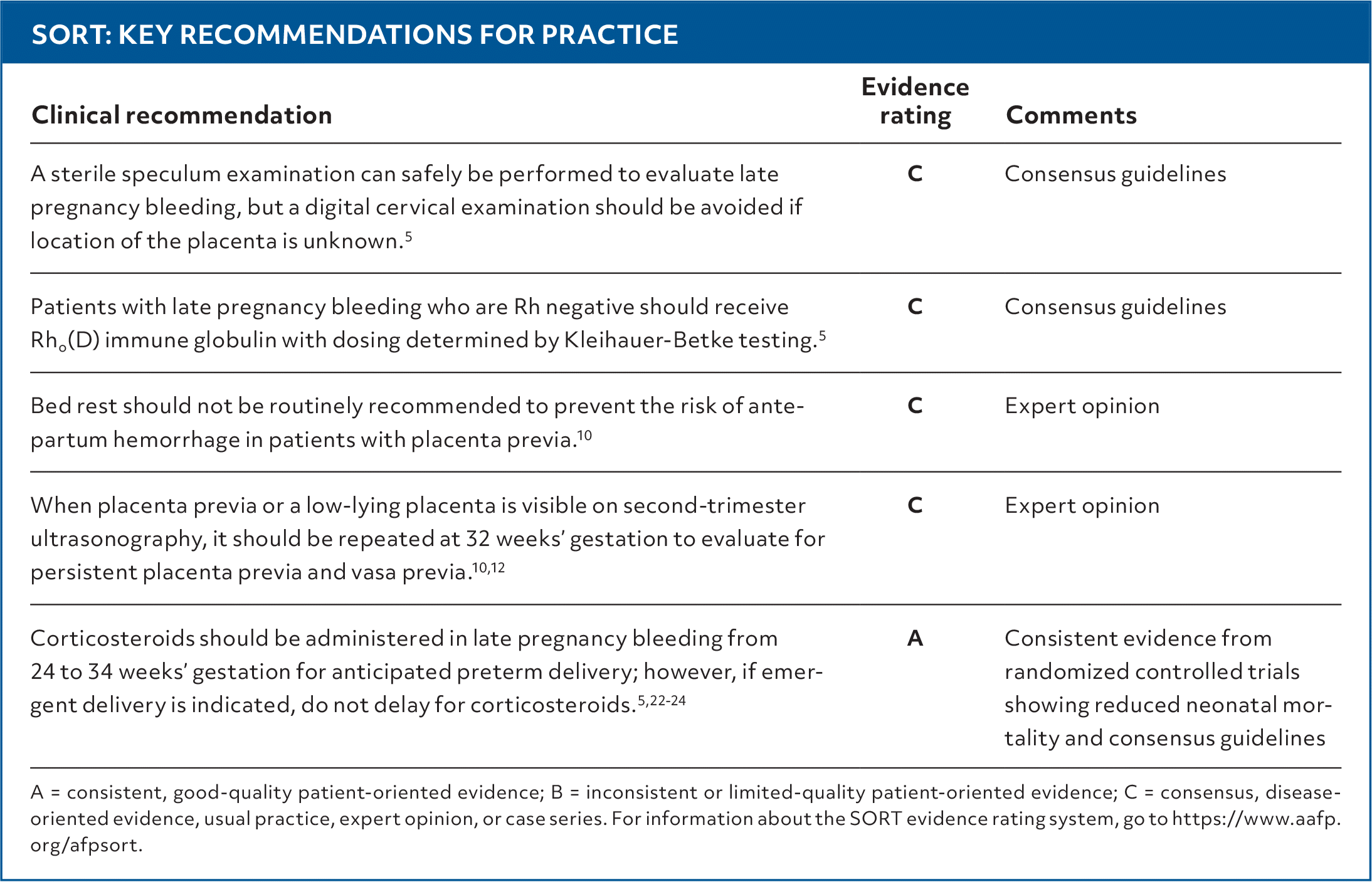
Late pregnancy bleeding, any vaginal bleeding that occurs after 20 weeks' gestation, can be due to obstetric emergencies or benign etiologies. The amount of blood loss does not always correlate with seriousness of the etiology, and the source of bleeding is often not immediately obvious. Even small amounts of blood loss should be evaluated carefully because this may be the initial symptom of emergent bleeding. Emergent obstetric etiologies include placental abruption, placenta previa, vasa previa, and uterine rupture. Placental abruption rarely presents with the classic triad of vaginal bleeding, pain, and uterine hypertonicity; vaginal bleeding with abnormal fetal heart rate is more common. Placenta previa is usually diagnosed on ultrasonography but can present with intermittent painless vaginal bleeding. A digital cervical examination should be avoided in patients with placenta previa, but a sterile speculum examination and transvaginal ultrasonography are safe regardless of placental location. Vasa previa, the presence of unprotected vessels outside the placenta running through membranes over or near the cervix, can cause rapidly emergent fetal bleeding. Uterine rupture is an immediate threat to the fetus that requires urgent cesarean delivery. Causes of bleeding that are not emergent include bloody show from labor, bleeding ectropion, cervical polyp, cervicitis, and vaginal infections. Performing ultrasonography to locate the placenta is key in making a diagnosis in patients with late pregnancy bleeding. Frequent vital signs, fetal monitoring, and serial laboratory tests will help identify those at high risk for complications.

NICOLE YONKE, MD, MPH, is an associate professor in the Department of Family and Community Medicine, University of New Mexico, Albuquerque.

FRANCHESKA SEVY GURULE, MD, is an associate professor in the Department of Family and Community Medicine, University of New Mexico, Albuquerque.

SANDRA ROSENFELD-O'TOOL, MD, is an associate clinical professor in the Department of Family and Community Medicine, University of New Mexico, Albuquerque.

Address correspondence to Nicole Yonke, MD, MPH, at nyonke@salud.unm.edu.

Author disclosure: Dr. Sandra Rosenfeld-O'Tool disclosed stock and bond holdings for Johnson & Johnson, Merck, and GSK. All relevant financial relationships have been mitigated. All other individuals in a position to control content for this activity have indicated they have no relevant financial relationships to disclose. [corrected]

  1. 1.Chollet C, Andre B, Voglimacci M, et al. Perinatal outcomes of second trimester antenatal genital bleeding. Clin Exp Obstet Gynecol. 2020;47(1):105-110.
  2. 2.Harlev A, Levy A, Zaulan Y, et al. Idiopathic bleeding during the second half of pregnancy as a risk factor for adverse perinatal outcome. J Matern Fetal Neonatal Med. 2008;21(5):331-335.
  3. 3.McCormack RA, Doherty DA, Magann EF, et al. Antepartum bleeding of unknown origin in the second half of pregnancy and pregnancy outcomes. BJOG. 2008;115(11):1451-1457.
  4. 4.Bhandari S, Raja EA, Shetty A, et al. Maternal and perinatal consequences of antepartum haemorrhage of unknown origin. BJOG. 2014;121(1):44-50.
  5. 5.Gyamfi-Bannerman C. Society for Maternal-Fetal Medicine (SMFM) consult series #44: management of bleeding in the late preterm period. Am J Obstet Gynecol. 2018;218(1):B2-B8.
  6. 6.Oyelese Y, Smulian JC. Placenta previa, placenta accreta, and vasa previa. Obstet Gynecol. 2006;107(4):927-941.
  7. 7.Timor-Tritsch IE, Yunis RA. Confirming the safety of transvaginal sonography in patients suspected of placenta previa. Obstet Gynecol. 1993;81(5 pt 1):742-744.
  8. 8.Shipp TD, Poder L, Feldstein VA, et al.; Expert Panel on GYN and OB Imaging. ACR Appropriateness Criteria second and third trimester vaginal bleeding. J Am Coll Radiol. 2020;17(11S):S497-S504.
  9. 9.Boisramé T, Sananès N, Fritz G, et al. Placental abruption: risk factors, management and maternal-fetal prognosis. Cohort study over 10 years. Eur J Obstet Gynecol Reprod Biol. 2014;179:100-104.
  10. 10.Silver RM. Abnormal placentation: placenta previa, vasa previa, and placenta accreta. Obstet Gynecol. 2015;126(3):654-668.
  11. 11.King LJ, Dhanya Mackeen A, Nordberg C, et al. Maternal risk factors associated with persistent placenta previa. Placenta. 2020;99:189-192.
  12. 12.Oyelese Y, Javinani A, Shamshirsaz AA. Vasa previa. Obstet Gynecol. 2023;142(3):503-518.
  13. 13.Al-Zirqi I, Stray-Pedersen B, Forsén L, et al. Uterine rupture: trends over 40 years. BJOG. 2016;123(5):780-787.
  14. 14.Sakornbut E, Leeman L, Fontaine P. Late pregnancy bleeding. Am Fam Physician. 2007;75(8):1199-1206.
  15. 15.Brandt JS, Ananth CV. Placental abruption at near-term and term gestations: pathophysiology, epidemiology, diagnosis, and management. Am J Obstet Gynecol. 2023;228(5S):S1313-S1329.
  16. 16.Jain V, Chari R, Maslovitz S, et al.; Maternal Fetal Medicine Committee. Guidelines for the management of a pregnant trauma patient. J Obstet Gynaecol Can. 2015;37(6):553-574.
  17. 17.Shinde GR, Vaswani BP, Patange RP, et al. Diagnostic performance of ultrasonography for detection of abruption and its clinical correlation and maternal and foetal outcome. J Clin Diagn Res. 2016;10(8):QC04-QC07.
  18. 18.Jenabi E, Salimi Z, Bashirian S, et al. The risk factors associated with placenta previa: an umbrella review. Placenta. 2022;117:21-27.
  19. 19.American College of Obstetricians and Gynecologists; Society for Maternal-Fetal Medicine. Obstetric care consensus no. 7: placenta accreta spectrum. Obstet Gynecol. 2018;132(6):e259-e275.
  20. 20.Einerson BD, Healy AJ, Lee A, et al.; SMFM Patient Safety and Quality Committee. Society for Maternal-Fetal Medicine special statement: emergency checklist, planning worksheet, and system preparedness bundle for placenta accreta spectrum. Am J Obstet Gynecol. 2024;230(1):B2-B11.
  21. 21.Fan D, Wu S, Liu L, et al. Prevalence of antepartum hemorrhage in women with placenta previa: a systematic review and meta-analysis. Sci Rep. 2017;7:40320.
  22. 22.McGoldrick E, Stewart F, Parker R, et al. Antenatal corticosteroids for accelerating fetal lung maturation for women at risk of preterm birth. Cochrane Database Syst Rev. 2020;12(12):CD004454.
  23. 23.Committee on Obstetric Practice. Committee opinion no. 713: antenatal corticosteroid therapy for fetal maturation. Obstet Gynecol. 2017;130(2):e102-e109.
  24. 24.Reddy UM, Deshmukh U, Dude A, et al. Society for Maternal-Fetal Medicine consult series #58: use of antenatal corticosteroids for individuals at risk for late preterm delivery: replaces SMFM statement #4, implementation of the use of antenatal corticosteroids in the late preterm birth period in women at risk for preterm delivery, August 2016. Am J Obstet Gynecol. 2021;225(5):B36-B42.
  25. 25.Jansen C, de Mooij YM, Blomaard CM, et al. Vaginal delivery in women with a low-lying placenta: a systematic review and meta-analysis. BJOG. 2019;126(9):1118-1126.
  26. 26.Ornaghi S, Vaglio Tessitore I, Vergani P. Pregnancy and delivery outcomes in women with persistent versus resolved low-lying placenta in the late third trimester. J Ultrasound Med. 2022;41(1):123-133.
  27. 27.Zhang W, Geris S, Al-Emara N, et al. Perinatal outcome of pregnancies with prenatal diagnosis of vasa previa: systematic review and meta-analysis. Ultrasound Obstet Gynecol. 2021;57(5):710-719.
  28. 28.Fishel Bartal M, Sibai BM, Ilan H, et al. Prenatal diagnosis of vasa previa: outpatient versus inpatient management. Am J Perinatol. 2019;36(4):422-427.
  29. 29.Vandenberghe G, Vierin A, Bloemenkamp K, et al. Incidence and outcomes of uterine rupture in women with unscarred, preterm or prelabour uteri: data from the International Network of Obstetric Survey Systems. BJOG. 2023;130(12):1493-1501.
  30. 30.Deshmukh U, Denoble AE, Son M. Trial of labor after cesarean, vaginal birth after cesarean, and the risk of uterine rupture: an expert review. Am J Obstet Gynecol. 2024;230(3S):S783-S803.
  31. 31.ACOG practice bulletin no. 205: vaginal birth after cesarean delivery. Obstet Gynecol. 2019;133(2):e110-e127.
  32. 32.Holmgren C, Scott JR, Porter TF, et al. Uterine rupture with attempted vaginal birth after cesarean delivery: decision-to-delivery time and neonatal outcome. Obstet Gynecol. 2012;119(4):725-731.

Copyright © 2026 by the American Academy of Family Physicians.

This content is owned by the AAFP. A person viewing it online may make one printout of the material and may use that printout only for his or her personal, non-commercial reference. This material may not otherwise be downloaded, copied, printed, stored, transmitted or reproduced in any medium, whether now known or later invented, except as authorized in writing by the AAFP. See permissions for copyright questions and/or permission requests.