

Articles
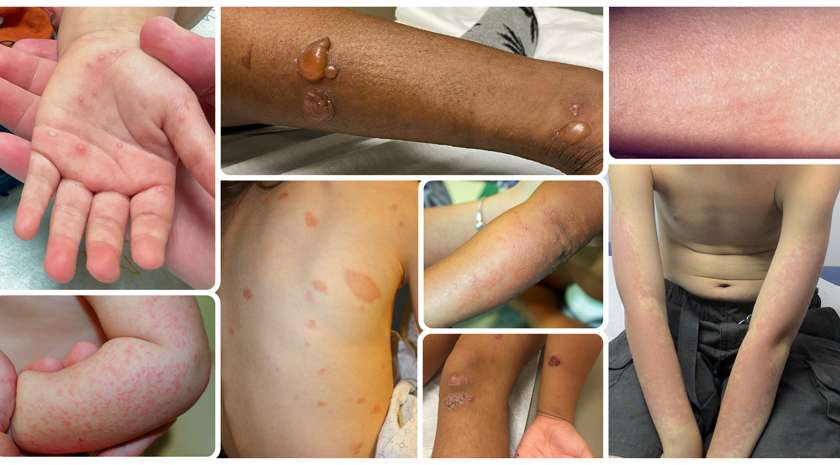
Common Skin Rashes in Children
Childhood skin rashes are common in primary care and are usually diagnosed clinically based on morphology, distribution, associated symptoms, and clinical course. Treatment depends on the underlying diagnosis and severity. Accurate recognition of common rash patterns can guide…
Primary Care for People With Alcohol Use Disorder
People with alcohol use disorder are nearly twice as likely as the general population to have a primary care physician. Physicians should be aware of common complications that are caused by, or co-occur with, heavy alcohol use and be able to identify and treat these conditions…
Influenza: Prevention, Diagnosis, and Treatment
Annual influenza vaccination is recommended for people 6 months and older, including pregnant individuals, who do not have a contraindication to vaccination. Although most patients do not require treatment for influenza, antivirals should be started as soon as possible for…
Vitamin D Supplementation in Community-Dwelling Adults
Routine screening for vitamin D deficiency is not recommended in the general population. Individuals 70 years and younger should consume 600 IU of vitamin D daily, and individuals older than 70 years should consume 800 IU daily. Some individuals with certain medical conditions…
Primary Care of Patients With Cancer
Family physicians' longitudinal relationship with patients allows them to address cancer-related issues in addition to chronic disease management, preventive care, psychosocial needs, and caregiver support.
Inside AFP
AFP's Article of the Year: Lower Extremity Abnormalities in Children
The 2025 Article of the Year award goes to Drs. Drew Baird, Caleb Dickison, and Hayley Spires for “Lower Extremity Abnormalities in Children”.
Editorials
Practice Alert: AAFP 2026–2027 Respiratory Vaccine Recommendations for Adults
The burden of respiratory viruses is substantial but partially preventable through vaccination.
Cochrane for Clinicians
HPV Vaccination After Cervical Conization
Human papillomavirus (HPV) vaccination administered to HPV vaccine–naive patients around the time of conization may reduce recurrent CIN grade 2 or higher (CIN 2+), at 24 to 36 months compared with no vaccination. It is unclear if HPV vaccination at the time of conization…
Exercise for Knee Osteoarthritis
Compared with control or placebo, exercise improves patient-reported treatment success over 2 years of follow-up. Adding exercise to a cointervention (eg, pain coping skills, weight loss program) increases patient-reported treatment success compared with the cointervention alone
Diary of a Family Physician
Diary of a Family Physician
First-person accounts from the front lines of family medicine.
Diagnostic Tests
Transient Elastography for Noninvasive Assessment of Liver Fibrosis in MASLD and Chronic Liver Disease
Determining the degree of hepatic fibrosis in patients with chronic liver disease is crucial for risk stratification because advanced fibrosis and cirrhosis can lead to serious complications, including liver failure and hepatocellular carcinoma.1 Because liver biopsy is…
FPIN's Help Desk Answers
Renin-Angiotensin System Inhibitor Discontinuation Before Noncardiac Surgery
Discontinuation of renin-angiotensin system inhibitors before noncardiac surgery decreases the risk of intraoperative hypotension and may decrease risk of acute kidney injury, but does not affect risk of mortality or postoperative cardiovascular complications.
FPIN's Clinical Inquiries
Daily Aspirin Dosing for Preeclampsia Prevention
In pregnant patients at high risk for preeclampsia, daily aspirin at any dose reduces the risk. Individual trials evaluating different doses have contradictory results. Current evidence does not support recommending daily aspirin at doses higher than 81 mg.
Photo Quiz
Circular Desquamation on the Soles
A 60-year-old man presented with circular, smooth macules and small patches with peripheral collarettes of desquamative scales on both soles.
Rash on the Palms and Soles
A woman presented with multiple well-demarcated, erythematous macules diffusely scattered over hands and feet, as well as oral ulcerations.
POEMs
Rivaroxaban Is No Better Than Aspirin After Catheter Ablation for Atrial Fibrillation at Least 1 Year Earlier
In patients who had a successful catheter ablation for atrial fibrillation at least 1 year ago, is there a net benefit to continued anticoagulation?
Mother-Baby Singing Groups Can Reduce Postpartum Depression Symptoms
Is prenatal exposure to acetaminophen (paracetamol) associated with autism or other neurodevelopmental disorders in children?
Olezarsen Reduces Triglyceride Levels and the Risk of Acute Pancreatitis in People With Severe Hypertriglyceridemia
Does olezarsen (Tryngolza) reduce the risk of acute pancreatitis in people with severe hypertriglyceridemia, defined as at least 500 mg/dL (5.65 mmol/L)?
Lack of Association Between Prenatal Acetaminophen Exposure and Child Neurodevelopmental Disorders
Is prenatal exposure to acetaminophen (paracetamol) associated with autism or other neurodevelopmental disorders in children?
Practice Guidelines
Hypertension Prevention, Detection, and Management: Guidelines From the AHA/ACC
The American Heart Association/American College of Cardiology (AHA/ACC), in collaboration with 11 other organizations, released updated guidelines for prevention, detection, and management of hypertension in adults.The American Heart Association/American College of Cardiology…
Primary Care Hypertension Management: Guidelines From Hypertension Canada
Hypertension Canada published guidelines to provide streamlined, pragmatic, evidence-based recommendations for primary care management of hypertension.
Letters to the Editor
Office Electrocautery Is Safe for Patients With Pacemakers
Corrections
Correction
Incorrect complication listed. In “Postoperative Management After Metabolic Surgery: Role of the Family Physician” (May 2026, p. 469), Table 1 incorrectly listed anastomotic leak as a complication of sleeve gastrectomy. Anastomotic leak was correctly described elsewhere in the…
Funded Educational Content
CME Bulletin: Major Depressive Disorder in Primary Care: Systematic Screening and Diagnostic Accuracy
Funded educational content
Metabolic Dysfunction-Associated Steatotic Liver Disease and Steatohepatitis: Pathophysiology and
Funded educational content