

Globally, cervical cancer is the fourth most common cancer in women and other people with a cervix. Population-based screening, applied to asymptomatic average-risk individuals, remains the core of prevention and focuses on the risk of high-grade cervical precancers and cancers. In the United States, underscreening is associated with socioeconomic disparities. Screening strategies include cytology alone, cotesting, and primary human papillomavirus (HPV) screening. The American Cancer Society recommends initiating cervical cancer screening at 25 years of age; primary HPV testing every 5 years is the preferred method. The US Preventive Services Task Force 2024 draft recommendation endorses the use of primary HPV screening every 5 years as the preferred method beginning at 30 years of age and recommends cytology alone every 3 years in patients 21 to 29 years of age. Cytology alone and cotesting are acceptable screening methods. Conclusion of screening at 65 years of age is recommended for individuals without a history of high-grade cervical intraepithelial neoplasia or cervical cancer in the past 25 years and with adequate negative screening results at 60 and 65 years of age. Management of patients with abnormal cervical cancer screening results should follow the 2019 American Society for Colposcopy and Cervical Pathology (ASCCP) risk-based management consensus guidelines.
Globally, cervical cancer is the fourth most common cancer in women and other people with a cervix, with an estimated 660,000 new cases diagnosed in 2022.1 Ineffective screening programs are associated with higher cervical cancer incidence and mortality.2,3 The American Cancer Society (ACS) projected that in 2025, there would be 13,360 new cervical cancer diagnoses and 4,320 deaths.4 In the United States, cervical cancer incidence and related deaths decreased by more than 50% from the mid-1970s to the mid-2000s, largely due to screening.4
Patients who lack regular preventive health care services are at a higher risk of cervical cancer.5 In the United States, up to 25% of eligible individuals are underscreened for cervical cancer, and nearly 50% of cervical cancers occur in those with inadequate screening.6,7 Disparities in cervical cancer incidence, stage, geography, and mortality largely reflect socioeconomic environment, as well as race and ethnicity.8–11 Reproductive health disparities are recognized in people living with disabilities and in vulnerable racial, ethnic, sexual, and gender minority communities.12–14
WHAT'S NEW ON THIS TOPIC
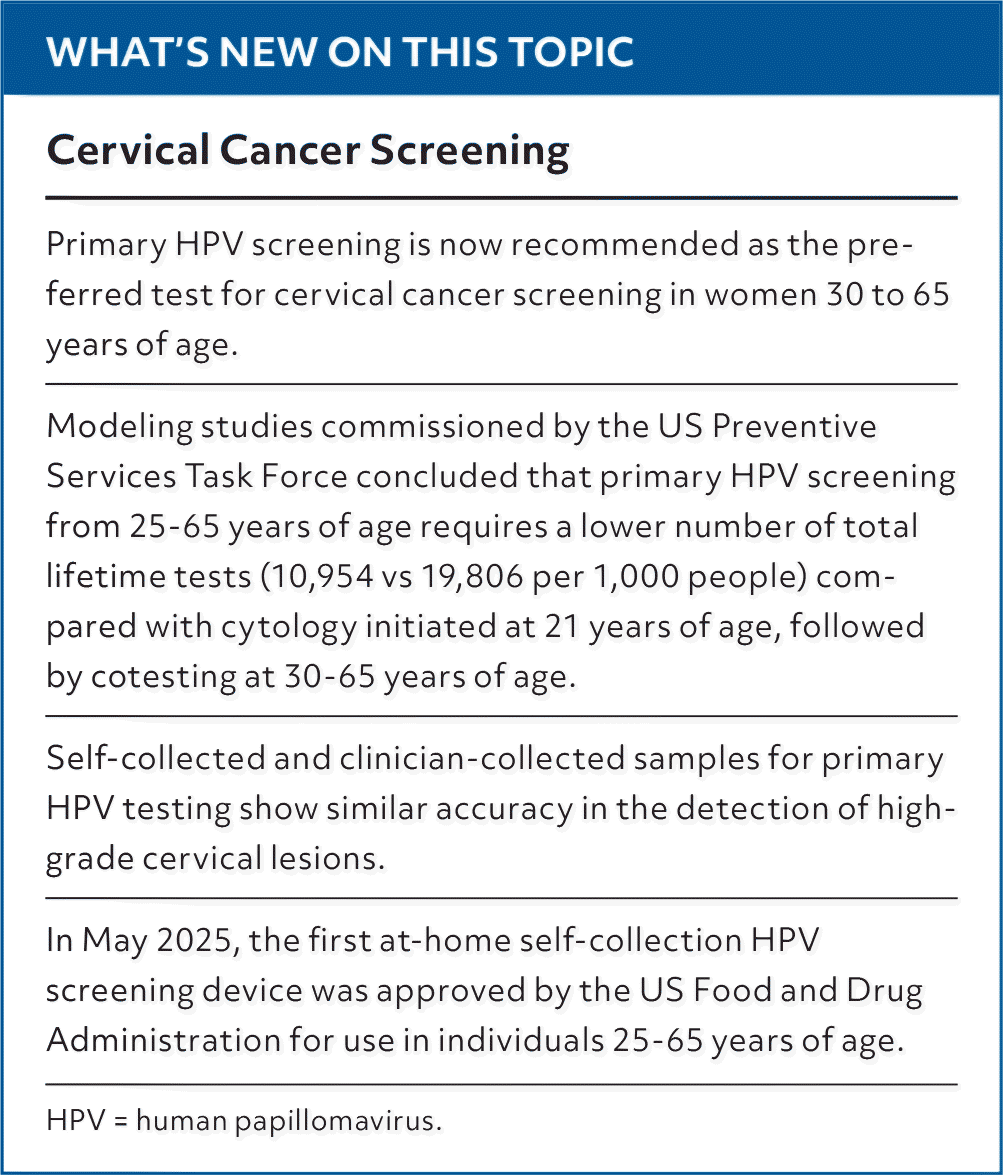
| Primary HPV screening is now recommended as the preferred test for cervical cancer screening in women 30 to 65 years of age. |
| Modeling studies commissioned by the US Preventive Services Task Force concluded that primary HPV screening from 25–65 years of age requires a lower number of total lifetime tests (10,954 vs 19,806 per 1,000 people) compared with cytology initiated at 21 years of age, followed by cotesting at 30–65 years of age. |
| Self-collected and clinician-collected samples for primary HPV testing show similar accuracy in the detection of high-grade cervical lesions. |
| In May 2025, the first at-home self-collection HPV screening device was approved by the US Food and Drug Administration for use in individuals 25–65 years of age. |
HPV = human papillomavirus.
Read the full article
Get immediate access, anytime, anywhere.
Choose a single article, issue, or full-access subscription.
Earn up to 14 CME credits per issue.
