Wheezing is a whistling sound that occurs with expiration due to narrowing or obstruction of the small airways. Up to 50% of children experience recurrent episodes of wheezing by age 5 years. Diagnosis of the cause can be difficult because of the many possible etiologies. The history should include the family history, age of onset, and pattern of wheezing (transient vs persistent). The differential diagnosis varies depending on age of onset, with younger children more commonly experiencing wheezing caused by congenital abnormalities or viral etiologies. Gastrointestinal reflux disease is another cause of wheezing in younger children. Children older than 1 year may experience wheezing related to acute processes including viral illness, foreign body aspiration, and reactive airways. The most common causes of wheezing in children younger than 6 years are bronchiolitis and asthma. A parental history of asthma, allergies, or eczema increases a child's likelihood of developing asthma. There are associations between wheezing and obstructive sleep apnea and snoring in children. Evaluation of wheezing should be guided by the patient history and presentation. Chest radiography is recommended as the initial imaging study for those with recurrent episodes of wheezing without a clear etiology. Management is determined by the underlying etiology.
Wheezing is a whistling sound that occurs with expiration caused by narrowing or obstruction of the small airways. The smaller airways of infants predispose them to wheezing in the setting of common viral infections. Up to 50% of children experience recurrent episodes of wheezing by age 5 years. Only about 30% of preschool-aged children with recurrent wheezing are diagnosed with asthma at age 6 years.1
SORT: KEY RECOMMENDATIONS FOR PRACTICE
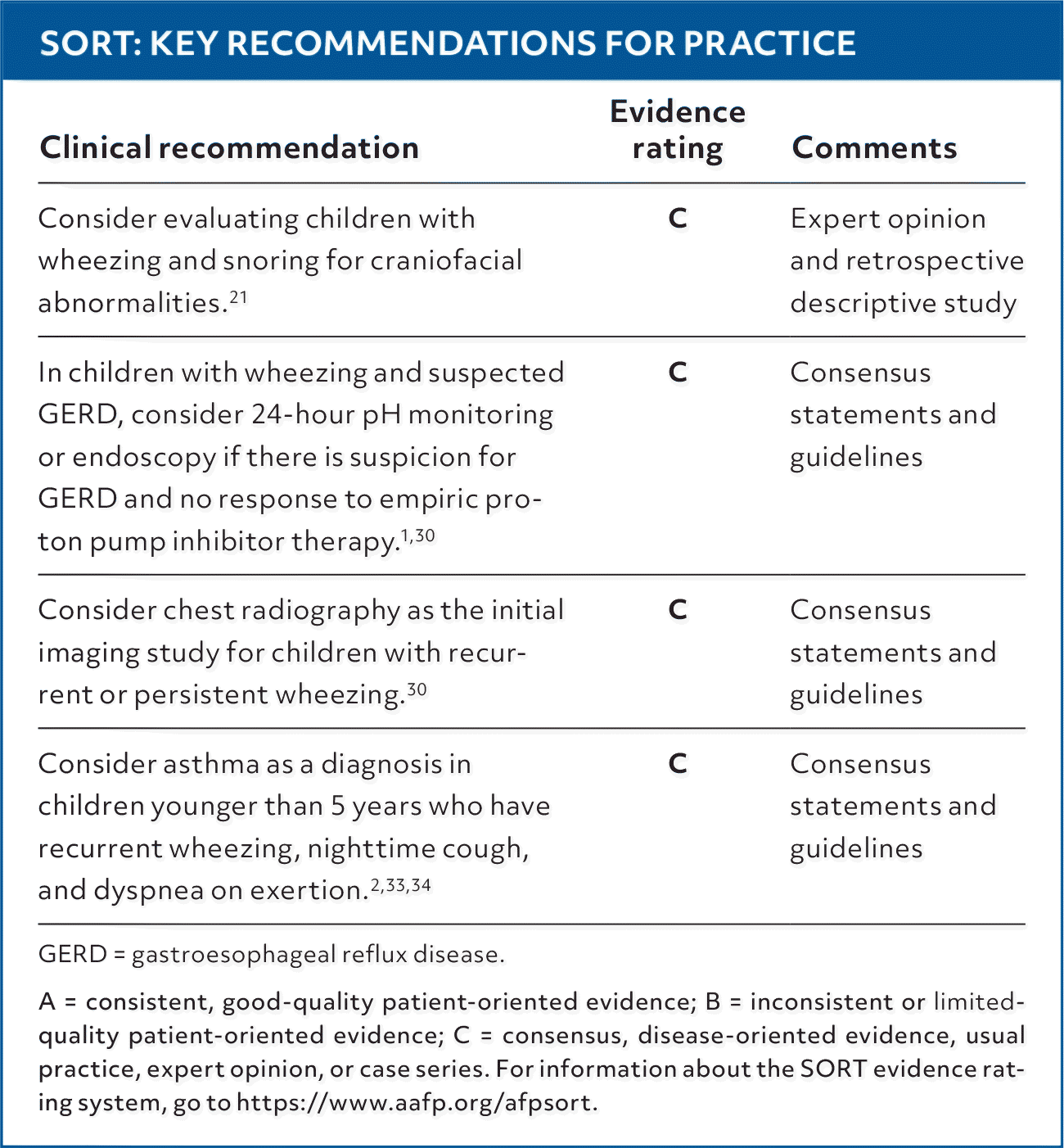
| Clinical recommendation | Evidence rating | Comments |
|---|---|---|
| Consider evaluating children with wheezing and snoring for craniofacial abnormalities.21 | C | Expert opinion and retrospective descriptive study |
| In children with wheezing and suspected GERD, consider 24-hour pH monitoring or endoscopy if there is suspicion for GERD and no response to empiric proton pump inhibitor therapy.1,30 | C | Consensus statements and guidelines |
| Consider chest radiography as the initial imaging study for children with recurrent or persistent wheezing.30 | C | Consensus statements and guidelines |
| Consider asthma as a diagnosis in children younger than 5 years who have recurrent wheezing, nighttime cough, and dyspnea on exertion.2,33,34 | C | Consensus statements and guidelines |
GERD = gastroesophageal reflux disease.
A = consistent, good-quality patient-oriented evidence; B = inconsistent or limited-quality patient-oriented evidence; C = consensus, disease-oriented evidence, usual practice, expert opinion, or case series. For information about the SORT evidence rating system, go to https://www.aafp.org/afpsort.
HISTORY
The differential diagnosis for wheezing in children is broad (Table 11–4). The most common causes in those younger than 6 years are bronchiolitis and asthma.5 The history should include the family history, age of onset, and pattern of wheezing (transient vs persistent). A review of systems should be performed to identify systemic diseases that may involve nonrespiratory symptoms. The presence of a fever suggests an infectious etiology, whereas atopic symptoms suggest asthma or allergies as the cause.
Read the full article
Get immediate access, anytime, anywhere.
Choose a single article, issue, or full-access subscription.
Earn up to 14 CME credits per issue.