Cervical Cancer Screening

Amy Wiser, MD
Jeffrey D. Quinlan, MD

American Family Physician. 2026;113(2):137-144.

Author disclosure: Dr. Amy Wiser disclosed a relationship with Merck as a consultant on HPV vaccination. All relevant financial relationships have been mitigated. All other individuals in a position to control content for this activity have indicated they have no relevant financial relationships to disclose. [corrected]

This clinical content conforms to AAFP criteria for CME.

Patient information: A handout on self-collected samples for cervical cancer screening is available with the online version of this article.

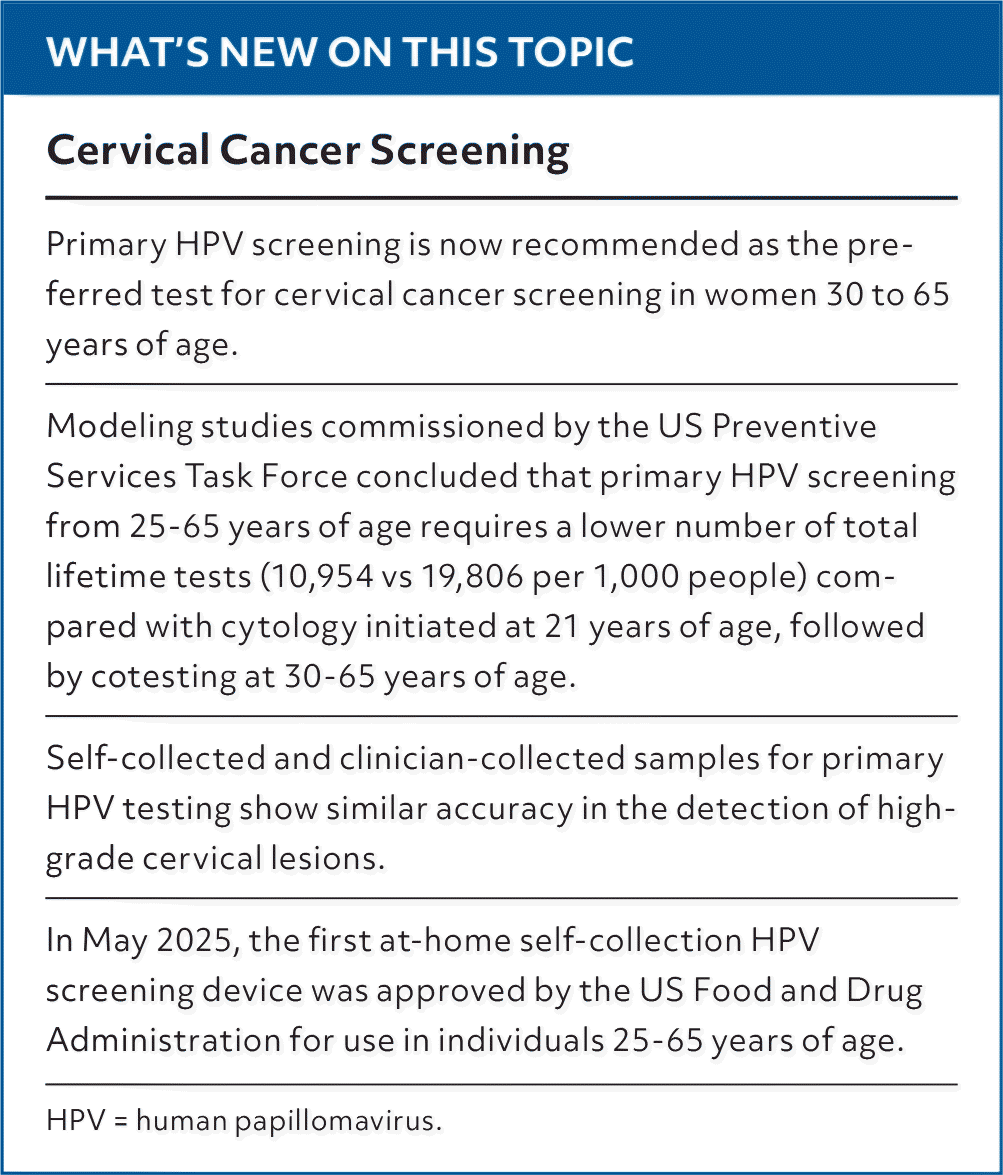
Globally, cervical cancer is the fourth most common cancer in women and other people with a cervix. Population-based screening, applied to asymptomatic average-risk individuals, remains the core of prevention and focuses on the risk of high-grade cervical precancers and cancers. In the United States, underscreening is associated with socioeconomic disparities. Screening strategies include cytology alone, cotesting, and primary human papillomavirus (HPV) screening. The American Cancer Society recommends initiating cervical cancer screening at 25 years of age; primary HPV testing every 5 years is the preferred method. The US Preventive Services Task Force 2024 draft recommendation endorses the use of primary HPV screening every 5 years as the preferred method beginning at 30 years of age and recommends cytology alone every 3 years in patients 21 to 29 years of age. Cytology alone and cotesting are acceptable screening methods. Conclusion of screening at 65 years of age is recommended for individuals without a history of high-grade cervical intraepithelial neoplasia or cervical cancer in the past 25 years and with adequate negative screening results at 60 and 65 years of age. Management of patients with abnormal cervical cancer screening results should follow the 2019 American Society for Colposcopy and Cervical Pathology (ASCCP) risk-based management consensus guidelines.

AMY WISER, MD, FAAFP, IBCLC, is a clinical associate professor in the Department of Family and Community Medicine at the University of Iowa Carver College of Medicine, Iowa City. At the time this article was written she was lead family medicine physician at Cascade AIDS Project, Prism Health, Portland, Oregon.

JEFFREY D. QUINLAN, MD, FAAFP, is professor, chair, and department executive officer in the Department of Family and Community Medicine at the University of Iowa Carver College of Medicine, Iowa City.

Address correspondence to Amy Wiser, MD, FAAFP, IBCLC, at amy-wiser@uiowa.edu.

Author disclosure: Dr. Amy Wiser disclosed a relationship with Merck as a consultant on HPV vaccination. All relevant financial relationships have been mitigated. All other individuals in a position to control content for this activity have indicated they have no relevant financial relationships to disclose. [corrected]

  1. 1.World Health Organization. Cervical cancer. March 5, 2024. Accessed November 4, 2025. https://www.who.int/news-room/fact-sheets/detail/cervical-cancer
  2. 2.IARC Working Group on the Evaluation of Cancer-Preventive Interventions. Cervical Cancer Screening: IARC Handbooks of Cancer Prevention. Vol 18. International Agency for Research on Cancer; 2022. Accessed November 4, 2025. https://publications.iarc.fr/Book-And-Report-Series/Iarc-Handbooks-Of-Cancer-Prevention/Cervical-Cancer-Screening-2022
  3. 3.Arbyn M, Weiderpass E, Bruni L, et al. Estimates of incidence and mortality of cervical cancer in 2018: a worldwide analysis. Lancet Glob Health. 2020;8(2):e191-e203.
  4. 4.American Cancer Society. Cancer facts & figures 2025. Accessed January 15, 2025. https://www.cancer.org/content/dam/cancer-org/research/cancer-facts-and-statistics/annual-cancer-facts-and-figures/2025/2025-cancer-facts-and-figures-acs.pdf
  5. 5.Brown ML, Klabunde CN, Cronin KA, et al. Challenges in meeting Healthy People 2020 objectives for cancer-related preventive services, National Health Interview Survey, 2008 and 2010. Prev Chronic Dis. 2014;11:e29.
  6. 6.Lee YW, Morgan JR, Fiascone S, et al. Underscreening, overscreening, and guideline-adherent cervical cancer screening in a national cohort. Gynecol Oncol. 2022;167(2):181-188.
  7. 7.Benard VB, Jackson JE, Greek A, et al. A population study of screening history and diagnostic outcomes of women with invasive cervical cancer. Cancer Med. 2021;10(12):4127-4137.
  8. 8.Beavis AL, Gravitt PE, Rositch AF. Hysterectomy-corrected cervical cancer mortality rates reveal a larger racial disparity in the United States. Cancer. 2017;123(6):1044-1050.
  9. 9.American Association for Cancer Research. AACR cancer disparities progress report 2024: achieving the bold vision of health equity. Accessed November 4, 2025. https://cancerprogressreport.aacr.org/wp-content/uploads/sites/2/2024/05/AACR_CDPR__2024.pdf
  10. 10.Yoo W, Kim S, Huh WK, et al. Recent trends in racial and regional disparities in cervical cancer incidence and mortality in United States. PLoS One. 2017;12(2):e0172548.
  11. 11.Buskwofie A, David-West G, Clare CA. A review of cervical cancer: incidence and disparities. J Natl Med Assoc. 2020;112(2):229-232.
  12. 12.Nguyen AQ, Mandigo M, Coleman JS. Cervical cancer screening for women with disabilities: time for a new approach? J Low Genit Tract Dis. 2018;22(4):318-319.
  13. 13.Peitzmeier SM, Khullar K, Reisner SL, et al. Pap test use is lower among female-to-male patients than non-transgender women. Am J Prev Med. 2014;47(6):808-812.
  14. 14.American Cancer Society. Lesbian, gay, bisexual, transgender, queer/questioning, intersex, asexual (LGBTQIA+) people and cancer fact sheet. October 2025. Accessed November 4, 2025. https://www.cancer.org/content/dam/cancer-org/cancer-control/en/booklets-flyers/lgbtq-people-with-cancer-fact-sheet.pdf
  15. 15.Center for Disease Control and Prevention. Human papillomavirus (HPV): clinical overview. July 9, 2024. Accessed November 4, 2025. https://www.cdc.gov/hpv/hcp/clinical-overview/index.html#cdc_clinical_overview_pat_coun-patient-counseling
  16. 16.Rerucha CM, Caro RJ, Wheeler VL. Cervical cancer screening. Am Fam Physician. 2018;97(7):441-448.
  17. 17.Campos NG, Demarco M, Bruni L, et al. A proposed new generation of evidence-based microsimulation models to inform global control of cervical cancer. Prev Med. 2021;144:106438.
  18. 18.Quinlan JD. Human papillomavirus: screening, testing, and prevention. Am Fam Physician. 2021;104(2):152-159.
  19. 19.Fontham ETH, Wolf AMD, Church TR, et al. Cervical cancer screening for individuals at average risk: 2020 guideline update from the American Cancer Society. CA Cancer J Clin. 2020;70(5):321-346.
  20. 20.Siebers AG, Klinkhamer PJJM, Grefte JMM, et al. Comparison of liquid-based cytology with conventional cytology for detection of cervical cancer precursors: a randomized controlled trial. JAMA. 2009;302(16):1757-1764.
  21. 21.Sherman ME, Lorincz AT, Scott DR, et al. Baseline cytology, human papillomavirus testing, and risk for cervical neoplasia: a 10-year cohort analysis. J Natl Cancer Inst. 2003;95(1):46-52.
  22. 22.US Preventive Services Task Force. Public comment on draft recommendation statement, draft evidence review, and draft modeling report: screening for cervical cancer. December 10, 2024. Accessed November 4, 2025. https://www.uspreventiveservicestaskforce.org/uspstf/announcements/public-comment-draft-recommendation-statement-draft-evidence-review-and-draft-modeling-report-screening-cervical-cancer
  23. 23.Perkins RB, Guido RS, Castle PE, et al.; 2019 ASCCP Risk-Based Management Consensus Guidelines Committee. 2019 ASCCP risk-based management consensus guidelines for abnormal cervical cancer screening tests and cancer precursors. J Low Genit Tract Dis. 2020;24(2):102-131.
  24. 24.Curry SJ, Krist AH, Owens DK, et al.; US Preventive Services Task Force. Screening for cervical cancer: US Preventive Services Task Force recommendation statement. JAMA. 2018;320(7):674-686.
  25. 25.US Food and Drug Administration. FDA roundup. May 17, 2024. Accessed November 4, 2025. https://www.fda.gov/news-events/press-announcements/fda-roundup-may-17-2024
  26. 26.Abbott Newsroom. Putting high-risk (HR) HPV to the test: A new generation of testing. April 23, 2025. Accessed November 4, 2025. https://www.abbott.com/corpnewsroom/products-and-innovation/putting-HPV-to-the-test-a-new-generation-of-testing.html
  27. 27.Wang J, Elfström KM, Dillner J. Human papillomavirus-based cervical screening and long-term cervical cancer risk: a randomised health-care policy trial in Sweden. Lancet Public Health. 2024;9(11):e886-e895.
  28. 28.Arbyn M, Castle PE, Schiffman M, et al. Meta-analysis of agreement/concordance statistics in studies comparing self- vs clinician-collected samples for HPV testing in cervical cancer screening. Int J Cancer. 2022;151(2):308-312.
  29. 29.Polman NJ, Ebisch RMF, Heideman DAM, et al. Performance of human papillomavirus testing on self-collected versus clinician-collected samples for the detection of cervical intraepithelial neoplasia of grade 2 or worse: a randomised, paired screen-positive, non-inferiority trial. Lancet Oncol. 2019;20(2):229-238.
  30. 30.Crane L, Fitzpatrick MB, Sutton E, et al. Evaluation of a self-collected device for human papillomavirus screening to increase cervical cancer screening. J Low Genit Tract Dis. 2025;29(1):1-5.
  31. 31.National Cancer Institute. NCI cervical cancer Last Mile initiative. Accessed November 4, 2025. https://prevention.cancer.gov/major-programs/nci-cervical-cancer-last-mile-initiative
  32. 32.National Cancer Institute. Self-collection for HPV testing to improve cervical cancer prevention (SHIP) trial (LMI-001-A-S02). Accessed November 4, 2025. https://www.cancer.gov/research/participate/clinical-trials-search/v?id=NCI-2024-07726
  33. 33.Winer RL, Lin J, Anderson ML, et al. Strategies to increase cervical cancer screening with mailed human papillomavirus self-sampling kits: a randomized clinical trial. JAMA. 2023;330(20):1971-1981.
  34. 34.Fitzpatrick MB, Behrens CM, Hibler K, et al. Clinical validation of a vaginal cervical cancer screening self-collection method for at-home use: a nonrandomized clinical trial. JAMA Netw Open. 2025;8(5):e2511081.
  35. 35.Moscicki AB, Flowers L, Huchko MJ, et al. Updated review for guidelines for cervical cancer screening in immunosuppressed women without HIV infection. J Low Genit Tract Dis. 2025;29(2):168-179.
  36. 36.National Institutes of Health, HIV Medicine Association, and Infectious Diseases Society of America. Guidelines for the prevention and treatment of opportunistic infections in adults and adolescents with HIV. Accessed November 4, 2025. https://clinicalinfo.hiv.gov/sites/default/files/guidelines/documents/adult-adolescent-oi/guidelines-adult-adolescent-oi.pdf
  37. 37.Perkins RB, Wolf AMD, Church TR, et al. Self-collected vaginal specimens for human papillomavirus testing and guidance on screening exit: an update to the American Cancer Society cervical cancer guideline. CA Cancer J Clin. 2026;76(1):1-12.
  38. 38.Wentzensen N, Massad LS, Clarke MA, et al. Self-collected vaginal specimens for HPV testing: recommendations from the Enduring Consensus Cervical Cancer Screening Guidelines Committee. J Low Genit Tract Dis. 2025;29(2):144-152.
  39. 39.Huh WK, Ault KA, Chelmow D, et al. Use of primary high-risk human papillomavirus testing for cervical cancer screening: interim clinical guidance. Gynecol Oncol. 2015;136(2):178-182.
  40. 40.Clarke MA, Wentzensen N, Perkins RB, et al.; Enduring Consensus Cervical Cancer Screening and Management Guidelines Committee. Recommendations for use of p16/Ki67 dual stain for management of individuals testing positive for human papillomavirus. J Low Genit Tract Dis. 2024;28(2):124-130.
  41. 41.Massad LS, Clarke MA, Perkins RB, et al.; Enduring Consensus Cervical Cancer Screening and Management Guidelines Committee. Applying results of extended genotyping to management of positive cervicovaginal human papillomavirus test results: enduring guidelines. J Low Genit Tract Dis. 2025;29(2):134-143.
  42. 42.Cintec Plus Cytology [package insert]. Roche; 2019. Accessed November 4, 2025. https://www.accessdata.fda.gov/cdrh_docs/pdf19/P190024C.pdf
  43. 43.Wentzensen N, Schwartz L, Zuna RE, et al. Performance of p16/Ki-67 immunostaining to detect cervical cancer precursors in a colposcopy referral population. Clin Cancer Res. 2012;18(15):4154-4162.
  44. 44.Sawaya GF, Kulasingam S, Denberg TD, et al.; Clinical Guidelines Committee of the American College of Physicians. Cervical cancer screening in average-risk women: best practice advice from the clinical guidelines committee of the American College of Physicians. Ann Intern Med. 2015;162(12):851-859.
  45. 45.Jin XW, Lipold L, Foucher J, et al. Cost-effectiveness of primary HPV testing, cytology and cotesting as cervical cancer screening for women above age 30 years. J Gen Intern Med. 2016;31(11):1338-1344.
  46. 46.US Preventive Services Task Force. Draft evidence review. Cervical cancer: screening. December 10, 2024. Accessed November 4, 2025. https://www.uspreventiveservicestaskforce.org/uspstf/document/draft-evidence-review/cervical-cancer-screening-adults-adolescents
  47. 47.Nuovo J, Melnikow J, Howell LP. New tests for cervical cancer screening. Am Fam Physician. 2001;64(5):780-786.

Copyright © 2026 by the American Academy of Family Physicians.

This content is owned by the AAFP. A person viewing it online may make one printout of the material and may use that printout only for his or her personal, non-commercial reference. This material may not otherwise be downloaded, copied, printed, stored, transmitted or reproduced in any medium, whether now known or later invented, except as authorized in writing by the AAFP. See permissions for copyright questions and/or permission requests.