

WHAT IS A CERVIX?
The cervix is the lowest part of your uterus or womb where it joins the vagina. It allows for bleeding during your period and opens to let the baby out during birth. It is pink and the size of a coin. Cancer can develop in the cervix.
WHO SHOULD BE SCREENED FOR CERVICAL CANCER?
Women and people with a cervix should be screened for cervical cancer. Even people who have had the human papillomavirus (HPV) vaccine should be tested if they have a cervix.
- Screening should start at 21 years of age and continue until at least 65 years of age.
- Screening can stop at 65 years of age for many people.
- Some people may need screening after 65 years of age, depending on their history.
- Depending on the test, screening should take place every 3 to 5 years.
WHY GET CERVICAL CANCER SCREENING?
Cervical cancer screening has saved many lives. Screening helps find changes of the cervix that are not normal and can develop into cancer. It can find these changes before you have any symptoms. Treating these changes can help prevent cancer from happening later.
WHAT IS HPV?
HPV is a very common infection that most people get at some point in their lives, usually through sexual contact. It occurs in people of any age, sexual orientation, and gender identity. Infection can occur regardless of the number of sex partners they have had. Most HPV infections do not cause symptoms and go away on their own. High-risk HPV infections that do not go away after many years can cause cervical cancer; this time allows for diagnosis and treatment before cancer develops.
WHAT IS PRIMARY HPV TESTING?
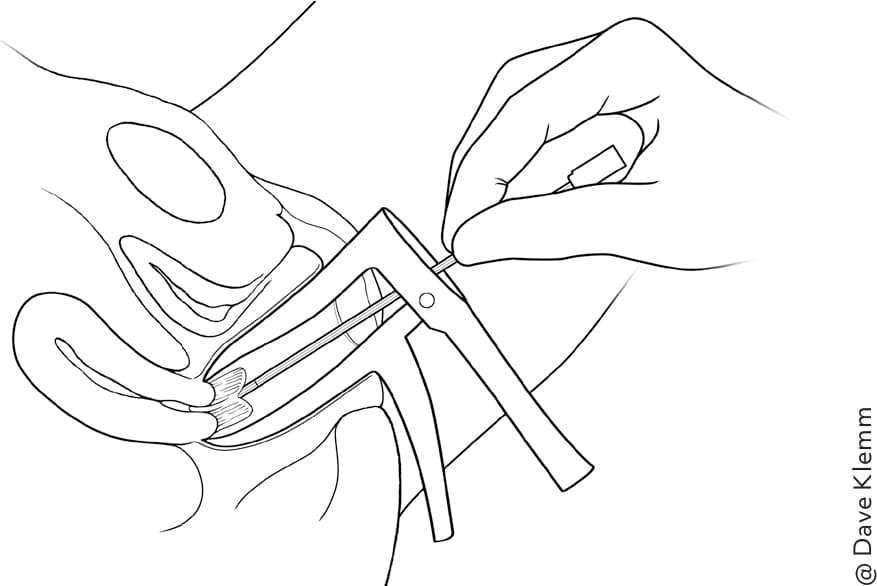
Primary HPV testing is a way to screen for cervical cancer. It is better at predicting your risk of cervical cancer than the Pap test. Primary HPV testing is done during a pelvic exam, where a clinician collects cells from your cervix (Drawing 1). Primary HPV testing is recommended by experts.
DRAWING 1
WHAT IS A PRIMARY HPV SELF-COLLECTED SAMPLE?
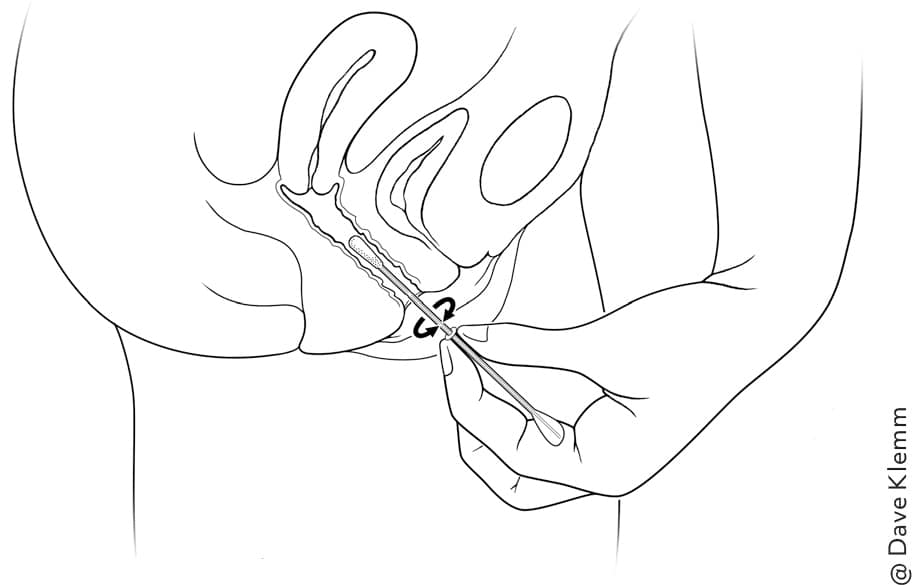
A primary HPV self-collected sample is a new way to screen for cervical cancer. You can collect your own sample from your vagina without a pelvic exam (Drawing 2). The results are as accurate as those collected by a doctor. If the results are abnormal, you will need a pelvic exam and further testing.
DRAWING 2
WHO CAN USE A SELF-COLLECTED SAMPLE?
You may be able to use a self-collected sample if you:
- Are at average risk of cervical cancer.
- Are not having symptoms, like abnormal bleeding or discharge.
- Are not on your period.
- Are not pregnant.
- Have not used any vaginal products in the past 2 days.
- Do not have a history of cervical cancer or HIV.
Self-collection may be preferred for people with a history of trauma or those who find pelvic exams extremely uncomfortable.
HOW DO I GET A SELF-COLLECTED SAMPLE?
Your doctor will give you a kit with a test tube and a brush or swab. Follow these steps:
Read the full article
Get immediate access, anytime, anywhere.
Choose a single article, issue, or full-access subscription.
Earn up to 14 CME credits per issue.
