Erectile dysfunction can result from organic, psychogenic, or substance-induced causes. Phosphodiesterase type 5 inhibitors are the mainstay of medical treatment, although other medications and interventions, such as intracavernosal injection therapy and constriction devices, can also be used. Priapism is defined as a prolonged erection of the penis continuing after or irrespective of sexual stimulation. It may result from conditions causing ischemic states or dysregulation of arterial inflow. Acute ischemic priapism is a medical emergency and can result in irreversible erectile dysfunction. Nonischemic priapism is not an emergent condition and should resolve spontaneously. Phimosis, or inability to fully retract the penile prepuce over the glans, is a congenital or acquired condition and can cause discomfort. Physiologic phimosis usually resolves by age 16 years, whereas pathologic phimosis may require circumcision for definitive treatment. Paraphimosis, an emergent condition, results from the foreskin becoming trapped proximal to the coronal sulcus. Treatment consists of manual reduction. In Peyronie disease, fibrous plaques develop in the penile shaft, subsequently causing deformity of the penis when erect. Surgical and nonsurgical treatment options, such as collagenase or intralesional injections, are available.
Case 2. VK is a 19-year-old foreign exchange student. He reports that since starting college, he has experimented with alcohol and nicotine vapes and, more recently, has become sexually active. He says he felt embarrassed when one of his partners commented that most American men are circumcised, as this practice is uncommon in his home country. Since then, he has had difficulty achieving an erection with another person present. He denies pain or difficulty with erection or ejaculation when masturbating. A chaperoned physical examination reveals a tight foreskin hood that does not easily retract over the glans but is otherwise unremarkable.
Erectile Dysfunction
DEFINITION AND EPIDEMIOLOGY
The American Urological Association (AUA) defines erectile dysfunction (ED) as the inability to achieve or maintain an erection sufficient for satisfactory sexual activity.1 The Diagnostic and Statistical Manual of Mental Disorders, 5th ed., text revision, criteria for ED include difficulty maintaining an erection during sexual activity or to complete sexual activity, distress from the symptoms, and presence of symptoms for 6 months or longer.2
ED affects approximately 50% of men ages 40 to 70 years3 (Figure 14). Prevalence figures for ED are subject to reporting bias and vary by disease severity, study, and country. Late-onset hypogonadism can further confound the relationship between sexual dysfunction and aging.5 Although patients with ED may report normal libido and ability to reach orgasm, difficulty with the arousal phase of the sexual cycle often causes emotional distress and interpersonal conflict for patients and their partners.6,7,8–10
FIGURE 1
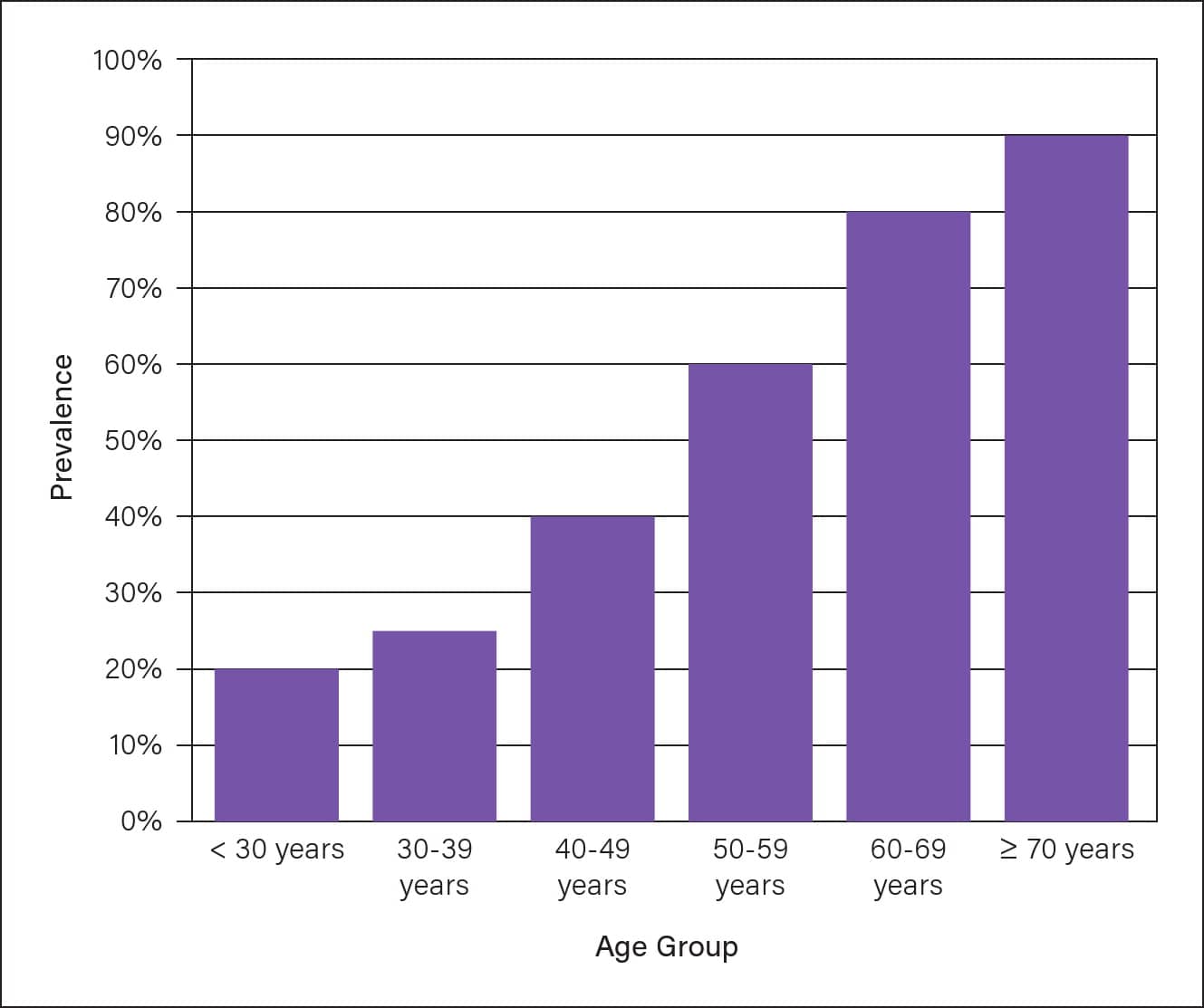
Prevalence of Erectile Dysfunction by Age Group
Information from reference 4.
PATHOPHYSIOLOGY, CAUSES, RISK FACTORS, AND COMORBIDITIES
Erection of the penis is a parasympathetic process. It occurs when smooth muscle relaxation allows for increased blood flow into the two cylinders of spongy tissue in the penile shaft. Compromised blood flow, inadequate release of nitric oxide (which assists with vasodilation), and impaired nerve impulses can contribute to the pathophysiology of ED.3,11
Vasculogenic disease is the most common organic cause of ED.3 (Table 112,13). Risk factors include sedentary lifestyle, smoking tobacco, and obesity.11,12 Aging is an independent risk factor.11 Hypertension and type 2 diabetes are common comorbid conditions.12 Because ED can be an early indicator of cardiovascular disease, men with ED should be considered at risk until proven otherwise.1,12
Read the full edition
Get immediate access, anytime, anywhere.
Choose a single edition, 1-year or 2-year full-access subscription.
Earn 4 CME credits for this edition.