
Small bowel obstruction and ileus are common surgical concerns that family physicians may encounter in a consultative role with surgical specialties. The most common cause of small bowel obstruction in adults and children is adhesions, followed by internal and external hernias. Postoperative ileus is a common complication that can occur after any abdominal surgery; however, with the implementation of enhanced recovery after surgery protocols, the incidence is decreasing. For small bowel obstruction, treatment focuses on gastric decompression, fluid resuscitation, electrolyte replacement, and pain control, which may include opioid therapy initially. Use of oral contrast medium studies for small bowel obstructions managed nonoperatively is now considered the standard of care after appropriate decompression and fluid resuscitation in the low-risk patient. Operative management is recommended for patients with hemodynamic instability, surgery in the previous 6 weeks, or signs of peritonitis, and for those in whom the condition does not resolve with an initial nonoperative approach. Treatment of postoperative ileus is largely supportive, entailing electrolyte correction, intravenous fluids as needed, and pain control.
Case 4. NB is an 85-year-old with osteoporosis and no history of abdominal surgery who is admitted to the hospital after she slipped and fell in the shower. She has a new burst fracture of her T10 vertebral body. She undergoes T10 kyphoplasty without complication on hospital day 2. She is given oxycodone, cyclobenzaprine, pregabalin, and acetaminophen for pain control. At discharge on postoperative day 3, she reports significant constipation, and the following day, she develops abdominal pain and distention. You see her in the office for hospital follow-up, and on examination, bowel sounds are absent.
Small Bowel Obstruction
Small bowel obstruction is one of the more common indications for emergent surgery and is defined as narrowing of the bowel lumen with delayed or no passage of luminal contents. It has a high morbidity rate and an in-hospital mortality rate of up to 3% per incident.1 In the United States, as many as 300,000 operations are performed yearly for small bowel obstruction.2 Of note, this condition should always be included in the differential diagnosis for patients presenting with acute-onset abdominal pain. The differential diagnosis for small bowel obstruction can be extensive (Table 13,4) and requires a dedicated history, physical examination, laboratory evaluation, and imaging.
Table 1 Select Differential Diagnosis for Small Bowel Obstruction and Ileus
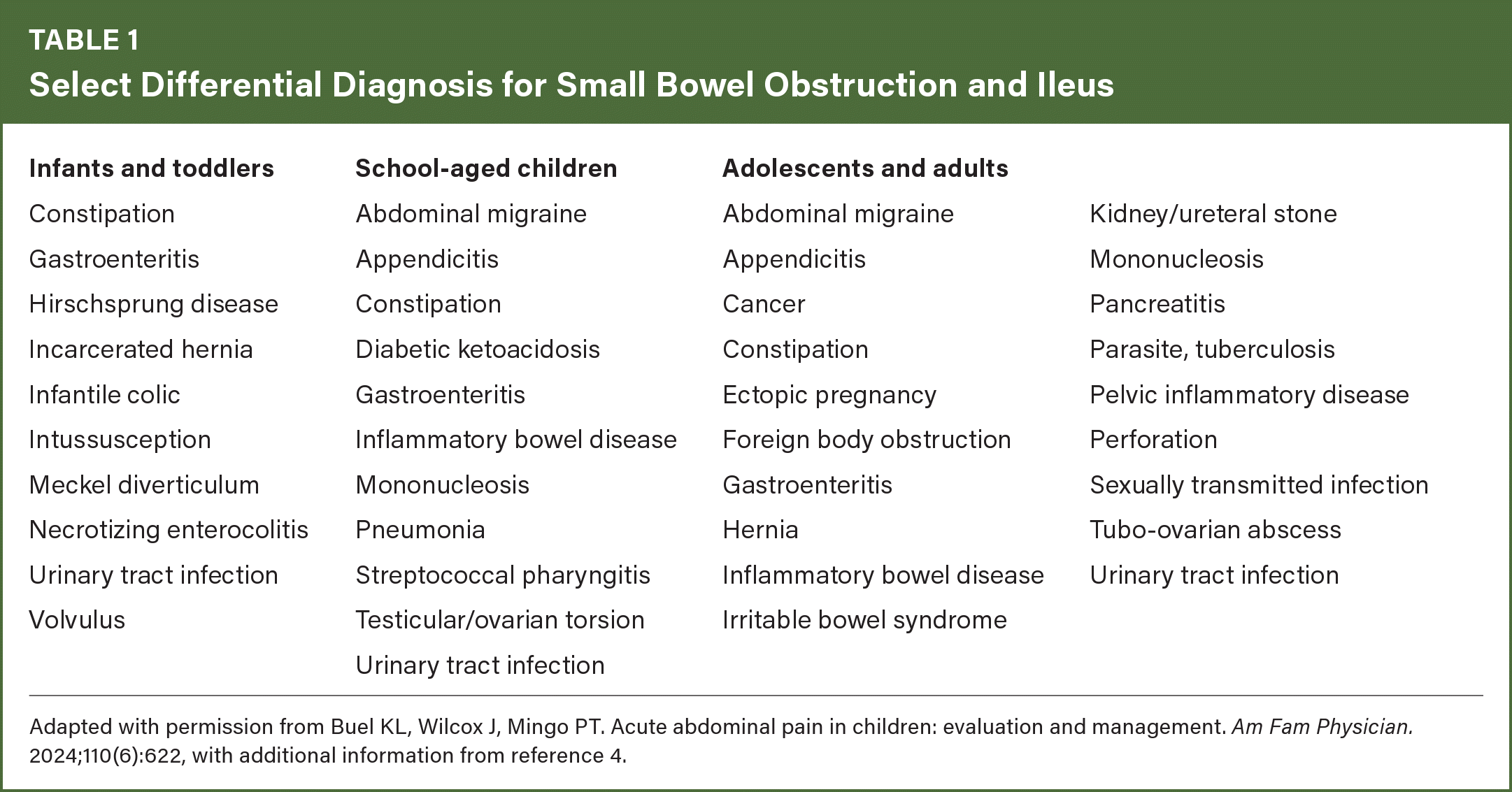
| Infants and toddlers | School-aged children | Adolescents and adults | |
| Constipation | Abdominal migraine | Abdominal migraine | Kidney/ureteral stone |
| Gastroenteritis | Appendicitis | Appendicitis | Mononucleosis |
| Hirschsprung disease | Constipation | Cancer | Pancreatitis |
| Incarcerated hernia | Diabetic ketoacidosis | Constipation | Parasite, tuberculosis |
| Infantile colic | Gastroenteritis | Ectopic pregnancy | Pelvic inflammatory disease |
| Intussusception | Inflammatory bowel disease | Foreign body obstruction | Perforation |
| Meckel diverticulum | Mononucleosis | Gastroenteritis | Sexually transmitted infection |
| Necrotizing enterocolitis | Pneumonia | Hernia | Tubo-ovarian abscess |
| Urinary tract infection | Streptococcal pharyngitis | Inflammatory bowel disease | Urinary tract infection |
| Volvulus | Testicular/ovarian torsion | Irritable bowel syndrome | |
| Urinary tract infection | |||
Adapted with permission from Buel KL, Wilcox J, Mingo PT. Acute abdominal pain in children: evaluation and management. Am Fam Physician. 2024;110(6):622, with additional information from reference 4.
Read the full edition
Get immediate access, anytime, anywhere.
Choose a single edition, 1-year or 2-year full-access subscription.
Earn 4 CME credits for this edition.