

Calcium is an essential element for normal physiologic function. Normal serum calcium is maintained within a close range of 8.4 to 10.4 mg/dL, and acute or severe changes can result in serious cardiac, musculoskeletal, and neurologic consequences. Normal calcium levels are maintained by interactions of parathyroid hormone and vitamin D. Parathyroid hormone regulates calcium levels via bone resorption, renal calcium reabsorption, and enhanced calcium absorption in the small intestine. Causes of hypocalcemia include hypoparathyroidism (often postsurgical), severe chronic kidney disease, and vitamin D deficiency. Laboratory testing for serum parathyroid hormone, kidney function, vitamin D metabolites, and serum phosphorus can help differentiate among causes. Acutely symptomatic patients require inpatient treatment with intravenous calcium gluconate, cardiac monitoring, and correction of hypomagnesemia. Hypercalcemia is most often due to primary hyperparathyroidism or malignancy. In the evaluation, hypercalcemia should first be confirmed by measurement of ionized calcium or repeat measurement of total serum calcium and correction for albumin. Obtaining a serum parathyroid hormone level is the next step. Asymptomatic, chronic mild hypercalcemia is often caused by primary hyperparathyroidism, which can be observed or treated surgically. Patients with severe hypercalcemia may have profound dehydration and require inpatient treatment with intravenous fluids, bisphosphonates, and calcitonin.
Wipperman J. Acid-Base and Electrolyte Disorders: Calcium Disorders. FP Essent. 2026;565:30-37.
Case 4. SG is a 56-year-old patient who has recently been treated for a third kidney stone in 2 years. You order a metabolic biochemistry panel and find that her calcium level is mildly increased at 12 mg/dL (3 mmol/L).
Physiology
Calcium is an essential element that plays a critical role in cardiac, hormonal, musculoskeletal, and neurologic functions. Precise control of serum calcium requires minute-to-minute adjustments to maintain homeostasis. Mild changes in the calcium level are relatively asymptomatic, but acute or severe changes can lead to serious consequences.
Normal calcium levels are maintained by interactions of parathyroid hormone (PTH) and vitamin D (Figure 11). In the parathyroid glands, the calcium-sensing receptor detects changes in serum ionized calcium and either stimulates PTH release if there is hypocalcemia or downregulates PTH release with hypercalcemia.2 PTH causes osteoclast-mediated bone resorption, increases renal calcium reabsorption, and enhances calcium absorption in the small intestine via increased renal secretion of 1,25-dihydroxyvitamin D (calcitriol), culminating in increased serum calcium. Decreased levels of PTH exert the opposite effects and lower serum calcium.
Figure 1
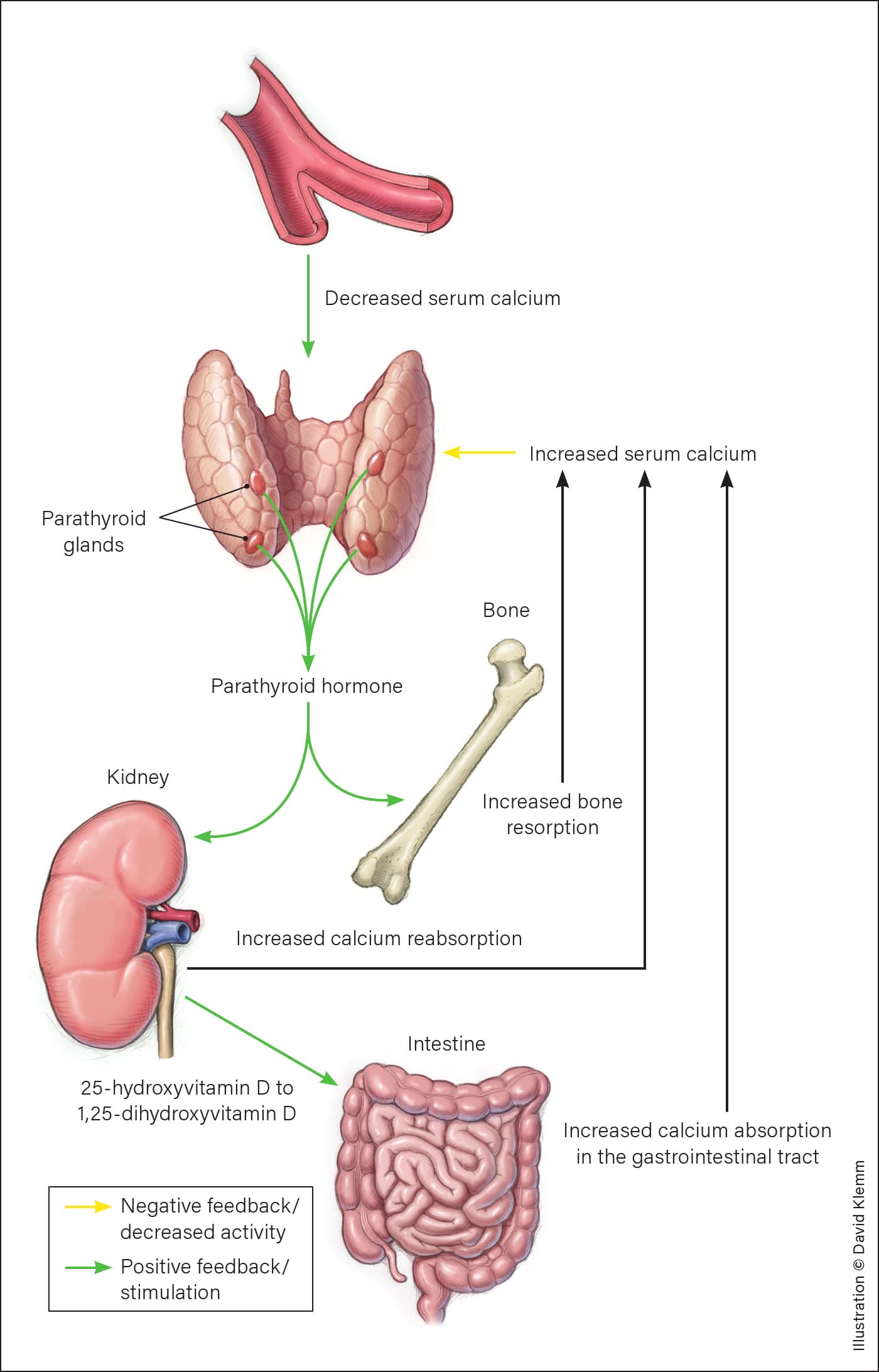
Figure 1. Calcium homeostasis.
Calcium-sensing receptors of parathyroid cells respond to serum calcium level and change with increased release (hypocalcemia) or suppression (hypercalcemia) of parathyroid hormone (PTH). PTH stimulates bone resorption, which increases serum calcium and phosphorus. In the kidney, PTH stimulates reabsorption of calcium and promotes phosphorus excretion. PTH also helps convert 25-hydroxyvitamin D to 1,25-dihydroxyvitamin D in the kidneys, which then increases intestinal transport of calcium and phosphorus.
Illustration © David Klemm
Adapted with permission from Michels TC, Kelly KM. Parathyroid disorders. Am Fam Physician. 2013;88(4):250.
PTH also stimulates renal phosphorus excretion, maintaining normal serum phosphorus levels despite increased bone resorption. Magnesium is required for normal parathyroid function, and serum levels less than 1 mg/dL (0.41 mmol/L) are associated with PTH resistance and impaired secretion.3
Read the full edition
Get immediate access, anytime, anywhere.
Choose a single edition, 1-year or 2-year full-access subscription.
Earn 4 CME credits for this edition.
