
Already a member or subscriber? Sign in now

Four AI-Enhanced Mobile Apps to Assist Primary Care Physicians

DAVID REBEDEW, MD, FAAFP, DABOM, CMD

FPM. 2025;32(4):15-20.

Author disclosure: no relevant financial relationships.

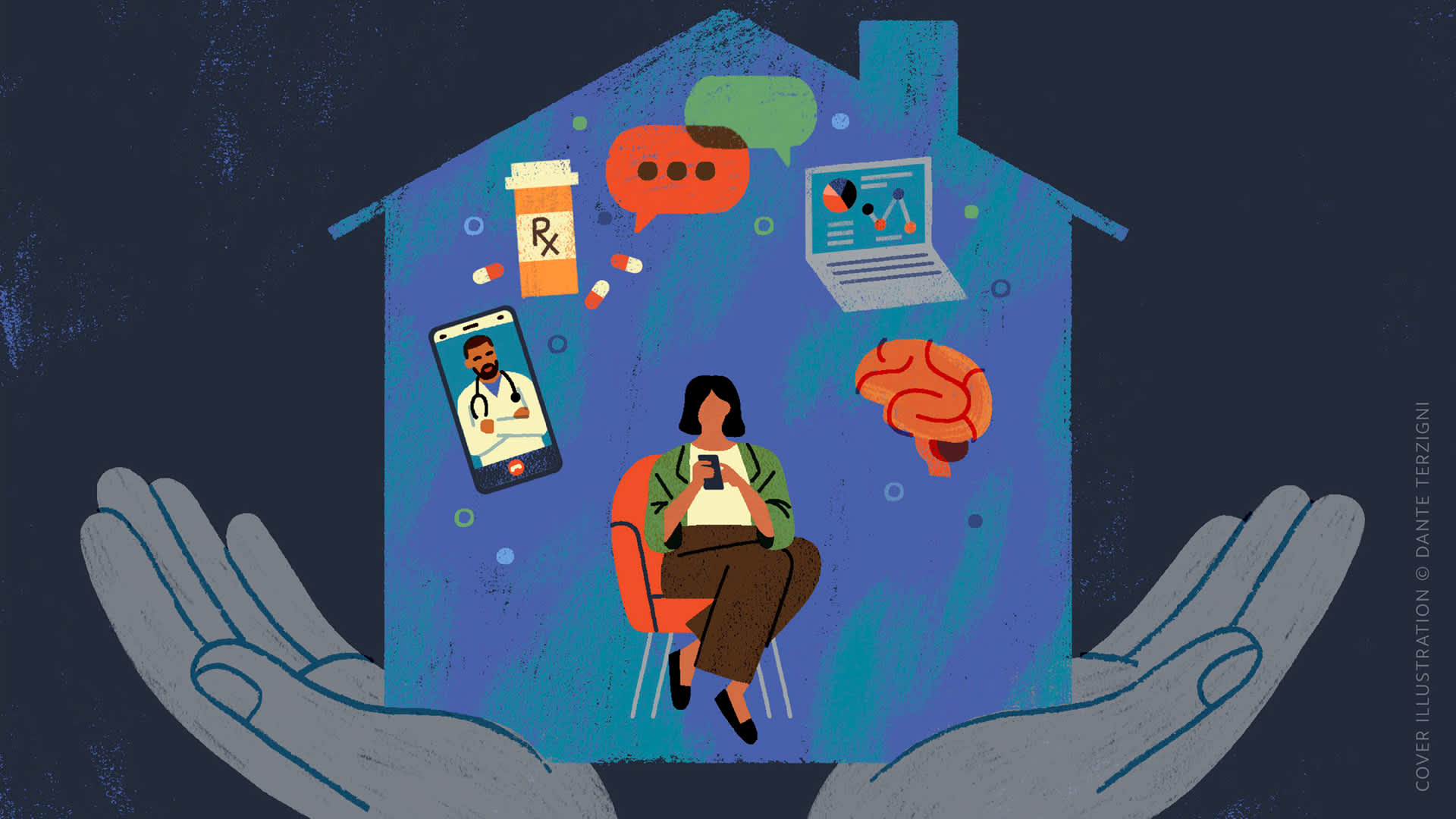
These apps can help you find evidence-based answers, generate prior authorization requests, create patient education materials, and more in seconds.

ai apps

Generative artificial intelligence (AI) can save physicians time in several practical ways, including drafting prior authorization requests, explaining test results in more patient-friendly language, and serving as a scribe.1 But the burgeoning number of AI-enhanced apps is difficult to sort through, and choosing the best tool for the task can be even more daunting. It’s important to choose wisely because AI programs are only as good as the data they’re trained on and are known to sometimes create false information. Programmers call these “hallucinations,” and they can include creating citations for articles that don’t exist.2

This article attempts to guide physicians to relatively reliable and trustworthy tools by reviewing four medical apps using FPM’s “SPPACES” criteria. Each of them is a five-star app in my opinion, but for more context I’ve included their App Store (Apple) and Google Play (Android) user ratings as of May 30, 2025. Ratings are based on a scale of 1–5, with five being the best.

SPPACES APP REVIEW CRITERIA

  • S – Source or developer of app
  • P – Platforms available
  • P – Pertinence to primary care practice
  • A – Authoritativeness/accuracy/currency of information
  • C – Cost
  • E – Ease of use
  • S – Sponsor(s)

KEY POINTS

  • These four mobile apps have artificial intelligence (AI) features that can help with clinical decision making, writing patient education materials, and even CME.
  • AI programs are only as accurate as the data they’re trained on. Some are better than others for specific tasks, e.g., Pathway is trained on only peer-reviewed journals and therefore best for clinical questions.
  • As with all AI tools, it’s recommended to check their output before you put it into practice.

Dr. Rebedew is a family physician at Mercyhealth in Janesville, Wisc.

Send comments to fpmedit@aafp.org, or add your comments to the article online.

Author disclosure: no relevant financial relationships.

  1. 1.Waldren SE. The promise and pitfalls of AI in primary care. Fam Pract Manag. 2024;31(2):27-31.
  2. 2.Hatem R, Simmons B, Thornton JE. A call to address AI “hallucinations” and how healthcare professionals can mitigate their risks. Cureus. 2023;15(9):e44720.
  3. 3.Editorial policy. Pathway.MD website. Updated 2024. Accessed May 30, 2025. https://www.pathway.md/editorial-policy
  4. 4.Mullie L. Pathway sets a new benchmark for specialty medical AI. Pathway.MD blog. May 2, 2025. Accessed May 29, 2025. https://www.pathway.md/blog/pathway-sets-a-new-benchmark-for-specialty-medical-ai
  5. 5.Sanii RY, Kasto JK, Wines WB, Mahylis JM, Muh SJ. Utility of artificial intelligence in orthopedic surgery literature review: a comparative pilot study. Orthopedics. 2024;47(3):e125-e130.
  6. 6.Mustuloğlu Ş, Deniz BP. Evaluation of chatbots in the emergency management of avulsion injuries. Dent Traumatol. Jan. 24, 2025.
  7. 7.Kumar RP, Sivan V, Bachir H, et al. Can artificial intelligence mitigate missed diagnoses by generating differential diagnoses for neurosurgeons? World Neurosurg. 2024;187:e1083-e1088.
  8. 8.Singh J, Sriram A. Perplexity AI in talks to raise funds at $18 billion valuation, source says. Reuters. March 20, 2025. Accessed May 30, 2025. https://www.reuters.com/technology/artificial-intelligence/perplexity-ai-talks-raise-funds-18-billion-valuation-bloomberg-news-reports-2025-03-20/

Copyright © 2026 by the American Academy of Family Physicians.

This content is owned by the AAFP. A person viewing it online may make one printout of the material and may use that printout only for his or her personal, non-commercial reference. This material may not otherwise be downloaded, copied, printed, stored, transmitted or reproduced in any medium, whether now known or later invented, except as authorized in writing by the AAFP. See permissions for copyright questions and/or permission requests.