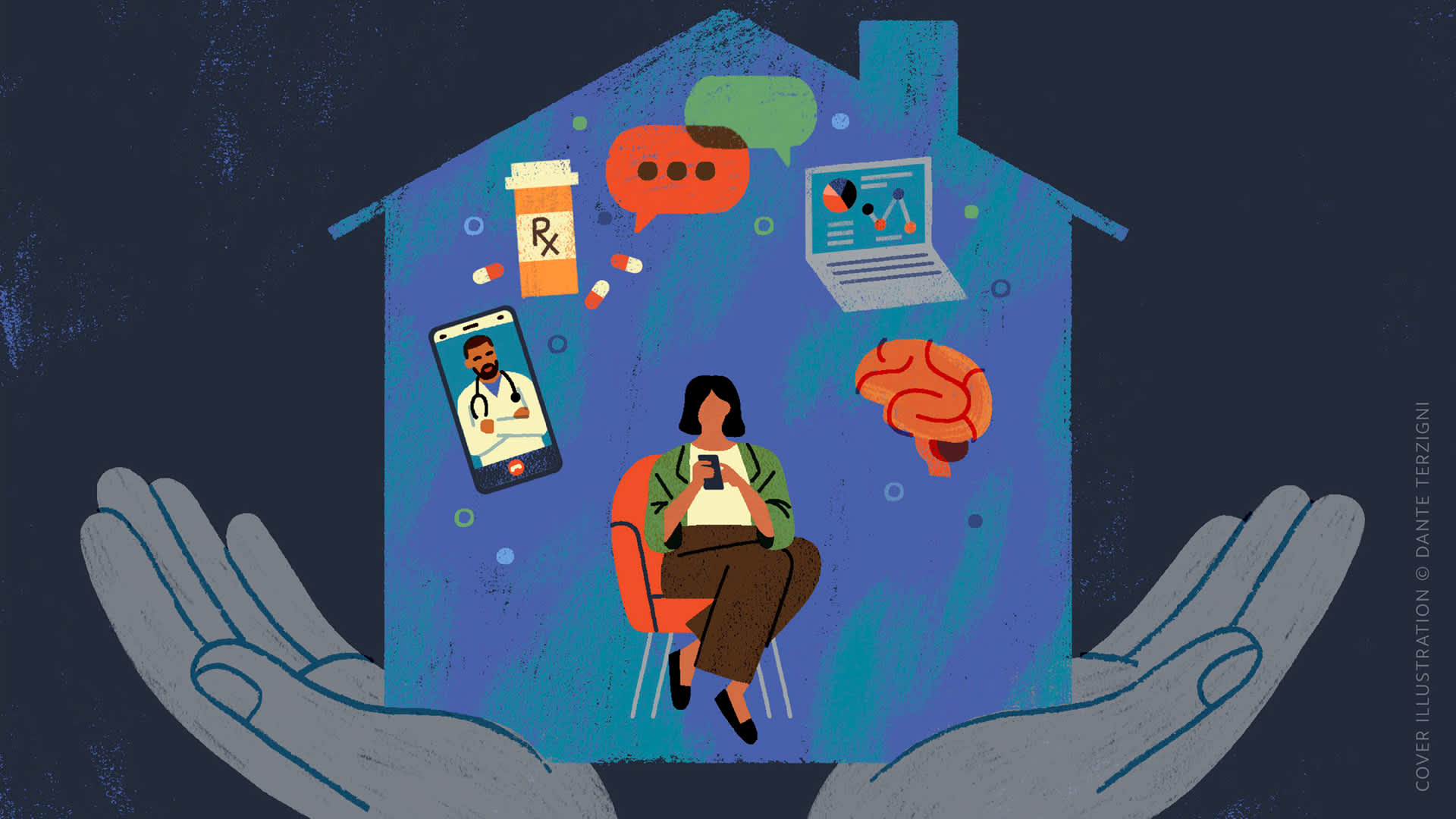

Visit note templates optimized for billing took some of the human touch out of primary care. AI can help us get it back.

The foundation of good medicine is good documentation. It tells the story of the patient, captures our clinical reasoning, and supports continuity of care. Yet for many of us in family medicine, writing notes — once a thoughtful, integrative process — has become a source of professional dissatisfaction and burnout.1 Strapped for time, many of us over-rely on templates influenced by billing requirements, which often leads to records that are bloated, impersonal, and disconnected from the heart of the clinical encounter.2
AI TO THE RESCUE
Over the past year, our practice has been using ambient artificial intelligence (AI) voice-recognition software as a solution to this growing disconnect. The AI scribe passively listens to patient encounters and drafts progress notes that are accurate, contextual, and closely aligned with the patient narrative, which we then review, edit as needed, and approve.3 The change has been nothing short of transformative, with three key benefits:
Improved accuracy: By transcribing the actual dialogue between patient and clinician, ambient AI reduces reliance on memory and minimizes transcription errors. Clinical details are captured more faithfully, leading to more accurate and individualized documentation.4
Enhanced efficiency: With AI-generated drafts to work from, we’ve saved an estimated one to two hours per day on documentation. We now spend that time on higher-value tasks such as coordinating care, teaching students and residents, or simply decompressing.
Reduced burnout: By shifting the documentation workload away from the keyboard and back into the context of the patient visit, ambient AI alleviates one of the most exhausting aspects of our jobs.
This shift has brought us back to the essence of family medicine. We find ourselves making more eye contact, listening more attentively, and thinking more clearly during patient visits. With the documentation process happening in the background, we’re able to be fully present in the room. Instead of toggling between checkboxes, we’re tuning in to patient emotions, concerns, and priorities — elements that rarely make it into templated notes but are central to compassionate, comprehensive primary care.
Ambient AI does not replace clinical judgment or human presence. We still finalize the notes. But we do so from a stronger foundation: the patient’s own words and experiences, rather than a dropdown menu or preloaded template.
KNOW AI’S LIMITS AS WELL AS ITS STRENGTHS
Read the full article
Get immediate access, anytime, anywhere.
Choose a single article, issue, or full-access subscription.
Earn up to 5 CME credits per issue.