
Am Fam Physician. 2023;108(1):91-92
Author disclosure: No relevant financial relationships.
A newborn was admitted to the nursery following an assisted delivery. The 24-year-old mother (primigravida) had an uneventful pregnancy. After delivery, the newborn had inconsolable crying and intermittent tachypnea. She was placed on pulse oximetry. The nurse reported a heart rate of 140 beats per minute, with an oxygen saturation of 99% on room air. The family medicine resident was called to the bedside.
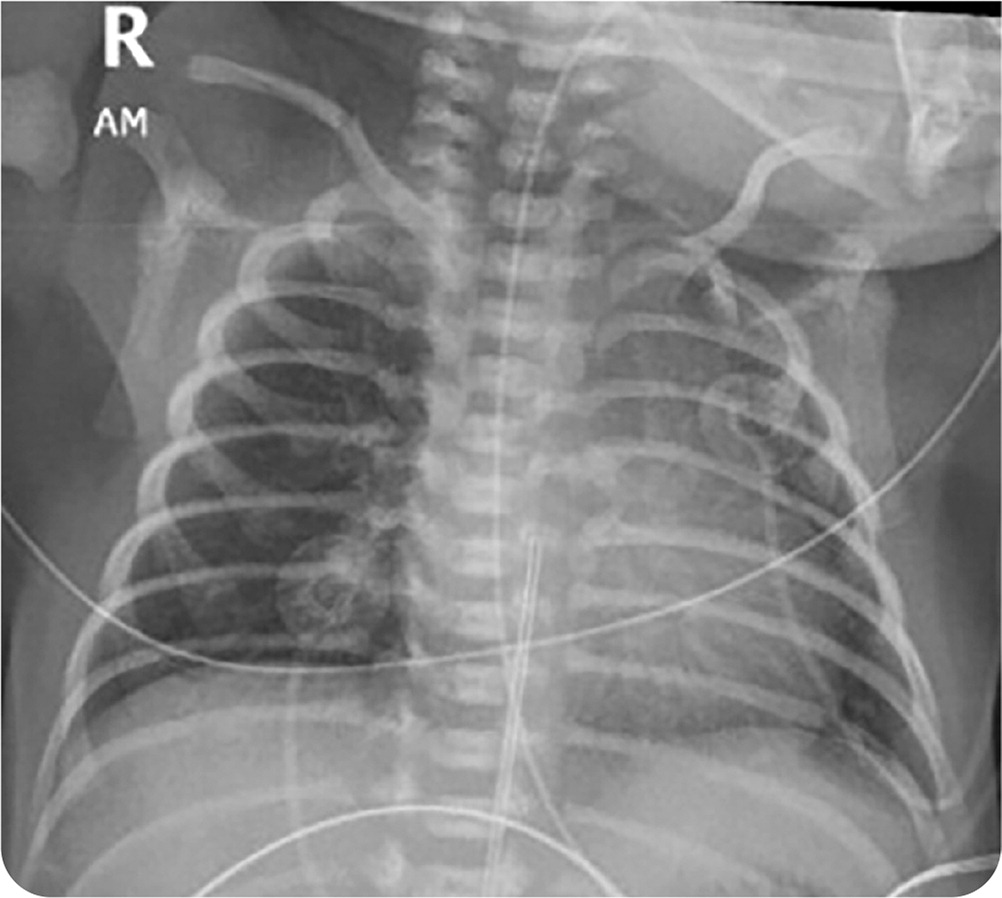
On examination, the chest was clear to auscultation. No cardiac murmur or radiofemoral delay were present. The infant had normal tone in all extremities. Blood pressure measurements in all four extremities were similar. Chest radiography was performed (Figure 1).
Question
Based on the patient's history and physical examination findings, which one of the following is the best course of action?
A. Counsel and reassure the parents.
B. Obtain urgent echocardiography.
C. Perform complete workup for sepsis.
D. Transfer patient to the neonatal intensive care unit.
Discussion
The answer is A: counsel and reassure the parents. A right midclavicular fracture was found on careful review of the radiograph. A neonatal clavicular fracture may occur during instrumental delivery, as in this case, and is often unavoidable. Macrosomia with higher birth weight is a common risk factor. The fracture usually heals spontaneously without treatment and has a good prognosis overall. Intervention is rarely indicated for nondisplaced fractures. Parental counseling and reassurance are important to alleviate concerns and anxiety.1–4
Cardiac conditions may cause inconsolable crying in the neonatal period. This newborn had good oxygen saturation on room air with no cyanosis. Therefore, echocardiography is not indicated.
Central nervous system infection can also present as inconsolable crying. The newborn was afebrile, had a normal heart rate, and had normal oxygen saturation. The neurologic examination was normal, making meningitis unlikely. A complete workup for sepsis is not warranted.
Because the infant was clinically stable on room air, escalating support is not required. A transfer to the neonatal intensive care unit would separate the newborn from the mother and may create further anxiety.
