

Obesity remains a major challenge in primary care. By 2030, it is projected that nearly one-half of adults in the United States will have obesity (body mass index of at least 30 kg/m2), and one-fourth will have severe obesity (body mass index of at least 35 kg/m2).1 Weight loss of 10% or more can lead to remission of type 2 diabetes and a significant reduction in cardiovascular risk, but achieving and sustaining weight loss with lifestyle interventions alone is difficult.2
The new generation of obesity management medications, glucagon-like peptide-1 (GLP-1) receptor agonists liraglutide (Saxenda) and semaglutide (Wegovy), as well as dual GLP-1 and glucose-dependent insulinotropic polypeptide receptor agonist tirzepatide (Zepbound), have demonstrated unprecedented efficacy in weight reduction, averaging 15% to 25% total body weight loss.2,3 However, practical challenges such as adverse effects, cost, risk of sarcopenia, and varied efficacy lead to nearly 65% of patients discontinuing them within the first year,4 which often leads to weight regain. Family physicians play a critical role in guiding patients through the complexities of injectable weight loss medication use and discontinuation.
Gastrointestinal adverse effects, such as nausea, vomiting, constipation, and diarrhea, are common with injectable obesity management medications and a frequent reason for discontinuation.2,3 Insurance coverage is inconsistent when the prescription is solely for weight loss, with monthly out-of-pocket costs of several hundred dollars; long-term use is unaffordable for many in the United States, where prices are especially high relative to other countries.5 Furthermore, the significant and often rapid weight loss achieved with these medications has raised concerns about the risk of sarcopenia because up to 40% of total weight loss is lean mass.6 Consequently, weight regain following discontinuation primarily involves fat mass, which ultimately worsens cardiovascular risk.5,7 The individual response to injectable obesity management medications also varies widely, with 10% to 15% of patients experiencing minimal or no weight loss.3,8
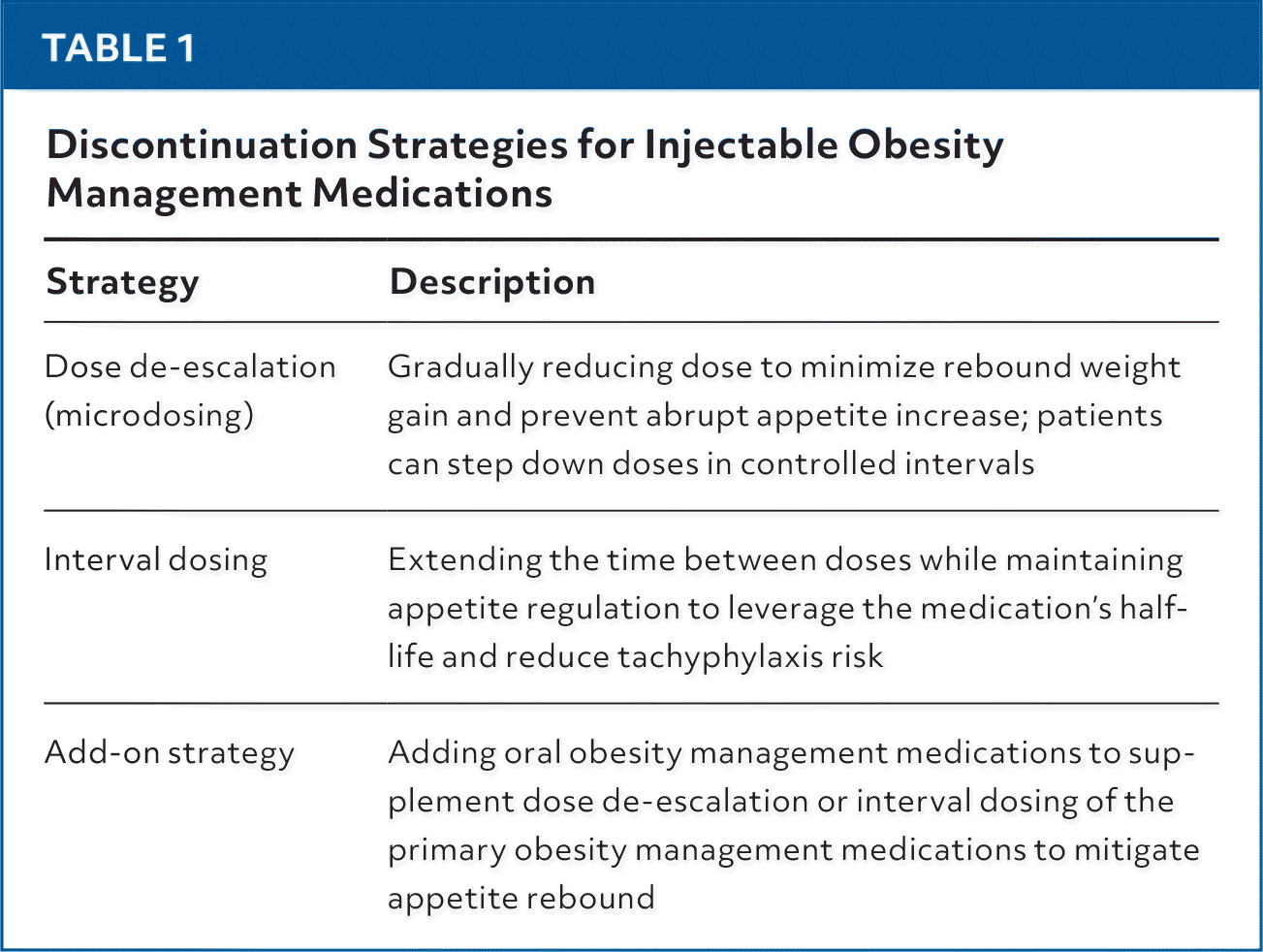
To help clinicians navigate discontinuation after patients achieve their weight loss goals, and given the absence of robust evidence or guidelines, we propose three discontinuation strategies: dose de-escalation, interval dosing, and the add-on strategy (Table 1).
TABLE 1. Discontinuation Strategies for Injectable Obesity Management Medications
| Strategy | Description |
|---|---|
| Dose de-escalation (microdosing) | Gradually reducing dose to minimize rebound weight gain and prevent abrupt appetite increase; patients can step down doses in controlled intervals |
| Interval dosing | Extending the time between doses while maintaining appetite regulation to leverage the medication's half-life and reduce tachyphylaxis risk |
| Add-on strategy | Adding oral obesity management medications to supplement dose de-escalation or interval dosing of the primary obesity management medications to mitigate appetite rebound |
With dose de-escalation (microdosing), patients taper off the medication to mitigate the risk of significant appetite increase and weight regain. Preliminary data suggest that, when combined with lifestyle modifications, tapering off semaglutide from full dosage can help sustain weight loss for at least 20 weeks.9 Randomized controlled trials of semaglutide and tirzepatide for weight loss followed structured dose escalation; therefore, reversing this approach (ie, titrating down doses monthly or at longer intervals) is a reasonable strategy to transition off therapy.8,10
With interval dosing, the interval between injections is progressively extended, initially from every 10 to 15 days, then up to every 21 days based on individual response. Given the long half-life of these medications, interval dosing may continue to provide sufficient appetite regulation while reducing costs, minimizing adverse effects, and preventing treatment fatigue.11 Preliminary real-world data further suggest that biweekly interval dosing of GLP-1 therapy can maintain prior weight loss for an average of 32 weeks, with an average of 2% additional weight loss and 84% of patients remaining on biweekly interval dosing.12
With the add-on strategy, oral obesity management medications such as phentermine-topiramate (Qsymia), bupropionnaltrexone (Contrave), or phentermine are added during dose de-escalation or interval dosing to supplement appetite suppression. Phentermine-topiramate has shown efficacy in patients who have received bariatric surgery, resulting in a 10% reduction in weight regain.13 This strategy allows for a more personalized treatment approach based on comorbidities and adverse effects, and it may be particularly effective in addressing emotional or compulsive eating behaviors that can reemerge after discontinuation of injectable obesity management medications.
Crucially, any discontinuation strategy must be paired with renewed commitment to lifestyle modifications. Significant changes in body composition influence metabolic rate and energy expenditure; therefore, sustained calorie reduction, dietary monitoring, and regular exercise are essential for weight loss maintenance.14 These modifications should be discussed before initiating obesity management medications and reinforced throughout treatment. Proven strategies for lean mass preservation and weight maintenance after bariatric surgery include healthy eating habits with a protein-focused diet (1.05 g/kg of adjusted body weight), regular weigh-ins, food and exercise diaries, and 150 to 300 minutes of moderate exercise or 75 to 150 minutes of vigorous exercise per week.15,16
Without adherence to these behavioral modifications, significant weight regain is likely.16 Thus, the decision to discontinue must be individualized and supported long term through continuity of care and multidisciplinary efforts that include referrals to nutrition, mental health, and exercise services.
Family physicians should consider these discontinuation strategies for patients who reach their weight loss goals, show motivation, and have minimal comorbidities; have severe adverse effects or complications; or struggle with financial constraints. In contrast, shared decision-making should guide care for those with multiple comorbidities, history of significant rebound weight gain, and difficulty maintaining dietary and physical activity modifications long term because they may require ongoing treatment.
