

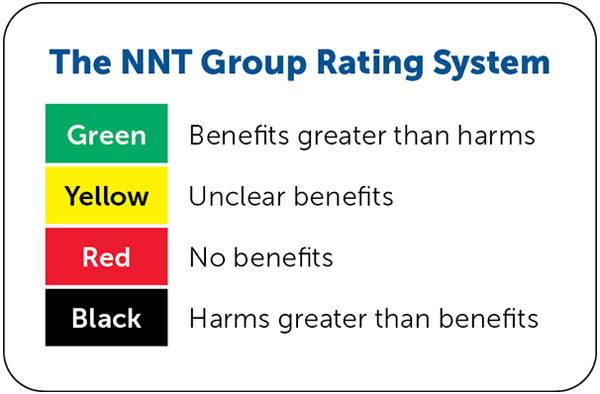
DETAILS FOR THIS REVIEW
Study Population: 12 parallel randomized controlled trials with 8,760 adult outpatients taking nonsteroidal anti-inflammatory drugs (NSAIDs) for more than 4 weeks across multiple centers and nations; patients received proton pump inhibitors (PPIs) for prevention of NSAID-induced ulcers or dyspepsia
Efficacy End Points: Global symptoms of dyspepsia (measured continuously and dichotomously by validated scores and scales), ulcer incidence (endoscopically confirmed gastric or duodenal ulcer), quality of life (measured by validated scales)
Harm End Points: Adverse events reported in absolute numbers or proportions and ulcer complications (bleeding and perforation); adverse events included headaches, bronchitis, dizziness, and major cardiovascular events (eg, angina, atrial flutter, coronary artery disease)
THE NUMBERS
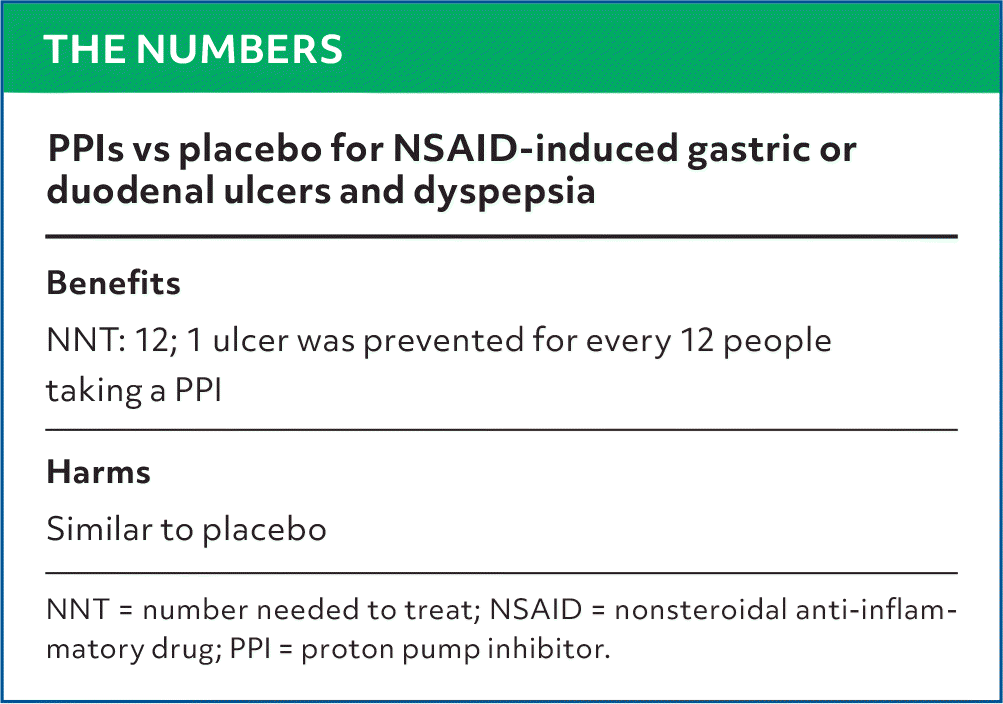
| Benefits |
| NNT: 12; 1 ulcer was prevented for every 12 people taking a PPI |
| Harms |
| Similar to placebo |
NNT = number needed to treat; NSAID = nonsteroidal anti-inflammatory drug; PPI = proton pump inhibitor.
Narrative: NSAIDs are widely used for the treatment of musculoskeletal conditions, pain, fever, and, in the case of aspirin, cardiovascular protection. Previous studies have shown NSAID use to be associated with a 1.9- to 4.7-fold increase in incidence of upper gastrointestinal bleeding and perforation.1–3 PPIs reduce gastric fluid acidity, and they may also be beneficial as prophylaxis against gastrointestinal adverse effects of NSAIDs, including ulcers and dyspepsia.4 The Cochrane review discussed here sought to determine whether PPIs could prevent or reduce NSAID-induced dyspepsia and ulcers.1
Evaluated studies used PPIs including esomeprazole, lansoprazole, omeprazole, and pantoprazole. Most studies used once daily dosing of PPIs, with only one study investigating twice daily dosing. PPIs were compared with placebo, histamine H2 antagonists, or misoprostol (a synthetic prostaglandin E1 analogue). Patients with an existing diagnosis of functional dyspepsia (discomfort without a structural or biochemical cause) or endoscopically confirmed gastric ulcer were excluded.
When compared with placebo, moderate-certainty evidence suggested that PPIs reduced ulcer incidence in patients taking long-term NSAID therapy (relative risk [RR] = 0.29; 95% CI, 0.23–0.36; absolute risk difference [ARD] = 8.4%; number needed to treat [NNT] = 12; 7,022 participants; 11 studies). Moderate-certainty evidence supported that PPIs improved global symptoms of dyspepsia (mean difference [MD] = −0.56; 95% CI, −0.74 to −0.38; 1,149 participants; two studies; continuous measurement using the Gastrointestinal Symptom Rating Scale, with lower scores indicating improved symptoms).
PPIs were also associated with a small increase in quality of life among patients taking long-term NSAIDs (MD = 0.39; 95% CI, 0.23–0.55; 1,149 participants; two studies; moderate-certainty evidence). There may be little to no difference in ulcer complications (low-certainty evidence), adverse events (very low-certainty evidence), and global symptoms of dyspepsia (dichotomous rating, very low-certainty evidence).
Compared with H2 antagonists, low-certainty evidence demonstrated little to no difference in ulcer incidence. No studies examined global symptoms of dyspepsia, ulcer complications, adverse events, or quality of life.
When PPIs were compared with misoprostol, very low-certainty evidence showed that there was a higher incidence of ulcers with PPI use (RR = 2.32; 95% CI, 1.25–4.30; ARD = 10.8%; NNT = 10; 402 participants; one study). The same randomized controlled trial demonstrated with very low-certainty evidence that PPIs were associated with fewer adverse events than misoprostol (RR = 0.38; 95% CI, 0.25–0.57; ARD = 19%; NNT = 6; 402 participants; one study).
Read the full article
Get immediate access, anytime, anywhere.
Choose a single article, issue, or full-access subscription.
Earn up to 14 CME credits per issue.
