
Anti-obesity drugs should be offered as initial treatment of overweight and obesity for adults with weight-related comorbidities and for those at high risk of complications, and as a component of first-line treatment for patients with obesity and overweight without comorbidities. Currently, US Food and Drug Administration–approved drugs for obesity include centrally acting drugs, gastrointestinal lipase inhibitors, and incretin mimetics. Other drugs are used off-label to promote weight loss. The incretin mimetics, glucagon-like peptide-1 receptor agonists (eg, semaglutide, liraglutide) and dual glucose-dependent insulinotropic polypeptide/glucagon-like peptide-1 receptor agonist (ie, tirzepatide), demonstrate the greatest weight loss benefits, with tirzepatide achieving reductions exceeding 20% in some patients. Drug selection should be individualized based on comorbidities (eg, cardiovascular disease, obstructive sleep apnea), cost, and patient preference. Despite growing evidence of benefit, barriers (eg, prescriber hesitancy, high costs, limited insurance coverage) persist. With multiple drugs in development, continued innovation in pharmacotherapy management offers promise, but expanding education and access remains critical to improving obesity care.
Case 3. AP is a 62-year-old patient who comes to your office for advice about losing weight. He has a history of obesity, a current body mass index (BMI) of 38 kg/m2, and obstructive sleep apnea. Approximately 6 months ago, he and his wife started going to the gym and have been adhering to the Mediterranean diet. Despite these efforts, he has only been able to lose approximately 2.3 kg.
Role of Pharmacotherapy
Pharmacotherapy should be offered as initial treatment of overweight and obesity for adults with weight-related comorbidities and for those at high risk for complications, and as a component of first-line management for patients with obesity and overweight without comorbidities.1 In the clinical trials conducted to obtain US Food and Drug Administration (FDA) approval for anti-obesity drugs, specific reduced calorie diets (eg, 500 kcal/day deficit, 1,200 kcal/day diet), physical activity (eg, 150 minutes per week), and diet counseling were also prescribed.2,3 All drugs are approved as adjuncts to diet and lifestyle changes and should be considered as a component of comprehensive care for obesity. Drug selection should be based on effectiveness, comorbidities (eg, hypertension, diabetes, heart failure), cost, and patient preferences (Table 11,2 and Table 21,4–7). Drugs known to promote weight gain should be modified or discontinued if possible (refer to Section One, Table 3).
Table 1 Drug Preference for Comorbidities
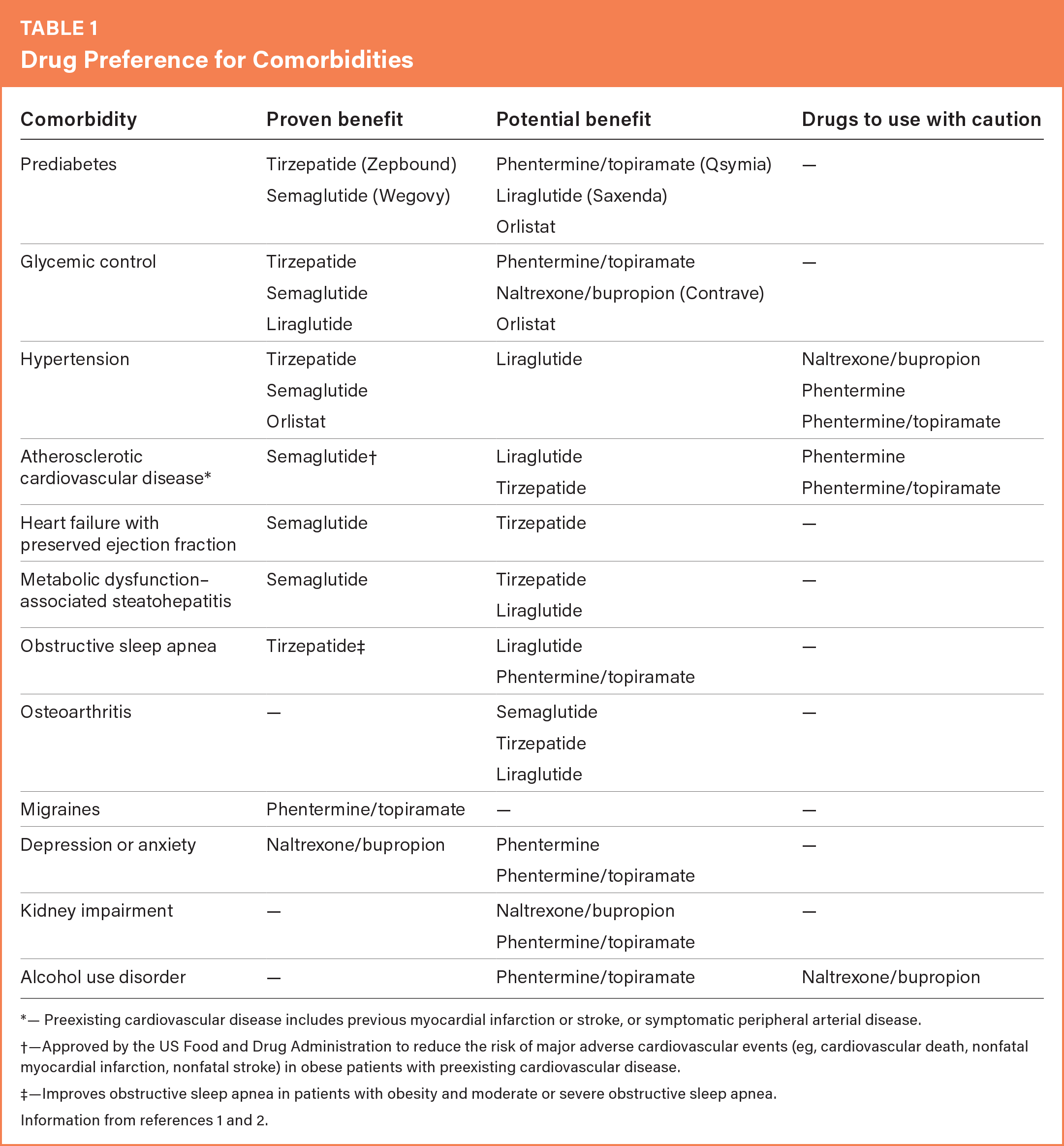
| Comorbidity | Proven benefit | Potential benefit | Drugs to use with caution |
|---|---|---|---|
| Prediabetes | Tirzepatide (Zepbound) Semaglutide (Wegovy) | Phentermine/topiramate (Qsymia) Liraglutide (Saxenda) Orlistat | — |
| Glycemic control | Tirzepatide Semaglutide Liraglutide | Phentermine/topiramate Naltrexone/bupropion (Contrave) Orlistat | — |
| Hypertension | Tirzepatide Semaglutide Orlistat | Liraglutide | Naltrexone/bupropion Phentermine Phentermine/topiramate |
| Atherosclerotic cardiovascular disease* | Semaglutide† | Liraglutide Tirzepatide | Phentermine Phentermine/topiramate |
| Heart failure with preserved ejection fraction | Semaglutide | Tirzepatide | — |
| Metabolic dysfunction–associated steatohepatitis | Semaglutide | Tirzepatide Liraglutide | — |
| Obstructive sleep apnea | Tirzepatide‡ | Liraglutide Phentermine/topiramate | — |
| Osteoarthritis | — | Semaglutide Tirzepatide Liraglutide | — |
| Migraines | Phentermine/topiramate | — | — |
| Depression or anxiety | Naltrexone/bupropion | Phentermine Phentermine/topiramate | — |
| Kidney impairment | — | Naltrexone/bupropion Phentermine/topiramate | — |
| Alcohol use disorder | — | Phentermine/topiramate | Naltrexone/bupropion |
*—Preexisting cardiovascular disease includes previous myocardial infarction or stroke, or symptomatic peripheral arterial disease.
†—Approved by the US Food and Drug Administration to reduce the risk of major adverse cardiovascular events (eg, cardiovascular death, nonfatal myocardial infarction, nonfatal stroke) in obese patients with preexisting cardiovascular disease.
‡—Improves obstructive sleep apnea in patients with obesity and moderate or severe obstructive sleep apnea.
Information from references 1 and 2.
Read the full edition
Get immediate access, anytime, anywhere.
Choose a single edition, 1-year or 2-year full-access subscription.
Earn 4 CME credits for this edition.