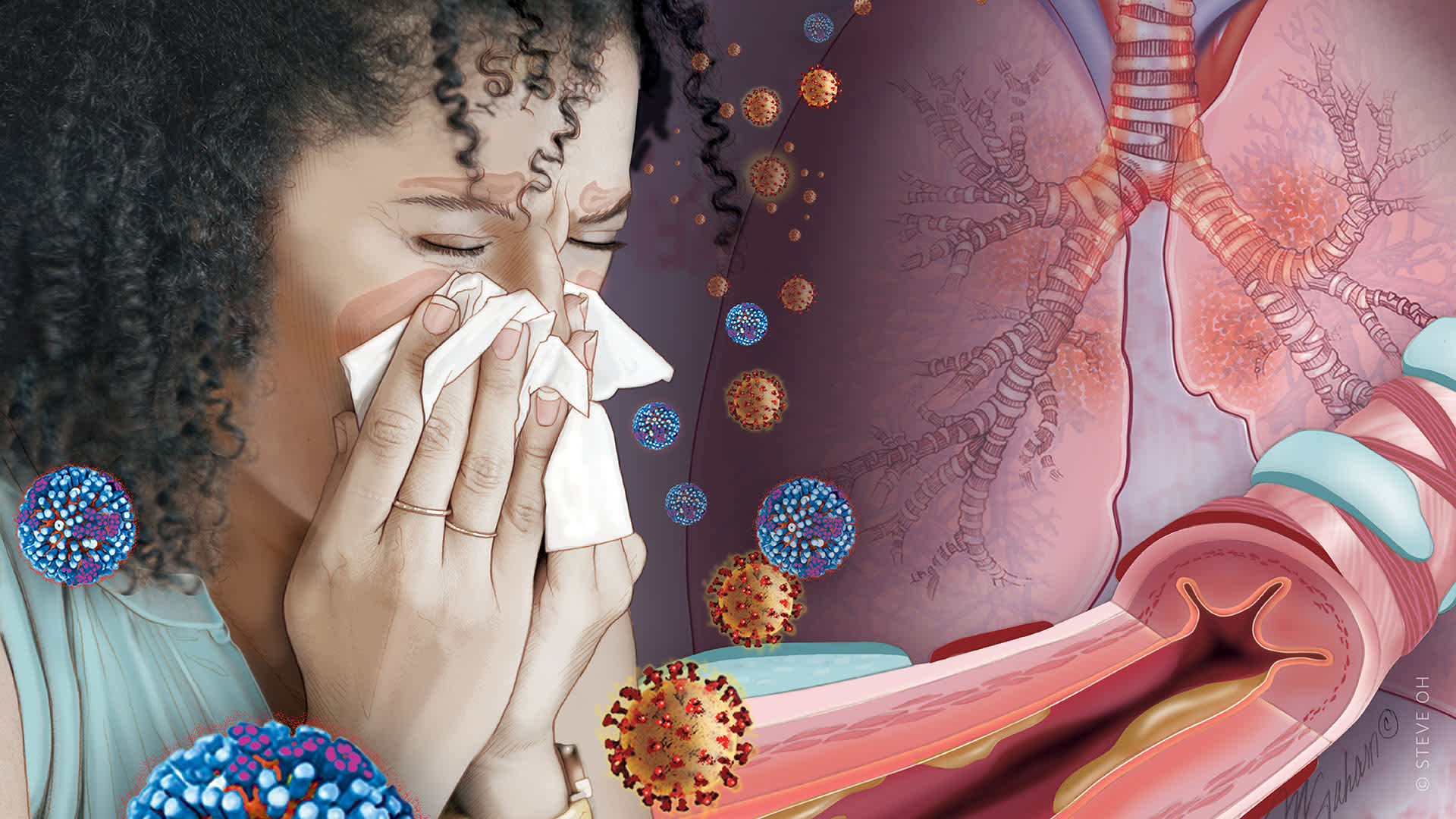
On March 11, 2020, the World Health Organization declared COVID-19 a pandemic. By late 2024, COVID-19 had become endemic, with regional surges caused by new variants and declining population immunity. Case fatality rates have decreased because of vaccination and the emergence of less virulent variants, but long COVID persists as a public health concern. Because of structural issues, including those related to employment, housing, health care access, and mistrust, minority and low-income individuals are at higher risk for COVID-19 infection and mortality. Preventive strategies include shared decision-making about vaccination for individuals 6 months and older, two vaccine doses for adults 65 and older, and vaccination for pregnant and breastfeeding individuals. COVID-19 can be distinguished from influenza and respiratory syncytial virus infection through testing. Rapid antigen tests are faster but less sensitive than polymerase chain reaction tests. Outpatient care of COVID-19 focuses on symptomatic relief and early antiviral use when indicated. Inpatient treatment involves remdesivir, corticosteroids, interleuken-6 inhibitors, anticoagulation, and respiratory support. Long-term complications of COVID-19 include cardiovascular, pulmonary, neurologic, mental health, and renal conditions. Thrombotic risk peaks during acute infection and remains elevated for up to 1 year. An effective community response to COVID-19 requires equitable vaccine access, integrated care, and rebuilding of patient trust to counter misinformation.
Naik H. Viral Respiratory Infections: COVID-19. FP Essent. 2026;569:28-40.
Case 3. WS is a 68-year-old man with hypertension and chronic kidney disease who presents with a 3-day history of fever, fatigue, dyspnea, and dry cough, as well as a positive COVID-19 home antigen test result. WS says his brother had COVID last year and developed a blood clot in his lower leg. WS is worried about his risks of severe disease and blood clots. He asks if he should start any treatment.
Background, Epidemiology, and Effects
On March 11, 2020, the World Health Organization (WHO) declared COVID-19 a pandemic. By September 2020, there were approximately 200,000 deaths from the illness in the United States and more than 1 million deaths worldwide. In December 2020, COVID vaccines became available in the United States.1 In May 2023, WHO declared an end to the public health emergency of international concern.2
By late 2024, COVID-19 had become endemic, with regional outbreaks caused by new variants and waning population immunity. Case fatality rates decreased because of vaccines and the emergence of less severe variants, but tracking prevalence has been more difficult due to reduced surveillance testing.3 A summer wave in 2025 caused by the XFG (Stratus) variant led to a peak in cases late in the season; by September, the prevalence was declining.
Most negative indicators for COVID-19 have decreased, but numbers of emergency department visits and hospitalizations remain high. COVID-19 currently accounts for less than 1% of deaths in the United States.4 Vaccination rates are low, and long-term effects, including long COVID, continue to be public health concerns.5 In September 2025, the Advisory Committee on Immunization Practices (ACIP) recommended that COVID-19 vaccination be treated as a personal choice for most individuals.6 Cases of long COVID are increasing, likely driven by repeated infections over time.7
Read the full edition
Get immediate access, anytime, anywhere.
Choose a single edition, 1-year or 2-year full-access subscription.
Earn 4 CME credits for this edition.