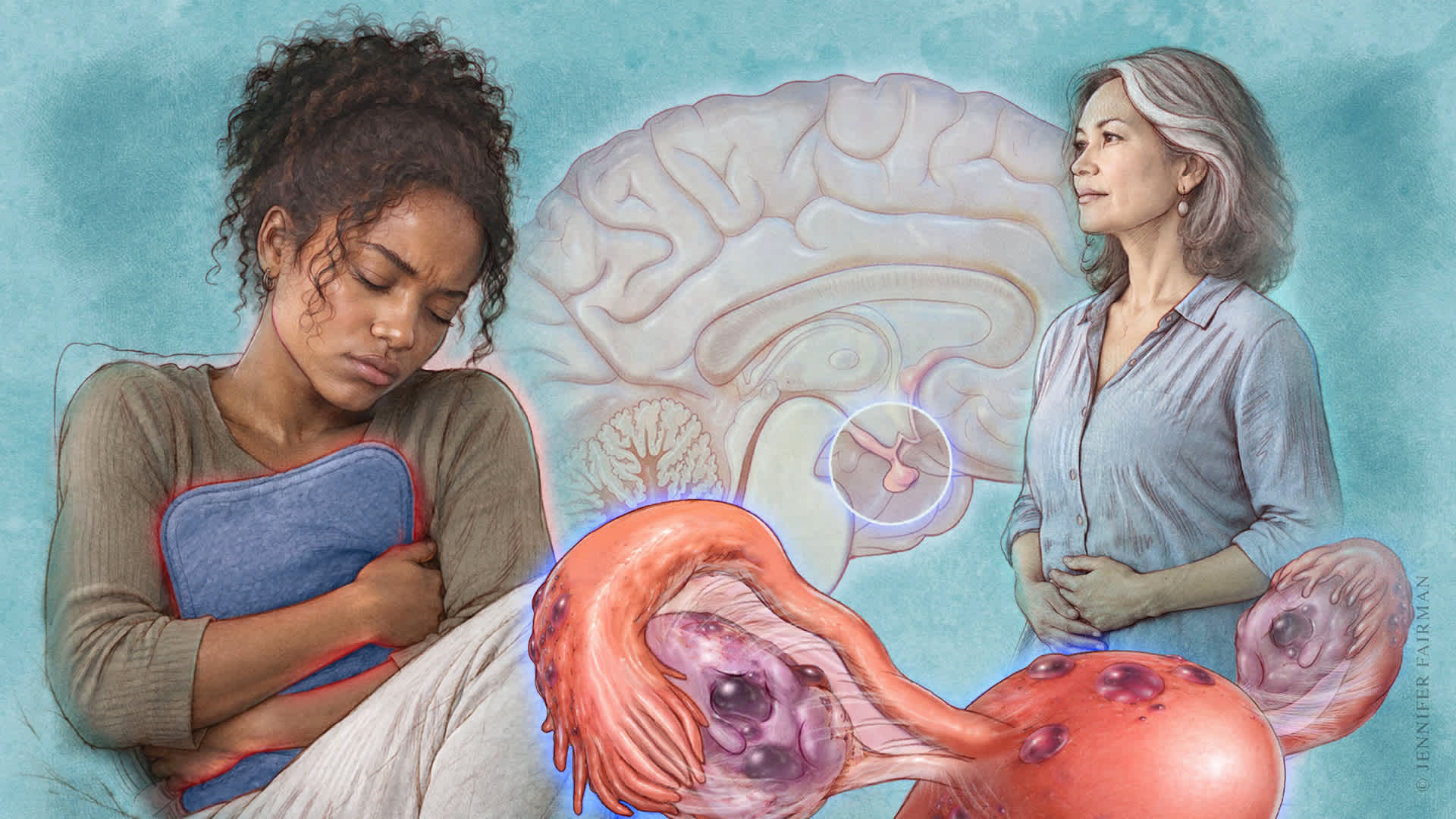
Dysmenorrhea, or painful menstruation, can be primary or secondary. Primary dysmenorrhea refers to menstrual pain occurring in the absence of an identifiable structural, infectious, or systemic cause. Secondary dysmenorrhea is due to an identifiable etiology, including endometriosis, pelvic inflammatory disease, leiomyoma, and interstitial cystitis. Factors key to diagnosing primary dysmenorrhea include presentation within a few months to up to 2 years of menarche, cramping and episodic pain, occurrence 2 to 3 days before the start of the menstrual cycle or at onset, location in the suprapubic region with potential radiation to the back or upper thighs, duration of 2 to 3 days, and presence in multiple cycles. Patients may also experience nonspecific symptoms, including nausea and vomiting, diarrhea, headaches, dizziness, and fatigue. Empiric treatment with nonsteroidal anti-inflammatory drugs with or without hormonal options can be initiated for suspected primary dysmenorrhea. If treatment for primary dysmenorrhea fails, secondary dysmenorrhea can be considered, and a pelvic examination followed by pelvic ultrasonography is recommended. Appropriate management of dysmenorrhea improves quality of life and decreases missed time from normal activities. If the condition is untreated, chronic pain syndromes can develop, leading to further complications.
Paruchuri B, Miller A. Menstrual Disorders: Dysmenorrhea. FP Essent. 2026;570:28-34.
Case 4. PT is a 24-year-old patient with painful periods that have worsened in the past year. She reports taking 600 mg of ibuprofen every 6 hours throughout her period, but she still has had to miss work on multiple occasions because of the pain. Her periods are regular, last 5 days, and require use of three pads per day.
Background, Epidemiology, and Impact
Dysmenorrhea, defined as painful menstruation, has been reported in up to 90% of menstruating women.1 Patients with dysmenorrhea report lower quality of life, significant changes in quality of sleep, and negative effects on their social lives, exercise routines, and relationships with family and friends.2,3
A large cross-sectional study found that 85% of women reported dysmenorrhea symptoms, 38% of whom were unable to complete usual tasks because of menstrual symptoms.4 The associated burden is substantial, with an estimated $2 billion per year lost from absenteeism or reduced functionality.1 A 2025 longitudinal cohort study showed dysmenorrhea and heavy bleeding were associated with lower school attendance and poorer academic achievement.5 Contributing factors can include stigma, restricted bathroom use, lack of access to menstrual products, and reduced ability to focus during menstruation.5
Dysmenorrhea is thought to be caused by elevated levels of inflammatory mediators, most notably prostaglandins, leukotrienes, and endothelial growth factors. These mediators increase uterine contractility, vasoconstriction, and tissue hypoxia, thereby intensifying pain.1 Although they are a normal part of menstruation, these and other related inflammatory mediators have been shown to be present at higher levels in patients with dysmenorrhea.6
Dysmenorrhea may be considered a central sensitization syndrome with associated allodynia and hyperalgesia symptoms.1 Central sensitization syndrome is driven by amplification of nervous system sensory input. Severe dysmenorrhea is more common in patients with allodynia.
Primary dysmenorrhea refers to painful menses without an underlying pathology.1 It typically first appears in adolescence within 6 to 12 months of menarche, although symptoms may not manifest until up to 2 years after menarche.1
Read the full edition
Get immediate access, anytime, anywhere.
Choose a single edition, 1-year or 2-year full-access subscription.
Earn 4 CME credits for this edition.