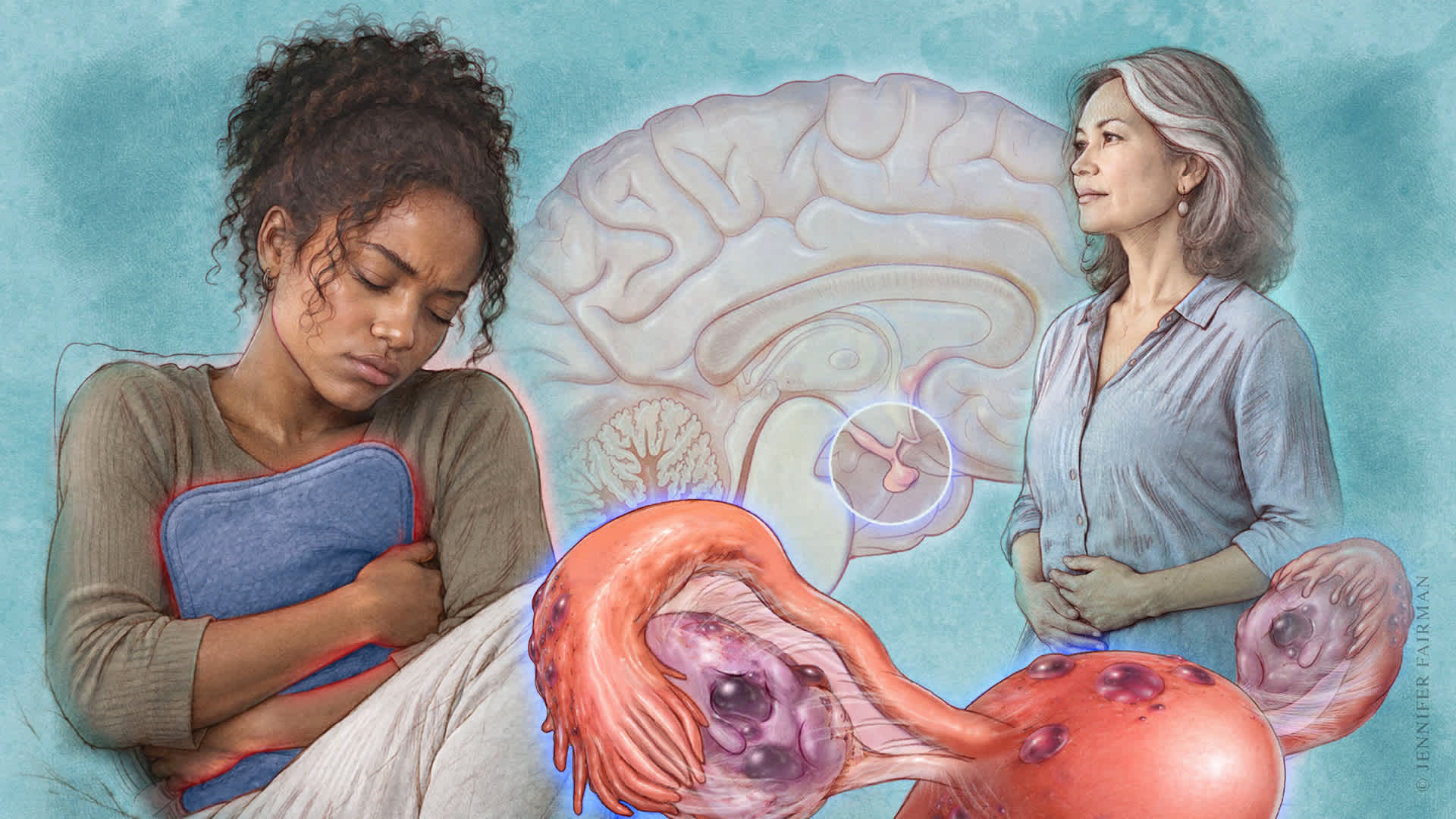
These key learning points summarize the consensus- and evidence-based recommendations included in this edition. The sources listed here for each statement recommend that physicians perform or implement these actions directly in a clinical setting. A = consistent, good-quality patient-oriented evidence; B = inconsistent or limited-quality patient-oriented evidence; C = consensus, disease-oriented evidence, usual practice, expert opinion, or case series. For information about the Strength of Recommendation Taxonomy (SORT) evidence rating system, go to https://www.aafp.org/afp/2004/0201/p548.
1. In a patient with amenorrhea and normal physical examination findings, begin the workup by excluding pregnancy and measuring thyroid-stimulating hormone (thyrotropin), prolactin, and follicle-stimulating hormone levels.
Evidence rating: SORT C
Source: Section One, reference 1
2. Recommend endometrial sampling (biopsy) in patients with abnormal uterine bleeding who are at increased risk for endometrial cancer in the setting of risk factors such as obesity, chronic anovulation, family history of malignancy, or age of 45 years or older.
Evidence rating: SORT A
Source: Section Two, reference 8
3. Recommend transvaginal ultrasonography for patients with new postmenopausal uterine bleeding.
Evidence rating: SORT C
Source: Section Three, reference 4
4. Recommend endometrial sampling for a patient with postmenopausal bleeding and an endometrial thickness greater than 4 mm on transvaginal ultrasonography or persistent or recurrent bleeding.
Evidence rating: SORT C
Source: Section Three, reference 4
5. Recommend nonsteroidal anti-inflammatory drugs for patients presenting with typical symptoms of primary dysmenorrhea, without further workup.
Evidence rating: SORT B
Sources: Section Four, references 1 and 6
6. Avoid opioids for management of adolescent dysmenorrhea.
Evidence rating: SORT C
Source: Section Four, reference 6
Read the full edition
Get immediate access, anytime, anywhere.
Choose a single edition, 1-year or 2-year full-access subscription.
Earn 4 CME credits for this edition.