

Childhood and adolescent sports participation is encouraged because of health and wellness benefits. However, the increasing number of young athletes means there is the potential for more sports-related overuse injuries. Most youth sports injuries occur at the bone’s relatively weaker growth centers: the epiphyses and apophyses. Little league shoulder and elbow are common overuse injuries in baseball and other single-arm dominant sports. Little league shoulder is a Salter-Harris fracture of the proximal humerus, and little league elbow is an apophysitis of the medial epicondyle. In both injuries, the athlete often reports decreased throwing velocity or accuracy. The physician should emphasize the Major League Baseball Pitch Smart guidelines when counseling on rehabilitation and prevention. Gymnast’s wrist is a distal radial epiphysis injury in which the patient reports chronic wrist pain. Gymnast’s wrist should be managed conservatively with immobilization. Spondylolysis is an important cause of overuse back pain in young athletes and can progress to spondylolisthesis. Patellofemoral pain syndrome presents with anterior knee pain, often made worse with running or descending stairs and improved with physical therapy. Osgood-Schlatter disease and Sinding-Larsen—Johansson disease are forms of knee apophysitis. Calcaneal apophysitis is a common cause of heel pain in young athletes and can be diagnosed clinically with the calcaneal squeeze test. Calcaneal apophysitis is treated conservatively, with good evidence for the use of heel cups and physical therapy.
In the United States, 40 million to 60 million children are involved in organized sports annually.1 Sports participation has many health and wellness benefits, but overuse injuries can occur in young athletes because of increased stress on the body without proper training. Organized sports are a contributor to these, often preventable, injuries.1–3 Children enter sports at a younger age, and the number of sports each child is involved in is increasing.1,2 This hypercompetitive culture has led some athletes to specialize in a specific sport for nine to 12 months out of a year. With early sports specialization, overuse injuries are becoming more common.2–4 Proper technique, resistance training, protective equipment, and avoiding early sports specialization are necessary for injury prevention in adolescents. This article focuses on overuse injuries (Table 1); however, assessing for nonmechanical musculoskeletal pain causes such as infection, rheumatologic causes, and malignancy is important. The history and physical examination can identify red-flag symptoms such as fever, weight loss, poor weight gain, night pain, or symmetric swelling. After the initial evaluation has excluded a non-mechanical cause of insidious onset pain, overuse injuries should be considered (Table 25–34 ).
SORT: KEY RECOMMENDATIONS FOR PRACTICE
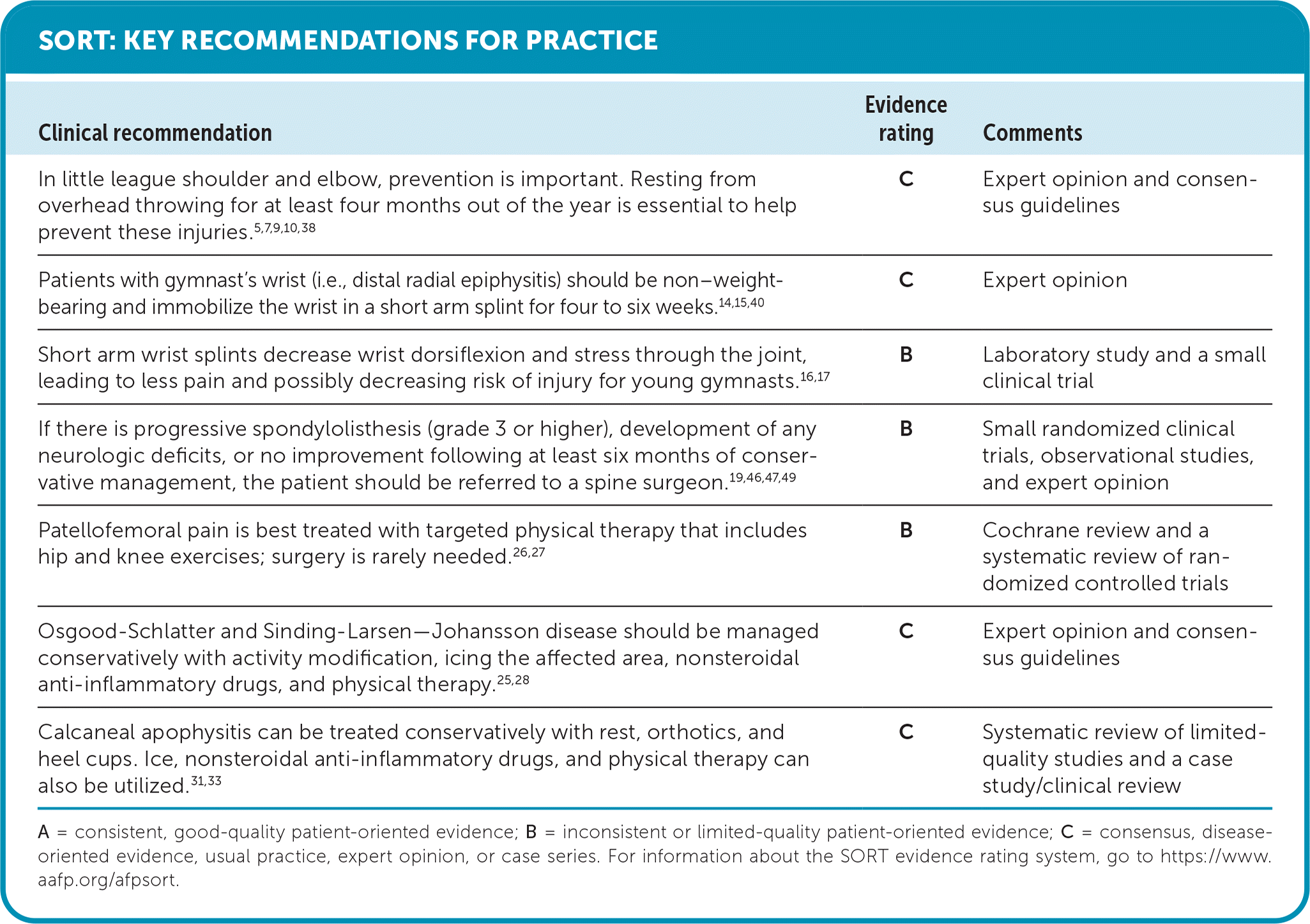
A = consistent, good-quality patient-oriented evidence; B = inconsistent or limited-quality patient-oriented evidence; C = consensus, disease-oriented evidence, usual practice, expert opinion, or case series. For information about the SORT evidence rating system, go to https://www.aafp.org/afpsort.
Read the full article
Get immediate access, anytime, anywhere.
Choose a single article, issue, or full-access subscription.
Earn up to 14 CME credits per issue.
