

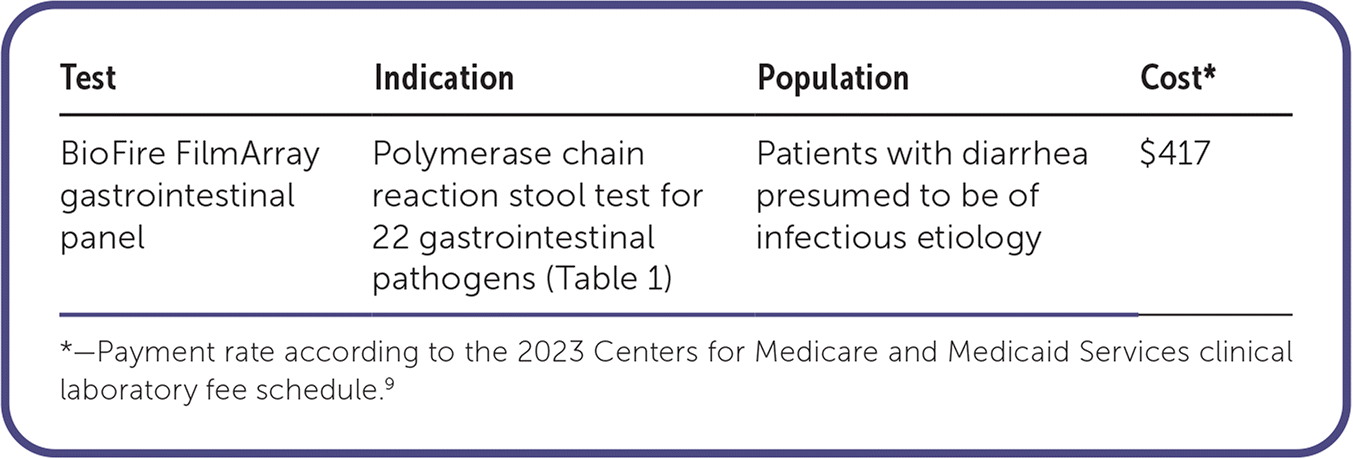
| Test | Indication | Population | Cost* |
|---|---|---|---|
| BioFire FilmArray gastrointestinal panel | Polymerase chain reaction stool test for 22 gastrointestinal pathogens (Table 1) | Patients with diarrhea presumed to be of infectious etiology | $417 |
*—Payment rate according to the 2023 Centers for Medicare and Medicaid Services clinical laboratory fee schedule.9
The BioFire FilmArray gastrointestinal (GI) panel is a multiplex polymerase chain reaction (PCR) test approved by the U.S. Food and Drug Administration to assess for 22 common viral, bacterial, and parasitic gastrointestinal pathogens.1 Stool culture, Clostridioides difficile toxin assay, or ova and parasite testing are typically reserved for patients with severe or prolonged disease, possible C. difficile infection, or unique risks for parasitic infection, respectively.2,3 In most patients with acute gastroenteritis, testing for a specific etiology is not performed, and confirmation of the pathogen does not change management of self-limited illness.
Accuracy
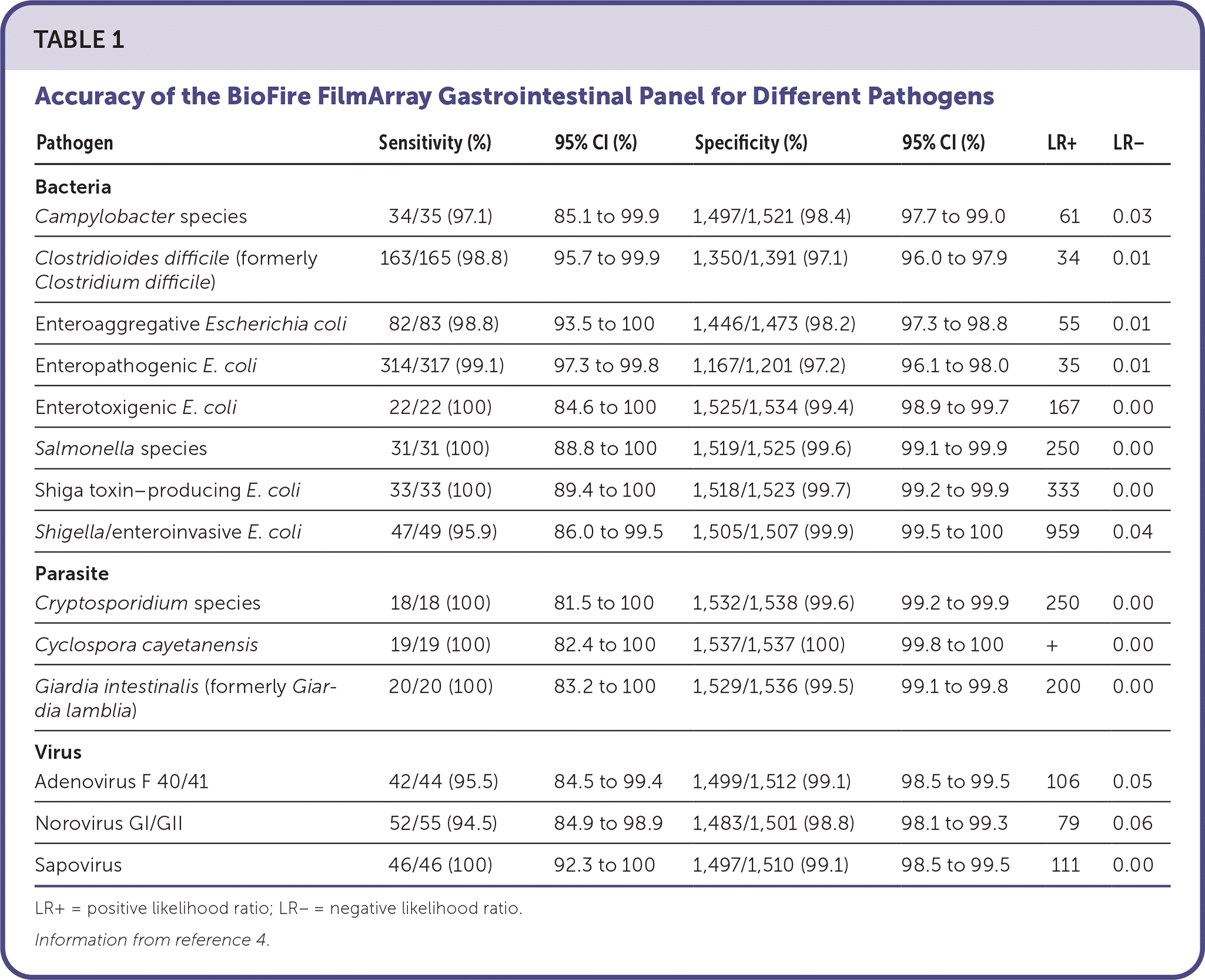
A multicenter study of stool specimens from 1,556 patients (62% younger than 21 years, 87% outpatient) compared the FilmArray GI panel with the results of conventional stool culture and molecular methods.4 Overall, the FilmArray GI panel was at least 94.5% sensitive and 97% specific for most panel targets.4 Individual pathogen accuracy is summarized in Table 1.4 In some cases, PCR detected a potential pathogen more often than the reference test.
TABLE 1. Accuracy of the BioFire FilmArray Gastrointestinal Panel for Different Pathogens
| Pathogen | Sensitivity (%) | 95% CI (%) | Specificity (%) | 95% CI (%) | LR+ | LR− |
|---|---|---|---|---|---|---|
| Bacteria | ||||||
| Campylobacter species | 34/35 (97.1) | 85.1 to 99.9 | 1,497/1,521 (98.4) | 97.7 to 99.0 | 61 | 0.03 |
| Clostridioides difficile (formerly Clostridium difficile) | 163/165 (98.8) | 95.7 to 99.9 | 1,350/1,391 (97.1) | 96.0 to 97.9 | 34 | 0.01 |
| Enteroaggregative Escherichia coli | 82/83 (98.8) | 93.5 to 100 | 1,446/1,473 (98.2) | 97.3 to 98.8 | 55 | 0.01 |
| Enteropathogenic E. coli | 314/317 (99.1) | 97.3 to 99.8 | 1,167/1,201 (97.2) | 96.1 to 98.0 | 35 | 0.01 |
| Enterotoxigenic E. coli | 22/22 (100) | 84.6 to 100 | 1,525/1,534 (99.4) | 98.9 to 99.7 | 167 | 0.00 |
| Salmonella species | 31/31 (100) | 88.8 to 100 | 1,519/1,525 (99.6) | 99.1 to 99.9 | 250 | 0.00 |
| Shiga toxin–producing E. coli | 33/33 (100) | 89.4 to 100 | 1,518/1,523 (99.7) | 99.2 to 99.9 | 333 | 0.00 |
| Shigella/enteroinvasive E. coli | 47/49 (95.9) | 86.0 to 99.5 | 1,505/1,507 (99.9) | 99.5 to 100 | 959 | 0.04 |
| Parasite | ||||||
| Cryptosporidium species | 18/18 (100) | 81.5 to 100 | 1,532/1,538 (99.6) | 99.2 to 99.9 | 250 | 0.00 |
| Cyclospora cayetanensis | 19/19 (100) | 82.4 to 100 | 1,537/1,537 (100) | 99.8 to 100 | + | 0.00 |
| Giardia intestinalis (formerly Giardia lamblia) | 20/20 (100) | 83.2 to 100 | 1,529/1,536 (99.5) | 99.1 to 99.8 | 200 | 0.00 |
| Virus | ||||||
| Adenovirus F 40/41 | 42/44 (95.5) | 84.5 to 99.4 | 1,499/1,512 (99.1) | 98.5 to 99.5 | 106 | 0.05 |
| Norovirus GI/GII | 52/55 (94.5) | 84.9 to 98.9 | 1,483/1,501 (98.8) | 98.1 to 99.3 | 79 | 0.06 |
| Sapovirus | 46/46 (100) | 92.3 to 100 | 1,497/1,510 (99.1) | 98.5 to 99.5 | 111 | 0.00 |
LR+ = positive likelihood ratio; LR− = negative likelihood ratio.
Information from reference 4.
Read the full article
Get immediate access, anytime, anywhere.
Choose a single article, issue, or full-access subscription.
Earn up to 14 CME credits per issue.
