

Details for This Review
Study Population: 36 studies with 23,299 women in two main groups: early menopausal women (fewer than 5 years since amenorrhea or menopause) with or without menopausal symptoms and “unselected” postmenopausal women (last menstrual period more than 5 years earlier, regardless of menopausal symptoms)
Efficacy End Points: Primary: sexual-function composite score; secondary: domains of sexual function, including desire, arousal, lubrication, orgasm, satisfaction, and pain
Harm End Points: Not evaluated in this review
THE NUMBERS
| Benefits |
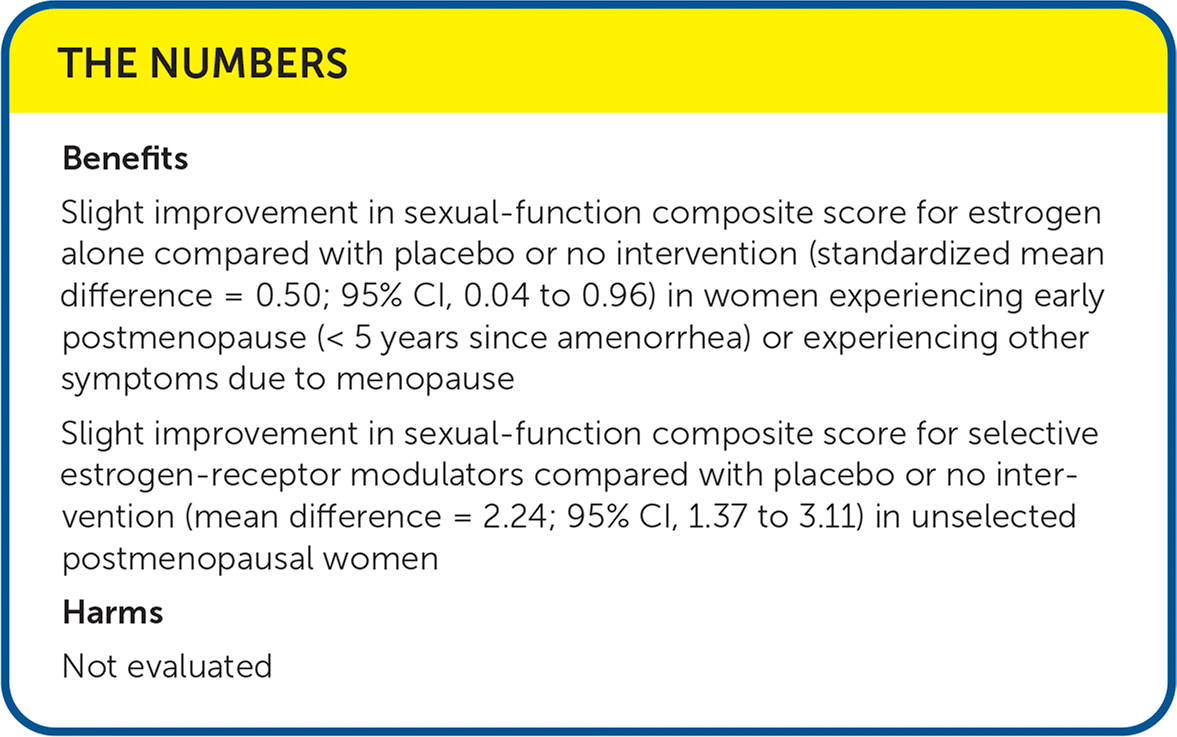
| Slight improvement in sexual-function composite score for estrogen alone compared with placebo or no intervention (standardized mean difference = 0.50; 95% CI, 0.04 to 0.96) in women experiencing early postmenopause (< 5 years since amenorrhea) or experiencing other symptoms due to menopause |
| Slight improvement in sexual-function composite score for selective estrogen-receptor modulators compared with placebo or no intervention (mean difference = 2.24; 95% CI, 1.37 to 3.11) in unselected postmenopausal women |
| Harms |
| Not evaluated |
Narrative: Perimenopausal or menopausal women may experience many symptoms due to fluctuating or declining hormone levels, especially as estrogen levels change. Symptoms may include hot flashes, night sweats, and mood changes. As circulating estrogen levels decrease, vaginal mucosa can atrophy, leading to dyspareunia and decreased sexual function, including decreased interest, arousal, vaginal lubrication, or ability to achieve orgasm.
Hormone therapy has some benefit in treating hot flashes and genitourinary syndrome of menopause (e.g., vaginal dryness, painful intercourse, urinary urgency), but the overall specific effect on sexual function is unclear.1
The Cochrane review and meta-analysis discussed here included 36 trials (23,299 women in aggregate) and assessed the effect of hormone therapy on sexual function in periand postmenopausal women.2 Patients were divided into two main groups: early menopausal women (fewer than 5 years since amenorrhea or menopause) with or without menopausal symptoms and “unselected” postmenopausal women (last menstrual period more than 5 years earlier, regardless of menopausal symptoms). The main outcome was a sexual-function composite score measured by any validated tool. Secondary outcomes included the domains of sexual function—desire, arousal, lubrication, orgasm, satisfaction, and pain.
For women experiencing early menopause, with or without menopausal symptoms, the review showed moderate-quality evidence that compared with placebo or no intervention, treatment with estrogen therapy (oral, transdermal, and vaginal formulations) alone may slightly improve the sexual-function composite score (standardized mean difference = 0.50; 95% CI, 0.04 to 0.96). The standardized mean difference is used to compare the average differences in symptom scales when different scales are used in the included studies. When considering standardized mean difference values, 0.20 to 0.49 is considered a small effect, 0.50 to 0.79 is considered moderate, and greater than 0.8 is considered large.3 Regarding the secondary outcomes of the domains of sexual function in this same group of women, low- to moderate-quality evidence demonstrated that compared with placebo or no intervention, treatment with estrogen therapy alone may slightly improve pain with intercourse (standardized mean difference = 0.35; 95% CI, 0.14 to 0.56), vaginal lubrication (standardized mean difference = 0.47; 95% CI, 0.21 to 0.73), and sexual satisfaction (standardized mean difference = 0.29; 95% CI, 0.08 to 0.51). The effect of estrogen therapy alone on orgasm was uncertain, and the effect on sexual desire and arousal was not studied in this population.
Read the full article
Get immediate access, anytime, anywhere.
Choose a single article, issue, or full-access subscription.
Earn up to 14 CME credits per issue.
