

DETAILS FOR THIS REVIEW
Study Population: 53 studies (majority parallel randomized controlled trials, including several multinational [more than 30 countries] and multicenter studies), with a total of 65,241 adults with all stages of chronic kidney disease (CKD; no studies included individuals on dialysis) and types 1 or 2 diabetes were included in this Cochrane review.1,2 Studies evaluating treatment in individuals with a history of kidney transplant, gestational diabetes, obesity without diabetes, and prediabetes were excluded
Efficacy End Points: Primary: all-cause death; cardiovascular death; 3-point (3P; comprising cardiovascular death, nonfatal stroke, nonfatal myocardial infarction) and 4-point (4P; comprising 3P plus heart failure hospitalization) major adverse cardiovascular events (MACE); fatal or nonfatal myocardial infarction; fatal or non-fatal stroke; and kidney failure (estimated glomerular filtration rate [GFR] less than 15 mL/min/1.73 m2 or kidney replacement therapy with dialysis or kidney transplant)
Secondary: patient oriented—heart failure and heart failure hospitalizations; disease-oriented—composite kidney score (including all-cause death and kidney failure–related death, kidney replacement therapy, 40% or greater loss of GFR); albuminuria progression; A1C
Harm End Points: withdrawal from treatment secondary to adverse events; individual adverse events, including diabetic ketoacidosis, hypoglycemia, genital infections, fractures, and amputations
THE NUMBERS
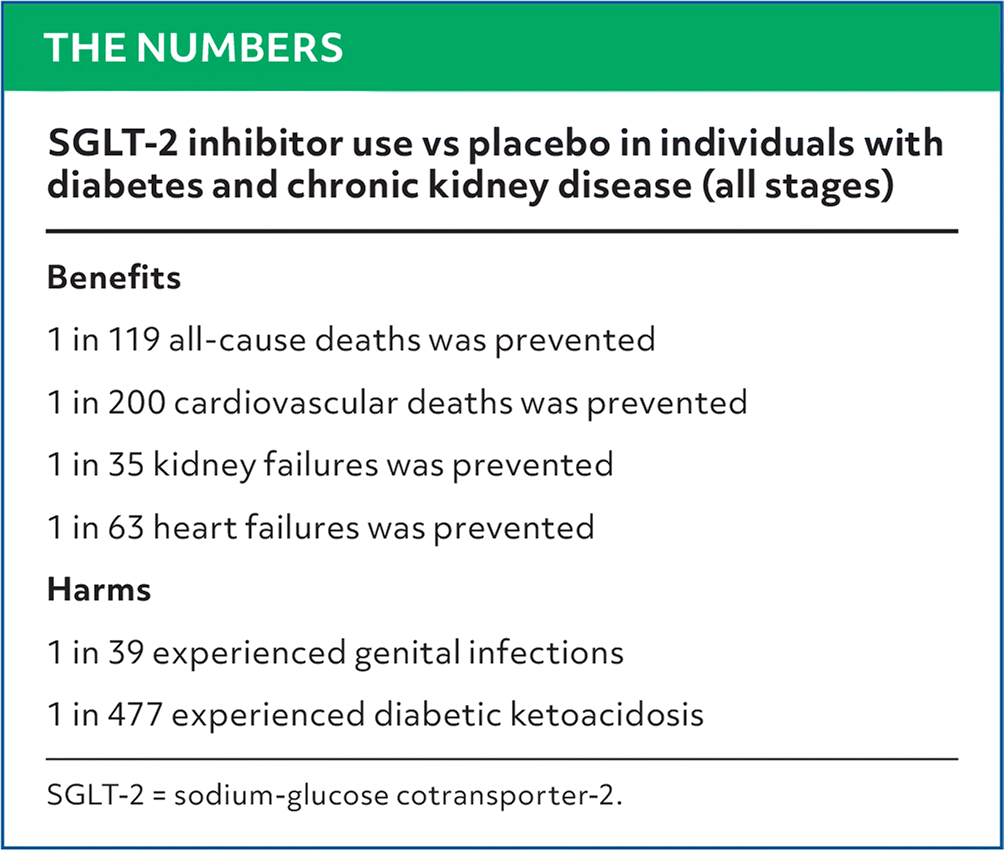
| Benefits |
| 1 in 119 all-cause deaths was prevented |
| 1 in 200 cardiovascular deaths was prevented |
| 1 in 35 kidney failures was prevented |
| 1 in 63 heart failures was prevented |
| Harms |
| 1 in 39 experienced genital infections |
| 1 in 477 experienced diabetic ketoacidosis |
SGLT-2 = sodium-glucose cotransporter-2.
Narrative: Diabetes is a common metabolic disorder affecting more than 422 million people globally, including nearly 10% of the US adult population (according to 2012–2014 estimates).3–5 It is a major risk factor for the development of CKD and cardiovascular disease, including myocardial infarction, stroke, heart failure, and death.1,3,4
Sodium-glucose cotransporter-2 (SGLT-2) inhibitors are a relatively new class of pharmacotherapy for diabetes treatment. SGLT-2 inhibitors not only assist with glycemic control but also modulate volume status, particularly in those with congestive heart failure and chronic kidney dysfunction. However, these positive effects achieved through induction of glycosuria and alterations in hemodynamics at the glomerular level also increase the risk of ketoacidosis, soft tissue infections, and volume depletion.1
The Cochrane review discussed here included 53 multinational studies (from more than 30 countries) with 65,241 adult participants with CKD and diabetes. The review is unique in its inclusion of individuals with early CKD stages (1 and 2) and in those with type 1 diabetes. It provides a comprehensive summary of the benefits and harms of SGLT-2 inhibitor use in those with CKD and diabetes.1
Across all CKD stages, high-certainty evidence showed that SGLT-2 inhibitors reduced all-cause mortality (risk ratio [RR] = 0.85; 95% CI, 0.78–0.94; absolute risk difference = 0.84%; number needed to treat [NNT] = 119; n = 44,397) and cardiovascular death (RR = 0.83; 95% CI, 0.74–0.93; absolute risk difference = 0.50%; NNT = 200; n = 43,792). High-certainty evidence also showed that SGLT-2 inhibitor use reduced kidney failure (RR = 0.7; 95% CI, 0.62–0.79; absolute risk difference = 2.9%; NNT = 35; n = 11,232) and heart failure (RR = 0.62; 95% CI, 0.51–0.77; absolute risk difference = 1.6%; NNT = 63; n = 10,577).
Read the full article
Get immediate access, anytime, anywhere.
Choose a single article, issue, or full-access subscription.
Earn up to 14 CME credits per issue.
