

Autism is a lifelong neurodevelopmental condition that affects approximately 1 in 31 US children and 1 in 45 US adults; autism spectrum disorder includes a wide range of neurologic diversity, symptoms, challenges, strengths, and abilities. The Diagnostic and Statistical Manual of Mental Disorders, 5th ed., text revision criteria for autism spectrum disorder require deficits in three areas of communication and social interaction across multiple settings, with at least two restricted or repetitive behaviors, not explained by another condition, and causing functional impairment. The American Academy of Pediatrics recommends screening for autism at ages 18 and 24 months in addition to routine developmental surveillance, whereas screening in adults is not recommended. Diagnosis should include a multidisciplinary team and a multidimensional assessment. Autistic individuals have a 20- to 30-year lower life expectancy than nonautistic people and experience higher rates of many chronic conditions, such as diabetes, epilepsy, gastrointestinal concerns, feeding disorders, and mental health disorders (eg, attention-deficit/hyperactivity disorder, depression, anxiety, schizophrenia). Treatment of children with autism spectrum disorder focuses on minimizing core deficits, maximizing functional independence, and preventing problem behaviors. Pharmacologic therapy may be indicated for related conditions or symptoms, such as sleep disorders, seizures, mental health conditions, behavior problems, and gastrointestinal issues. Melatonin effectively reduces sleep symptoms and improves daytime behaviors with minimal adverse effects. The SPACE (sensory, predictability, acceptance, communication, empathy) framework provides specific interventions that make health care more accessible and affirming to autistic patients.
Autism is a lifelong neurodevelopmental condition that encompasses a wide range of neurologic diversity, symptoms, challenges, strengths, and abilities. Autism spectrum disorder (ASD) is estimated to affect 1 in 31 children and 1 in 45 adults in the United States.1,2 Autistic individuals often have significant social communication and interaction challenges, repetitive behaviors, and unusual or intense interests. Some individuals have intellectual or language disabilities, and many experience sensory differences, including high or low sensitivity to sounds, light, textures, tastes, and physical touch.3
SORT: KEY RECOMMENDATIONS FOR PRACTICE
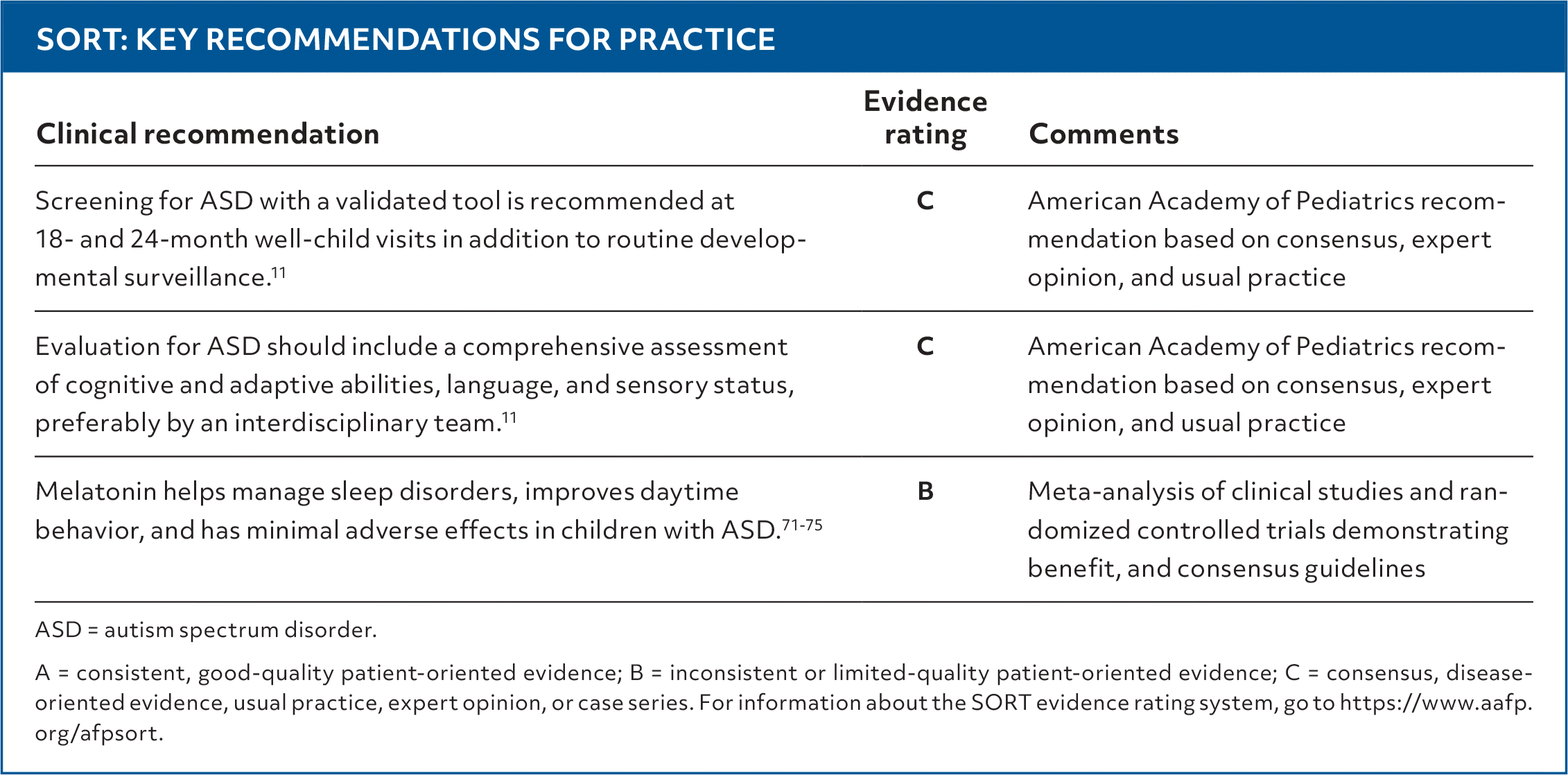
| Clinical recommendation | Evidence rating | Comments |
|---|---|---|
| Screening for ASD with a validated tool is recommended at 18- and 24-month well-child visits in addition to routine developmental surveillance.11 | C | American Academy of Pediatrics recommendation based on consensus, expert opinion, and usual practice |
| Evaluation for ASD should include a comprehensive assessment of cognitive and adaptive abilities, language, and sensory status, preferably by an interdisciplinary team.11 | C | American Academy of Pediatrics recommendation based on consensus, expert opinion, and usual practice |
| Melatonin helps manage sleep disorders, improves daytime behavior, and has minimal adverse effects in children with ASD.71–75 | B | Meta-analysis of clinical studies and randomized controlled trials demonstrating benefit, and consensus guidelines |
ASD = autism spectrum disorder.
A = consistent, good-quality patient-oriented evidence; B = inconsistent or limited-quality patient-oriented evidence; C = consensus, disease-oriented evidence, usual practice, expert opinion, or case series. For information about the SORT evidence rating system, go to https://www.aafp.org/afpsort.
HISTORICAL AND SOCIAL CONTEXT
Historically, autism and related disabilities were identified through the medical model of disease, which locates a disability within the individual. Approaches to treating autism in this model focus on reducing the outward manifestations of neurodevelopmental differences. In contrast, the social model views disability as not caused by the difference or condition itself but by structural factors that do not match the individual's needs for inclusion and accessibility.4 The neurodiversity paradigm recognizes neurologic and developmental differences as part of human diversity. It posits that many of the challenges experienced by autistic people are driven by a misalignment of characteristics of autistic people and society's expectations and biases.5–8 Primary care clinicians should be aware of these different perspectives when working with autistic individuals and their families. There is no current consensus on using identity-first or person-first language in autism spectrum disorder. Clinicians are less likely to use identity-first language,9 whereas many autistic people prefer identity-first language.10
Read the full article
Get immediate access, anytime, anywhere.
Choose a single article, issue, or full-access subscription.
Earn up to 14 CME credits per issue.
