
Musculoskeletal conditions are often managed conservatively, and injection therapies can serve as a diagnostic and therapeutic adjunct in their management. Corticosteroids are commonly injected into joints and soft tissues for their anti-inflammatory properties in pain reduction. Although these injections are widely used, their potential long-term risks, including chondrotoxicity, require careful evaluation of their role in short-term pain relief. Based on current research, hyaluronic acid and prolotherapy may offer pain relief with a potentially lower risk profile compared with corticosteroids, but they are not typically covered by health insurance. Platelet-rich plasma has shown mixed but generally promising results for multiple indications, although its use is limited by out-of-pocket expense. Stem cell therapy remains largely experimental. Compared with landmark-guided techniques, ultrasound guidance offers clinicians increased injection accuracy, safety, and the ability to perform injections that previously required specialty referral.
Case 2. AB is a 55-year-old woman with a history of osteoarthritis of the right knee who presents with increased pain and reduced mobility during the past 6 months. She has tried physical therapy and oral anti-inflammatory medications with limited relief and is asking about the potential benefits of corticosteroid injections.
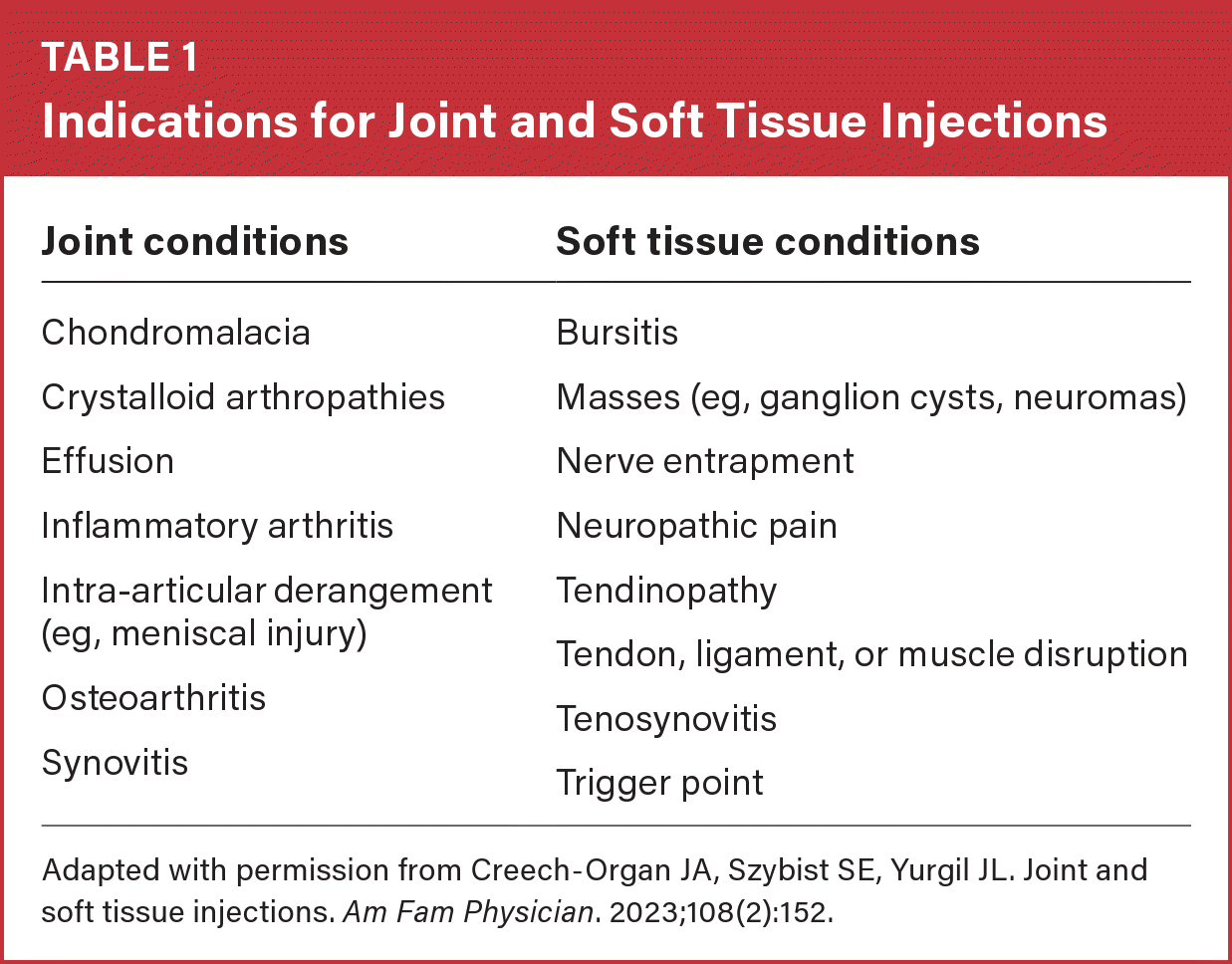
Musculoskeletal conditions are reported by 48% of the US population and account for a substantial component of many primary care visits.1 Joint and soft tissue conditions can be treated with injection therapy (Table 11).
Table 1 Indications for Joint and Soft Tissue Injections
| Joint conditions | Soft tissue conditions |
|---|---|
| Chondromalacia Crystalloid arthropathies Effusion Inflammatory arthritis Intra-articular derangement (eg, meniscal injury) Osteoarthritis Synovitis | Bursitis Masses (eg, ganglion cysts, neuromas) Nerve entrapment Neuropathic pain Tendinopathy Tendon, ligament, or muscle disruption Tenosynovitis Trigger point |
Adapted with permission from Creech-Organ JA, Szybist SE, Yurgil JL. Joint and soft tissue injections. Am Fam Physician. 2023;108(2):152.
Osteoarthritis is one of the most common causes of pain and disability in the United States. An estimated 54.4 million people (22.7% of the US general population) have physician-reported arthritis, and 23.7 million individuals have activity limitations due to arthritis.2
Musculoskeletal conditions are often managed conservatively with a combination of activity modification, self-education, analgesia, and rehabilitation.3 In cases of diagnostic uncertainty, rehabilitation limited by pain, or insufficient response to first-line therapy, soft tissue and joint injections may be used for diagnostic and therapeutic purposes.1 Absolute contraindications for injections include overlying skin or soft tissue infection, underlying fracture, and a history of significant allergic reaction to injection substrate or local anesthetics. Relative contraindications include previous arthroplasty of the affected joint, systemic infection, and a history of vasovagal reaction.1
A 2023 systematic review and meta-analysis found that periprocedural adjustment of warfarin therapy is not required before joint injection or aspiration.4 Similarly, retrospective cohort data suggest that interruption of direct oral anticoagulant therapy is also unnecessary.5
Mechanisms of Action
Corticosteroids are the most well studied of common injection therapies. They have been used for conditions including osteoarthritis, adhesive capsulitis, tenosynovitis, trigger finger, and carpal tunnel syndrome.1 The mechanism of action is thought to be due to a range of anti-inflammatory activities, including inhibition of cytokine, chemokine, and adhesion molecule production as well as opposition of pro-inflammatory cytokines6 (Table 21,7).
Read the full edition
Get immediate access, anytime, anywhere.
Choose a single edition, 1-year or 2-year full-access subscription.
Earn 4 CME credits for this edition.