

Chronic musculoskeletal pain disorders account for 70% to 80% of chronic pain diagnoses in the United States. The most common conditions are low back pain, neck pain, headache disorders, and knee and hip osteoarthritis. Most evidence suggests that treatments for chronic pain are best used in combination, such as in multidisciplinary rehabilitation programs. Evaluation of individual treatments in isolation is limited by small sample sizes, high risk of bias, lack of standardization in clinician delivery and treatment dosage or intensity, and inconsistent categorization of treatment techniques. Moderate-certainty evidence supports the effectiveness of exercise-based therapies, whereas low- to moderate-certainty evidence supports the use of osteopathic manipulative treatment for pain management across multiple body regions. Additional available therapies include other types of manual therapy (eg, spinal manipulative therapy, chiropractic care), massage therapy, Rolfing, traction, transcutaneous electrical nerve stimulation, therapeutic ultrasound, laser therapy, dry needling, shockwave therapy, and kinesio taping.
Case 3. GH is a 50-year-old man with chronic shoulder pain due to rotator cuff tendinopathy. He has tried oral medications and home exercises with minimal relief. He heard about osteopathic manipulative therapy from a friend and asks you whether it would help his shoulder pain and limited mobility.
Chronic musculoskeletal pain disorders account for 70% to 80% of chronic pain diagnoses in the United States.1 The most common conditions are low back pain, neck pain, headache disorders, and knee and hip osteoarthritis.2
A 2008 Medical Expenditure Panel Survey estimated that approximately 100 million US adults were affected by chronic pain. Associated health care and lost productivity costs were estimated to range from $560 to $650 billion annually, exceeding those of heart disease ($309 billion), cancer ($243 billion), and diabetes ($188 billion).3 These figures notably exclude costs related to pain in vulnerable populations such as long-term care residents, children, and incarcerated individuals.
Due to the multifactorial nature of pain, most evidence suggests the treatments for chronic musculoskeletal pain are best used in combination, such as in multidisciplinary rehabilitation programs.4 Evaluating individual treatments in isolation is challenging because of study limitations such as small sample sizes, high risk of bias, lack of standardization in clinician delivery and treatment dosage or intensity, and inconsistent categorization of treatment techniques.
Exercise-Based Therapies
Exercise-based therapies, including therapeutic exercises and home exercise programs, may be prescribed by a clinician or delivered by a physical therapist (Table 15–8). Active patient participation is critical to the effectiveness of the therapies. A study that included 300 patients at an outpatient pain clinic found approximately one-half adhered to their prescribed home exercise program. Younger patients and those who received comprehensive instructions were significantly more likely to adhere, whereas patients with pain in multiple body regions had lower adherence.9 Despite this issue, home exercise programs remain advantageous given their low cost and accessibility.
Table 1 Exercise-Based and Manual Therapies for Musculoskeletal Conditions
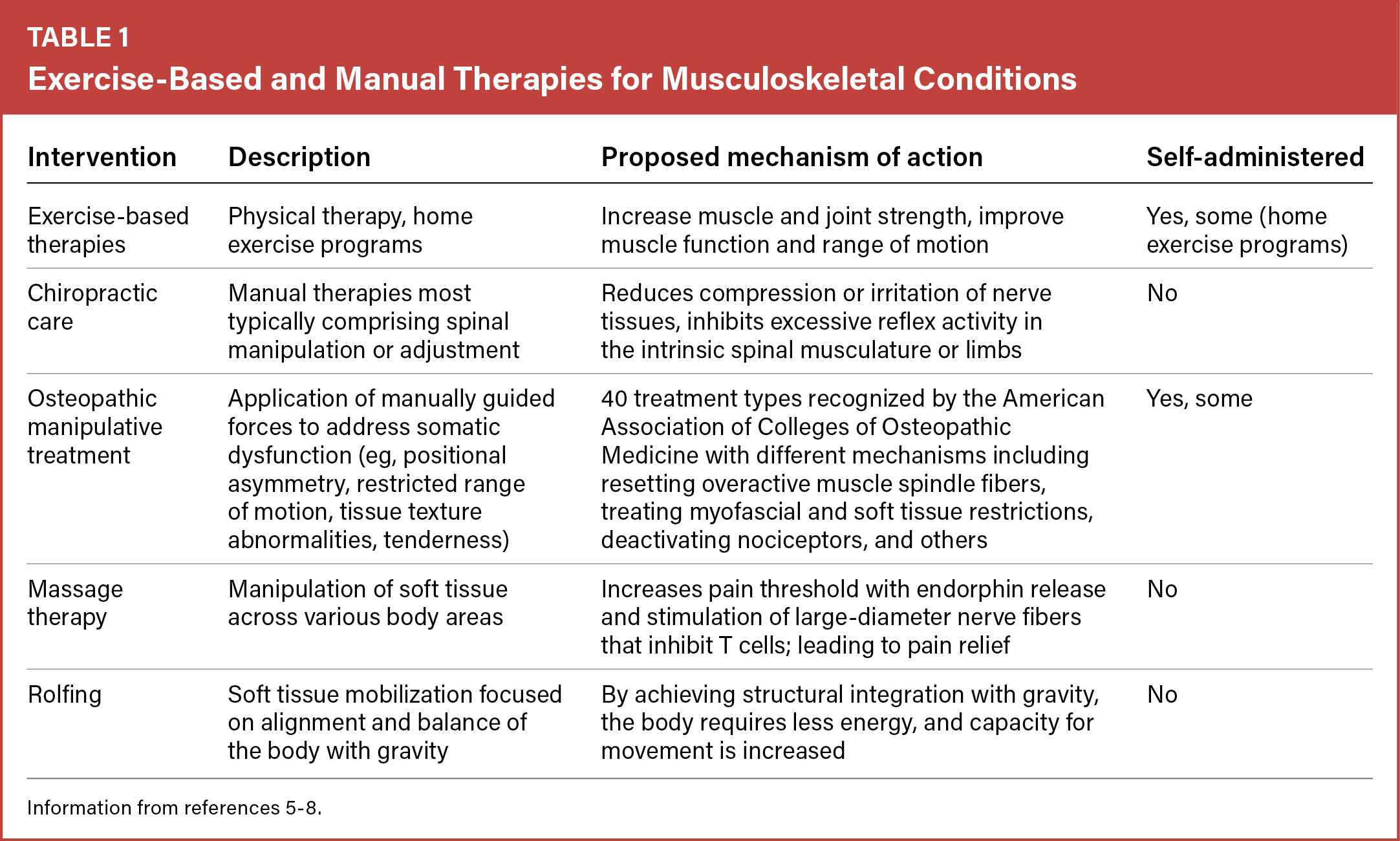
| Intervention | Description | Proposed mechanism of action | Self-administered |
|---|---|---|---|
| Exercise-based therapies | Physical therapy, home exercise programs | Increase muscle and joint strength, improve muscle function and range of motion | Yes, some (home exercise programs) |
| Chiropractic care | Manual therapies most typically comprising spinal manipulation or adjustment | Reduces compression or irritation of nerve tissues, inhibits excessive reflex activity in the intrinsic spinal musculature or limbs | No |
| Osteopathic manipulative treatment | Application of manually guided forces to address somatic dysfunction (eg, positional asymmetry, restricted range of motion, tissue texture abnormalities, tenderness) | 40 treatment types recognized by the American Association of Colleges of Osteopathic Medicine with different mechanisms including resetting overactive muscle spindle fibers, treating myofascial and soft tissue restrictions, deactivating nociceptors, and others | Yes, some |
| Massage therapy | Manipulation of soft tissue across various body areas | Increases pain threshold with endorphin release and stimulation of large-diameter nerve fibers that inhibit T cells; leading to pain relief | No |
| Rolfing | Soft tissue mobilization focused on alignment and balance of the body with gravity | By achieving structural integration with gravity, the body requires less energy, and capacity for movement is increased | No |
Read the full edition
Get immediate access, anytime, anywhere.
Choose a single edition, 1-year or 2-year full-access subscription.
Earn 4 CME credits for this edition.
