

A 22-month-old girl presented with a rash that had worsened over the previous four weeks. The rash began as a small patch in the right axilla, then spread to the entire right side of the torso. The rash became pruritic and more confluent as it spread. She did not have associated fevers or chills. The rash was worsened with hydrocortisone use.
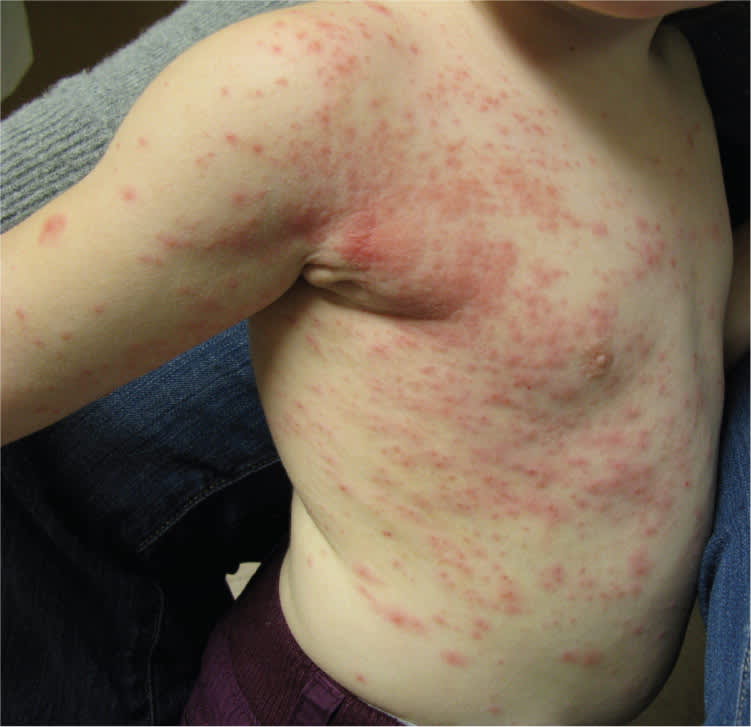
The patient was otherwise healthy, with no changes in diet or bowel habits. Examination revealed an erythematous, maculopapular rash on the right side of the trunk that was worse at the axilla (Figures 1 and 2). No purpura or petechiae were noted.
Figure 1.
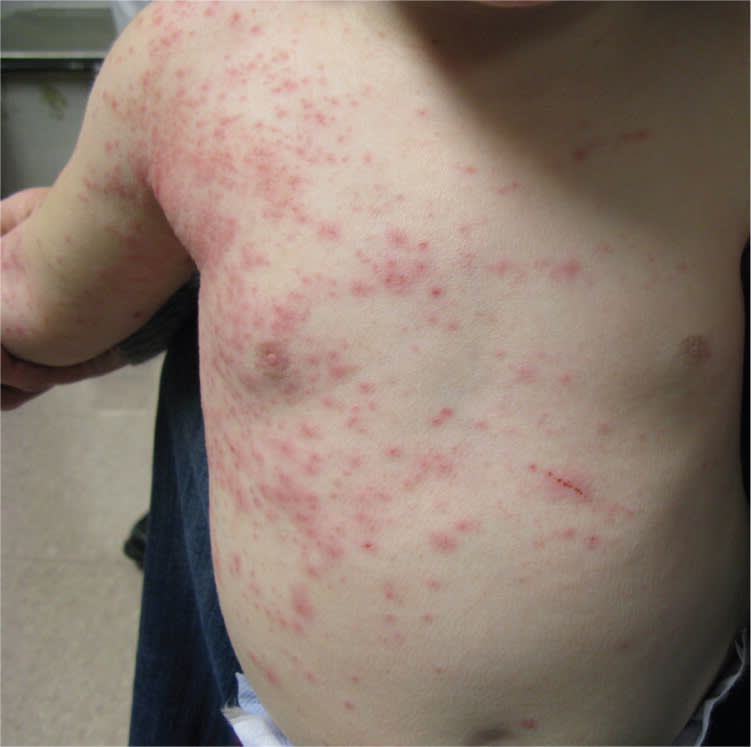
Figure 2.
Question
Based on the patient's history and physical examination findings, which one of the following is the most likely diagnosis?
A. Gianotti-Crosti syndrome.
B. Herpes zoster.
C. Measles.
D. Unilateral laterothoracic exanthem.
Discussion
The answer is D: unilateral laterothoracic exanthem. The disease was first described in 1962,1 and may also be called asymmetrical periflexural exanthem of childhood.2 It usually occurs in children around two years of age, but can appear between six months to 10 years of age. The male-to-female ratio is 1:2, and most cases are seen in the winter and spring. Typically, patients have fever or an upper respiratory or gastrointestinal prodrome. The disease lasts three to six weeks and resolves spontaneously, usually without recurrence.3–5
The rash associated with this exanthem is characterized by a unilateral location with lesions spreading in a centrifugal pattern. The lesions may spread to the contralateral side as the disease progresses, but maintain a unilateral predominance. Although the axilla is the most common site at the onset of the rash, antecubital, inguinal, or popliteal folds may also be affected.2
Although the pathogenesis is unclear,3 a viral etiology is suspected based on similarities to other viral exanthems.2 Unilateral laterothoracic exanthem has been reported in adults, with similar clinical features to those seen in children. This supports the hypothesis of a viral etiology because the first contact with a virus is more likely in childhood, whereas adults may develop symptoms if first contact with the virus happens later in life.2 Treatment with topical corticosteroids is directed at relieving symptoms, most commonly pruritus.3
Gianotti-Crosti syndrome causes a brownish-red rash that may be maculopapular. The rash is symmetrical and typically involves the cheeks, buttocks, forearms, and legs. It generally does not affect the trunk.
The rash associated with herpes zoster is unilateral and dermatomal, and is characterized by vesicular lesions. The lesions may develop for up to one week, then begin to crust after one to two weeks.
The measles rash begins on the face and spreads to the rest of the body. It is typically associated with fever, conjunctivitis, coryza, and cough. The rash usually resolves within a week with fine desquamation.
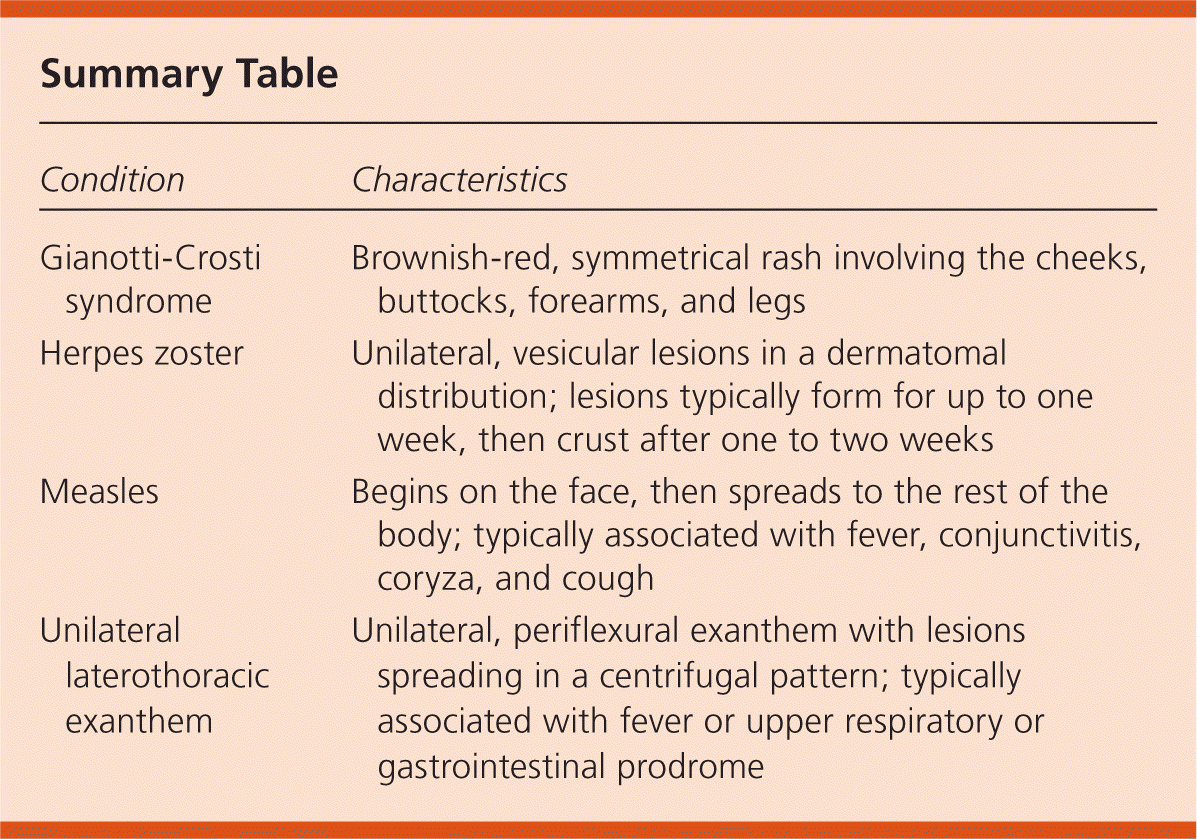
Summary Table
| Condition | Characteristics |
|---|---|
| Gianotti-Crosti syndrome | Brownish-red, symmetrical rash involving the cheeks, buttocks, forearms, and legs |
| Herpes zoster | Unilateral, vesicular lesions in a dermatomal distribution; lesions typically form for up to one week, then crust after one to two weeks |
| Measles | Begins on the face, then spreads to the rest of the body; typically associated with fever, conjunctivitis, coryza, and cough |
| Unilateral laterothoracic exanthem | Unilateral, periflexural exanthem with lesions spreading in a centrifugal pattern; typically associated with fever or upper respiratory or gastrointestinal prodrome |
