

Elizabeth D. Close, MD
April O. Gunn, DO
Alexandria Cooke, MD

American Family Physician. 2023;108(6):605-613.

Author disclosure: No relevant financial relationships.

Primary care for women and other patients with similar reproductive potential can include a discussion about pregnancy and, depending on the patient’s intent, contraceptive care or preconception care. Folic acid supplementation of at least 400 mcg per day is recommended to reduce the risk of neural tube defects, because many pregnancies are unplanned. Having a body mass index of 18.5 to 24.9 kg per m2 before pregnancy also reduces complications. Patients with a history of bariatric surgery should delay pregnancy for at least 12 months post-procedure and ensure that their nutritional status is adequate before conception. It is essential to review the patient’s medications and chronic medical conditions to avoid teratogens and optimize treatment before conception to reduce maternal and fetal morbidity and mortality. Having a prepregnancy A1C level of less than 6.5% is strongly recommended for patients with diabetes mellitus to minimize congenital anomalies and complications. Vaccinations should be updated to prevent adverse outcomes related to infections. Infectious disease screenings should be updated before conception to allow for treatment, prophylaxis, or timing of pregnancy to avoid complications. Screening and counseling should be provided for substance use and potential environmental exposures to identify and mitigate detrimental exposures before pregnancy.

The World Health Organization recognizes preconception care as a way to improve the health of women before pregnancy and to improve pregnancy-related maternal and fetal outcomes.1 Individuals with reproductive potential should be encouraged during routine visits to develop a reproductive plan, regardless of their intent to become pregnant, because about 45% of pregnancies in the United States are unintended.2

SORT: KEY RECOMMENDATIONS FOR PRACTICE
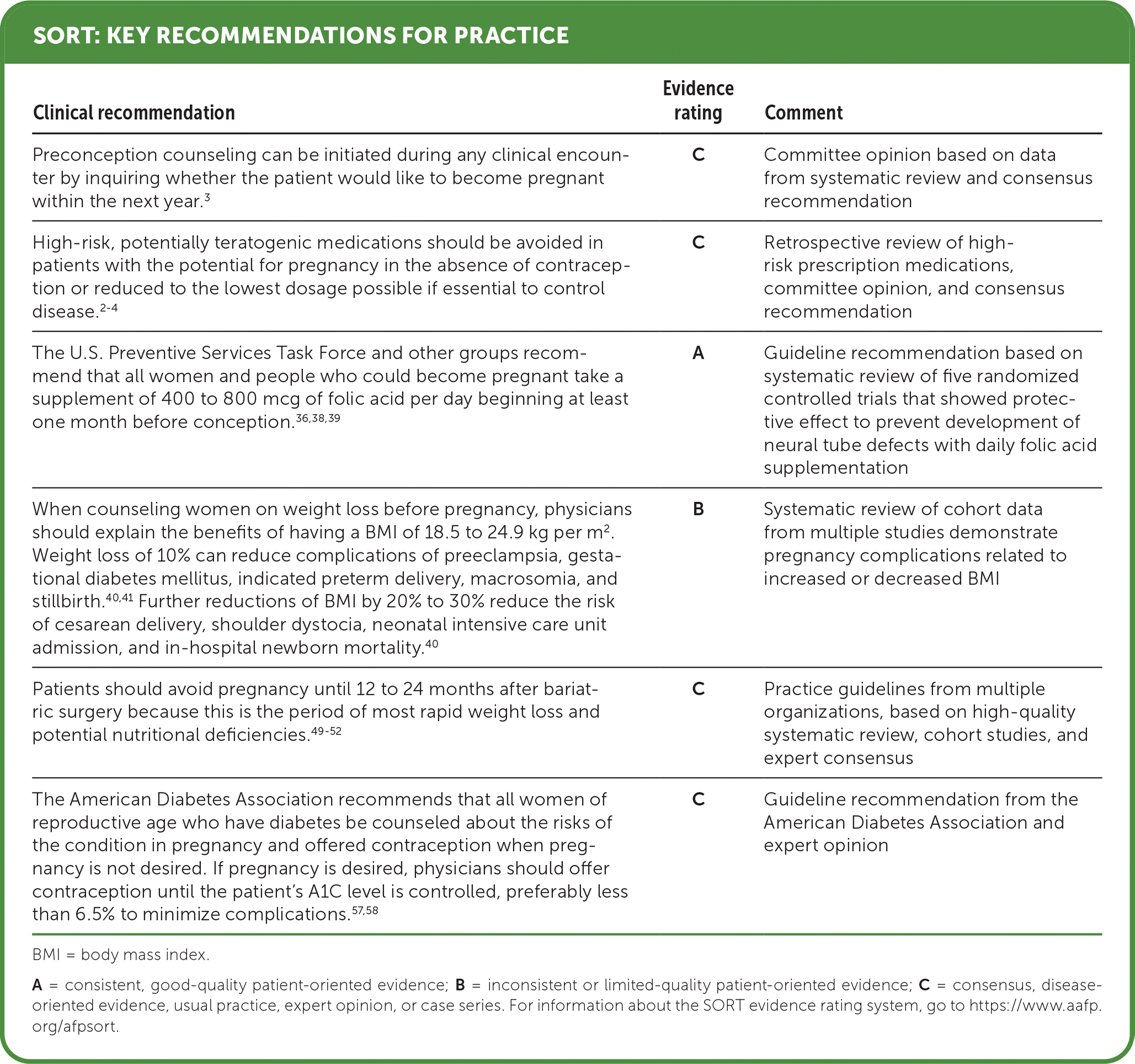
Clinical recommendation Evidence rating Comment
Preconception counseling can be initiated during any clinical encounter by inquiring whether the patient would like to become pregnant within the next year.3 C Committee opinion based on data from systematic review and consensus recommendation
High-risk, potentially teratogenic medications should be avoided in patients with the potential for pregnancy in the absence of contraception or reduced to the lowest dosage possible if essential to control disease.2–4 C Retrospective review of high-risk prescription medications, committee opinion, and consensus recommendation
The U.S. Preventive Services Task Force and other groups recommend that all women and people who could become pregnant take a supplement of 400 to 800 mcg of folic acid per day beginning at least one month before conception.36,38,39 A Guideline recommendation based on systematic review of five randomized controlled trials that showed protective effect to prevent development of neural tube defects with daily folic acid supplementation
When counseling women on weight loss before pregnancy, physicians should explain the benefits of having a BMI of 18.5 to 24.9 kg per m2. Weight loss of 10% can reduce complications of preeclampsia, gestational diabetes mellitus, indicated preterm delivery, macrosomia, and stillbirth.40,41 Further reductions of BMI by 20% to 30% reduce the risk of cesarean delivery, shoulder dystocia, neonatal intensive care unit admission, and in-hospital newborn mortality.40 B Systematic review of cohort data from multiple studies demonstrate pregnancy complications related to increased or decreased BMI
Patients should avoid pregnancy until 12 to 24 months after bariatric surgery because this is the period of most rapid weight loss and potential nutritional deficiencies.49–52 C Practice guidelines from multiple organizations, based on high-quality systematic review, cohort studies, and expert consensus
The American Diabetes Association recommends that all women of reproductive age who have diabetes be counseled about the risks of the condition in pregnancy and offered contraception when pregnancy is not desired. If pregnancy is desired, physicians should offer contraception until the patient’s A1C level is controlled, preferably less than 6.5% to minimize complications.57,58 C Guideline recommendation from the American Diabetes Association and expert opinion

BMI = body mass index.

A = consistent, good-quality patient-oriented evidence; B = inconsistent or limited-quality patient-oriented evidence; C = consensus, disease-oriented evidence, usual practice, expert opinion, or case series. For information about the SORT evidence rating system, go to https://www.aafp.org/afpsort.

ELIZABETH D. CLOSE, MD, FAAFP, is an associate professor in the Department of Family Medicine at the University of Tennessee Health Science Center College of Medicine–Chattanooga.

APRIL O. GUNN, DO, is an assistant professor in the Department of Family Medicine at the University of Tennessee Health Science Center College of Medicine–Chattanooga.

ALEXANDRIA COOKE, MD, is an assistant professor in the Department of Family Medicine at the University of Tennessee Health Science Center College of Medicine–Chattanooga.

Address correspondence to Elizabeth D. Close, MD, FAAFP, University of Tennessee College of Medicine, 1100 E. Third St., Chattanooga, TN 37403 (elizabeth.close@erlanger.org). Reprints are not available from the authors.

Author disclosure: No relevant financial relationships.

  1. 1.World Health Organization. Preconception care: maximizing the gains for maternal and child health. Policy brief. Geneva 2013. Accessed October 27, 2023. https://www.who.int/publications/i/item/WHO-FWC-MCA-13.02
  2. 2.Finer LB, Zolna MR. Declines in unintended pregnancy in the United States, 2008–2011. N Engl J Med. 2016;374(9):843-852.
  3. 3.American College of Obstetricians and Gynecologists. ACOG committee opinion no. 762: prepregnancy counseling. Obstet Gynecol. 2019;133(1):e78-e89.
  4. 4.Panchal BD, Cash R, Moreno C, et al. High-risk medication prescriptions in primary care for women without documented contraception. J Am Board Fam Med. 2019;32(4):474-480.
  5. 5.Cragan JD, Friedman JM, Holmes LB, et al. Ensuring the safe and effective use of medications during pregnancy: planning and prevention through preconception care. Matern Child Health J. 2006;10(5 suppl):S129-S135.
  6. 6.Yonkers KA, Wisner KL, Stewart DE, et al. The management of depression during pregnancy: a report from the American Psychiatric Association and the American College of Obstetricians and Gynecologists. Obstet Gynecol. 2009;114(3):703-713.
  7. 7.Gluck JC, Gluck PA. Asthma controller therapy during pregnancy. Am J Obstet Gynecol. 2005;192(2):369-380.
  8. 8.Anderson KN, Dutton AC, Broussard CS, et al. ADHD medication use during pregnancy and risk for selected birth defects: National Birth Defects Prevention Study, 1998–2011. J Atten Disord. 2020;24(3):479-489.
  9. 9.Huybrechts KF, Hernández-Díaz S, Patorno E, et al. Antipsychotic use in pregnancy and the risk for congenital malformations. JAMA Psychiatry. 2016;73(9):938-946.
  10. 10.ElSayed NA, Aleppo G, Aroda VR, et al.; on behalf of the American Diabetes Association. 15. Management of diabetes in pregnancy: standards of care in diabetes-2023. Diabetes Care. 2023;46(suppl 1):S254-S266.
  11. 11.ElSayed NA, Aleppo G, Aroda VR, et al.; on behalf of the American Diabetes Association. 10. Cardiovascular disease and risk management: standards of care in diabetes-2023 [published correction appears in Diabetes Care. 2023; 46(4): 898]. Diabetes Care. 2023;46(suppl 1):S158-S190.
  12. 12.Alexander EK, Pearce EN, Brent GA, et al. 2017 Guidelines of the American Thyroid Association for the diagnosis and management of thyroid disease during pregnancy and the postpartum [published correction appears in Thyroid. 2017; 27(9): 1212]. Thyroid. 2017;27(3):315-389.
  13. 13.American College of Obstetricians and Gynecologists. ACOG committee opinion no. 711: opioid use and opioid use disorder in pregnancy. Obstet Gynecol. 2017;130(2):e81-e94.
  14. 14.Harden CL, Hopp J, Ting TY, et al.; American Academy of Neurology; American Epilepsy Society. Practice parameter update: management issues for women with epilepsy—focus on pregnancy (an evidence-based review): obstetrical complications and change in seizure frequency: report of the Quality Standards Subcommittee and Therapeutics and Technology Assessment Subcommittee of the American Academy of Neurology and American Epilepsy Society. Neurology. 2009;73(2):126-132.
  15. 15.Beyer-Westendorf J, Tittl L, Bistervels I, et al. Safety of direct oral anticoagulant exposure during pregnancy: a retrospective cohort study. Lancet Haematol. 2020;7(12):e884-e891.
  16. 16.Silver RM, Warren JE. Preconception counseling for women with thrombophilia. Clin Obstet Gynecol. 2006;49(4):906-919.
  17. 17.U.S. Preventive Services Task Force. Chlamydia and gonorrhea: screening. September 14, 2021. Accessed January 19, 2023. https://www.uspreventiveservicestaskforce.org/uspstf/recommendation/chlamydia-and-gonorrhea-screening
  18. 18.U.S. Preventive Services Task Force. Genital herpes infection: serologic screening. February 14, 2023. Accessed October 27, 2023. https://www.uspreventiveservicestaskforce.org/uspstf/recommendation/genital-herpes-serologic-screening
  19. 19.U.S. Preventive Services Task Force. Hepatitis B virus infection in adolescents and adults: screening. December 15, 2020. Accessed January 19, 2023. https://www.uspreventiveservicestaskforce.org/uspstf/recommendation/hepatitis-b-virus-infection-screening
  20. 20.U.S. Preventive Services Task Force. Hepatitis C virus infection in adolescents and adults: screening. March 2, 2020. Accessed January 19, 2023. https://www.uspreventiveservicestaskforce.org/uspstf/recommendation/hepatitis-c-screening
  21. 21.U.S. Preventive Services Task Force. Human immunodeficiency virus (HIV) infection: screening. June 11, 2019. Accessed January 19, 2023. https://www.uspreventiveservicestaskforce.org/uspstf/recommendation/human-immunodeficiency-virus-hiv-infection-screening
  22. 22.U.S. Preventive Services Task Force. Syphilis infection in nonpregnant adolescents and adults: screening. September 27, 2022. Accessed January 19, 2023. https://www.uspreventiveservicestaskforce.org/uspstf/recommendation/syphilis-infection-nonpregnant-adults-adolescents-screening
  23. 23.U.S. Preventive Services Task Force. Latent tuberculosis infection in adults: screening. May 2, 2023. Accessed October 27, 2023. https://www.uspreventiveservicestaskforce.org/uspstf/recommendation/latent-tuberculosis-infection-screening
  24. 24.Weng MK, Doshani M, Khan MA, et al. Universal hepatitis B vaccination in adults aged 19–59 years: updated recommendations of the Advisory Committee on Immunization Practices - United States, 2022. MMWR Morb Mortal Wkly Rep. 2022;71(13):477-483.
  25. 25.Grohskopf LA, Blanton LH, Ferdinands JM, et al. Prevention and control of seasonal influenza with vaccines: recommendations of the Advisory Committee on Immunization Practices - United States, 2022–23 influenza season. MMWR Recomm Rep. 2022;71(1):1-28.
  26. 26.McLean HQ, Fiebelkorn AP, Temte JL, et al.; Centers for Disease Control and Prevention. Prevention of measles, rubella, congenital rubella syndrome, and mumps, 2013: summary recommendations of the Advisory Committee on Immunization Practices (ACIP) [published correction appears in MMWR Recomm Rep. 2015; 64(9): 259]. MMWR Recomm Rep. 2013;62(RR-04):1-34.
  27. 27.Marin M, Güris D, Chaves SS, et al.; Advisory Committee on Immunization Practices; Centers for Disease Control and Prevention (CDC). Prevention of varicella: recommendations of the Advisory Committee on Immunization Practices (ACIP). MMWR Recomm Rep. 2007;56(RR-4):1-40.
  28. 28.Centers for Disease Control and Prevention. Adult immunization schedule by age. Accessed January 19, 2023. https://www.cdc.gov/vaccines/schedules/hcp/imz/adult.html
  29. 29.Meites E, Szilagyi PG, Chesson HW, et al. Human papillomavirus vaccination for adults: updated recommendations of the Advisory Committee on Immunization Practices. MMWR Morb Mortal Wkly Rep. 2019;68(32):698-702.
  30. 30.Centers for Disease Control and Prevention. COVID-19 vaccines for people who would like to have a baby. Updated September 22, 2023. Accessed October 27, 2023. https://www.cdc.gov/coronavirus/2019-ncov/vaccines/planning-for-pregnancy.html
  31. 31.Lassi ZS, Imam AM, Dean SV, et al. Preconception care: caffeine, smoking, alcohol, drugs and other environmental chemical/radiation exposure. Reprod Health. 2014;11(suppl 3):S6.
  32. 32.Lo JO, Hedges JC, Girardi G. Impact of cannabinoids on pregnancy, reproductive health, and offspring outcomes. Am J Obstet Gynecol. 2022;227(4):571-581.
  33. 33.Sathyanarayana S, Focareta J, Dailey T, et al. Environmental exposures: how to counsel preconception and prenatal patients in the clinical setting. Am J Obstet Gynecol. 2012;207(6):463-470.
  34. 34.American College of Obstetricians and Gynecologists’ Committee on Obstetric Practice. Reducing prenatal exposure to toxic environmental agents: ACOG committee opinion, number 832. Obstet Gynecol. 2021;138(1):e40-e54.
  35. 35.Segal TR, Giudice LC. Before the beginning: environmental exposures and reproductive and obstetrical outcomes. Fertil Steril. 2019;112(4):613-621.
  36. 36.Raghuraman N, Tuuli MG. Preconception care as an opportunity to optimize pregnancy outcomes. JAMA. 2021;326(1):79-80.
  37. 37.World Health Organization. Preconception care to reduce maternal and childhood mortality and morbidity: policy brief. 2013. Accessed October 27, 2023. https://iris.who.int/handle/10665/340533
  38. 38.U.S. Preventive Services Task Force. Folic acid supplementation to prevent neural tube defects: preventive medication. August 1, 2023. Accessed October 27, 2023. https://www.uspreventiveservicestaskforce.org/uspstf/recommendation/folic-acid-for-the-prevention-of-neural-tube-defects-preventive-medication
  39. 39.Prasad P, Mori M, Toriello HV; ACMG Professional Practice and Guidelines Committee. Focused Revision: policy statement on folic acid and neural tube defects [published correction appears in Genet Med. 2021; 23(12): 2469]. Genet Med. 2021;23(12):2464-2466.
  40. 40.Schummers L, Hutcheon JA, Bodnar LM, et al. Risk of adverse pregnancy outcomes by prepregnancy body mass index: a population-based study to inform prepregnancy weight loss counseling. Obstet Gynecol. 2015;125(1):133-143.
  41. 41.Delcore L, Lacoursiere DY. Preconception care of the obese woman. Clin Obstet Gynecol. 2016;59(1):129-139.
  42. 42.Diabetes Prevention Program (DPP) Research Group. The Diabetes Prevention Program (DPP): description of lifestyle intervention. Diabetes Care. 2002;25(12):2165-2171.
  43. 43.Piercy KL, Troiano RP, Ballard RM, et al. The physical activity guidelines for Americans. JAMA. 2018;320(19):2020-2028.
  44. 44.Ozempic highlights of prescribing information. Accessed February 22, 2023. https://www.ozempic.com/prescribing-information.html
  45. 45.Bjørk MH, Zoega H, Leinonen MK, et al. Association of prenatal exposure to antiseizure medication with risk of autism and intellectual disability [published correction appears in JAMA Neurol. 2022; 79(7): 727]. JAMA Neurol. 2022;79(7):672-681.
  46. 46.Banerjee ES, Schroeder R, Harrison TD. Metabolic surgery for adult obesity: common questions and answers. Am Fam Physician. 2022;105(6):593-601.
  47. 47.American Society for Metabolic and Bariatric Surgery. Estimate of bariatric surgery numbers, 2011–2021. June 2022.Accessed February 23, 2023. https://asmbs.org/resources/estimate-of-bariatric-surgery-numbers
  48. 48.Ciangura C, Coupaye M, Deruelle P, et al.; BARIA-MAT Group. Clinical practice guidelines for childbearing female candidates for bariatric surgery, pregnancy, and post-partum management after bariatric surgery [published correction appears in Obes Surg. 2020; 30(9): 3650–3651]. Obes Surg. 2019;29(11):3722-3734.
  49. 49.Parrott J, Frank L, Rabena R, et al. American Society for Metabolic and Bariatric Surgery Integrated Health Nutritional Guidelines for the surgical weight loss patient 2016 update: micronutrients. Surg Obes Relat Dis. 2017;13(5):727-741.
  50. 50.Mechanick JI, Youdim A, Jones DB, et al. Clinical practice guidelines for the perioperative nutritional, metabolic, and nonsurgical support of the bariatric surgery patient--2013 update: cosponsored by American Association of Clinical Endocrinologists, the Obesity Society, and American Society for Metabolic & Bariatric Surgery. Endocr Pract. 2013;19(2):337-372.
  51. 51.American College of Obstetricians and Gynecologists. ACOG practice bulletin no. 105: bariatric surgery and pregnancy. Obstet Gynecol. 2009;113(6):1405-1413.
  52. 52.Chapmon K, Stoklossa CJ, Benson-Davies S; Integrated Health Clinical Issues Committee of the American Society for Metabolic and Bariatric Surgery. Nutrition for pregnancy after metabolic and bariatric surgery: literature review and practical guide. Surg Obes Relat Dis. 2022;18(6):820-830.
  53. 53.Galazis N, Docheva N, Simillis C, et al. Maternal and neonatal outcomes in women undergoing bariatric surgery: a systematic review and meta-analysis. Eur J Obstet Gynecol Reprod Biol. 2014;181:45-53.
  54. 54.Alamri SH, Abdeen GN. Maternal nutritional status and pregnancy outcomes post-bariatric surgery. Obes Surg. 2022;32(4):1325-1340.
  55. 55.Shawe J, Ceulemans D, Akhter Z, et al. Pregnancy after bariatric surgery: consensus recommendations for periconception, antenatal and postnatal care. Obes Rev. 2019;20(11):1507-1522.
  56. 56.Snoek K, van de Woestijne N, Willemsen S, et al. The impact of preconception gastric bypass surgery on maternal micronutrient status before and during pregnancy: a retrospective cohort study in the Netherlands between 2009 and 2019. Nutrients. 2022;14(4):736.
  57. 57.Alexopoulos AS, Blair R, Peters AL. Management of preexisting diabetes in pregnancy: a review. JAMA. 2019;321(18):1811-1819.
  58. 58.American Diabetes Association. Standards of care in diabetes-2023 abridged for primary care providers [published correction appears in Clin Diabetes. 2023; 41(2): 328]. Clin Diabetes. 2022;41(1):4-31.
  59. 59.Wu Y, Liu B, Sun Y, et al. Association of maternal prepregnancy diabetes and gestational diabetes mellitus with congenital anomalies of the newborn. Diabetes Care. 2020;43(12):2983-2990.
  60. 60.Tita AT, Szychowski JM, Boggess K, et al.; Chronic Hypertension and Pregnancy (CHAP) Trial Consortium. Treatment for mild chronic hypertension during pregnancy. N Engl J Med. 2022;386(19):1781-1792.
  61. 61.Ogunwole SM, Chen X, Mitta S, et al. Interconception care for primary care providers: consensus recommendations on preconception and postpartum management of reproductive-age patients with medical comorbidities. Mayo Clin Proc Innov Qual Outcomes. 2021;5(5):872-890.
  62. 62.Wilson SA, Stem LA, Bruehlman RD. Hypothyroidism: diagnosis and treatment. Am Fam Physician. 2021;103(10):605-613.
  63. 63.Okosieme OE, Khan I, Taylor PN. Preconception management of thyroid dysfunction. Clin Endocrinol (Oxf). 2018;89(3):269-279.
  64. 64.U.S. Preventive Services Task Force. Intimate partner violence, elder abuse, and abuse of vulnerable adults: screening. October 23, 2018. Accessed May 5, 2023. https://www.uspreventiveservicestaskforce.org/uspstf/recommendation/intimate-partner-violence-and-abuse-of-elderly-and-vulnerable-adults-screening
  65. 65.Thompson MA, Horberg MA, Agwu AL, et al. Primary care guidance for persons with human immunodeficiency virus: 2020 update by the HIV Medicine Association of the Infectious Diseases Society of America [published corrections appear in Clin Infect Dis. 2022; 74(10): 1893–1898, and Clin Infect Dis. 2022; 75(11): 2052]. Clin Infect Dis. 2021;73(11):e3572-e3605.
  66. 66.Farahi N, Zolotor A. Recommendations for preconception counseling and care. Am Fam Physician. 2013;88(8):499-506.
  67. 67.Lu MC. Recommendations for preconception care. Am Fam Physician. 2007;76(3):397-400.
  68. 68.Brundage SC. Preconception health care. Am Fam Physician. 2002;65(12):2507-2515.

Copyright © 2026 by the American Academy of Family Physicians.

This content is owned by the AAFP. A person viewing it online may make one printout of the material and may use that printout only for his or her personal, non-commercial reference. This material may not otherwise be downloaded, copied, printed, stored, transmitted or reproduced in any medium, whether now known or later invented, except as authorized in writing by the AAFP. See permissions for copyright questions and/or permission requests.
