

Pancreatic Cancer: Rapid Evidence Review

Carl Bryce, MD
Merima Bucaj, DO

American Family Physician. 2024;109(3):245-250.

Author disclosure: No relevant financial relationships.

Pancreatic cancer is relatively uncommon and carries a poor prognosis because patients often develop signs or symptoms at a late stage of illness. Patients with a family history, especially those with genetic syndromes, are at a significantly increased risk of pancreatic cancer. Modifiable risk factors include smoking, heavy alcohol use, and obesity. Although patients at increased risk should be screened, screening is not recommended for asymptomatic people at average risk. The differential diagnosis for a symptomatic patient is broad, including gastroesophageal reflux disease, gastritis, peptic ulcer disease, chronic pancreatitis, biliary dyskinesia, cholelithiasis, gastroparesis, or constipation. Initial serologic testing should include transaminase and bilirubin levels, and in patients with midepigastric pain, lipase levels. Pancreas-protocol, contrast-enhanced abdominal computed tomography is the imaging test of choice. Carbohydrate antigen 19-9 is the most studied cancer marker and moderately accurate in patients suspected of having cancer; however, the positive predictive value is 0.9% in asymptomatic patients. Treatment includes neoadjuvant or adjuvant chemotherapy and surgery if the cancer is resectable. The treatment approach is best determined by a multidisciplinary, high-volume center. For a patient undergoing chemotherapy, nutritional and psychosocial support and palliation of symptoms should be goals during treatment.

Pancreatic cancer accounts for 3% of all cancer diagnoses and 7% of cancer-related deaths in the United States; pancreatic ductal adenocarcinoma makes up 95% of pancreatic cancers.1 This article provides a summary and review of the best available patient-oriented evidence for pancreatic cancer.

SORT: KEY RECOMMENDATIONS FOR PRACTICE
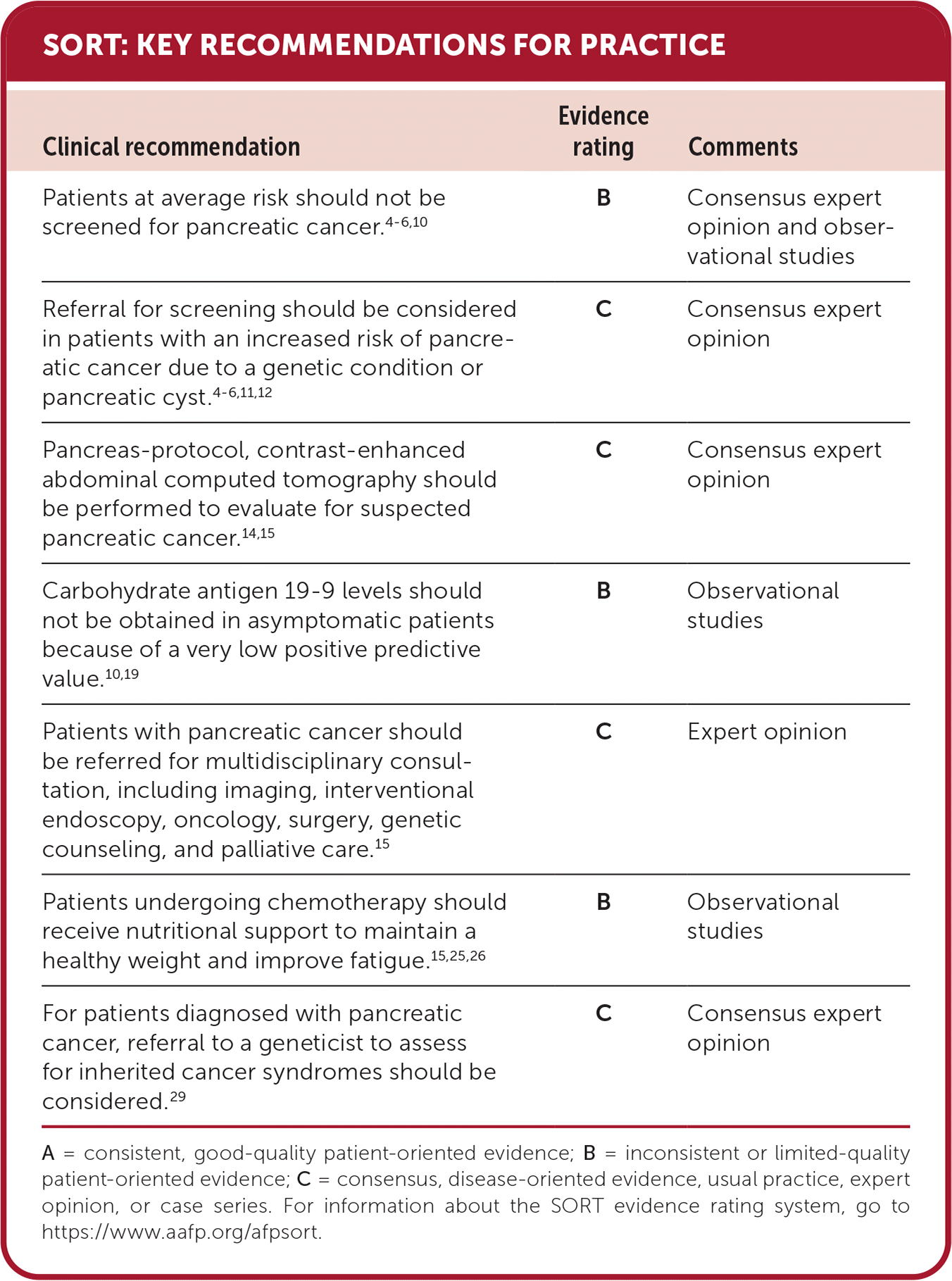
A = consistent, good-quality patient-oriented evidence; B = inconsistent or limited-quality patient-oriented evidence; C = consensus, disease-oriented evidence, usual practice, expert opinion, or case series. For information about the SORT evidence rating system, go to https://www.aafp.org/afpsort.

CARL BRYCE, MD, FAAFP, is program director at the Abrazo Family Medicine Residency in Phoenix, Ariz., and clinical assistant professor in the Department of Family Medicine at Midwestern University Arizona College of Osteopathic Medicine (AZCOM) in Glendale, Ariz.

MERIMA BUCAJ, DO, FAAFP, is chair of the Department of Family Medicine at District Medical Group/Valleywise Health in Phoenix; clinical assistant professor in the Department of Family and Community Medicine at Creighton University School of Medicine in Phoenix; and clinical assistant professor in the Department of Family Medicine at Midwestern University Arizona College of Osteopathic Medicine (AZCOM) in Glendale. At the time this article was written, she was program director of the Abrazo Family Medicine Residency in Phoenix.

Address correspondence to Carl Bryce, MD, FAAFP, 2000 W. Bethany Home Rd., Ste. 200, Phoenix, AZ 85015 (carl.bryce@abrazohealth.com). Reprints are not available from the authors.

Author disclosure: No relevant financial relationships.

  1. 1.American Cancer Society. Cancer facts & figures 2023. Accessed April 3, 2023. https://www.cancer.org/content/dam/cancer-org/research/cancer-facts-and-statistics/annual-cancer-facts-and-figures/2023/2023-cancer-facts-and-figures.pdf
  2. 2.National Cancer Institute. Surveillance, Epidemiology, and End Results Program. Cancer stat facts: pancreatic cancer. Accessed April 3, 2023. https://seer.cancer.gov/statfacts/html/pancreas.html
  3. 3.Hassan MM, Bondy ML, Wolff RA, et al. Risk factors for pancreatic cancer: case-control study. Am J Gastroenterol. 2007;102(12):2696-2707.
  4. 4.Aslanian HR, Lee JH, Canto MI. AGA clinical practice update on pancreas cancer screening in high-risk individuals: expert review. Gastroenterology. 2020;159(1):358-362.
  5. 5.Syngal S, Brand RE, Church JM, et al.; American College of Gastroenterology. ACG clinical guideline: genetic testing and management of hereditary gastrointestinal cancer syndromes. Am J Gastroenterol. 2015;110(2):223-262.
  6. 6.Sawhney MS, Calderwood AH, Thosani NC, et al.; ASGE Standards of Practice Committee. ASGE guideline on screening for pancreatic cancer in individuals with genetic susceptibility: summary and recommendations. Gastrointest Endosc. 2022;95(5):817-826.
  7. 7.Liu X, Zhang ZH, Jiang F. Hepatitis B virus infection increases the risk of pancreatic cancer: a meta-analysis. Scand J Gastroenterol. 2021;56(3):252-258.
  8. 8.Hu JX, Zhao CF, Chen WB, et al. Pancreatic cancer: a review of epidemiology, trend, and risk factors. World J Gastroenterol. 2021;27(27):4298-4321.
  9. 9.Xu M, Jung X, Hines OJ, et al. Obesity and pancreatic cancer: overview of epidemiology and potential prevention by weight loss. Pancreas. 2018;47(2):158-162.
  10. 10.Owens DK, Davidson KW, Krist AH, et al.; US Preventive Services Task Force. Screening for pancreatic cancer. US Preventive Services Task Force recommendation statement. JAMA. 2019;322(5):438-444.
  11. 11.Canto MI, Almario JA, Schulick RD, et al. Risk of neoplastic progression in individuals at high risk for pancreatic cancer undergoing long-term surveillance. Gastroenterology. 2018;155(3):740-751.e2.
  12. 12.Elta GH, Enestvedt BK, Sauer BG, et al. ACG clinical guideline: diagnosis and management of pancreatic cysts. Am J Gastroenterol. 2018;113(4):464-479.
  13. 13.Pyzocha NJ. Galleri test for the detection of cancer. Am Fam Physician. 2022;106(4):459-460.
  14. 14.Kanji ZS, Gallinger S. Diagnosis and management of pancreatic cancer. CMAJ. 2013;185(14):1219-1226.
  15. 15.National Comprehensive Cancer Network. NCCN clinical practice guidelines for pancreatic adenocarcinoma V.2.2023. May 23, 2023. Accessed September 18, 2023. https://www.nccn.org/guidelines/guidelines-process/transparency-process-and-recommendations/GetFileFromFileManagerGuid?FileManagerGuidId=62531874-f464-46bf-8e44-b32ca53123d6
  16. 16.Adamek HE, Albert J, Weitz M, et al. Pancreatic cancer detection with magnetic resonance cholangiopancreatography and endoscopic retrograde cholangiopancreatography: a prospective controlled study. Lancet. 2000;356(9225):190-193.
  17. 17.Zhao B, Zhao B, Chen F. Diagnostic value of serum carbohydrate antigen 19-9 in pancreatic cancer: a systematic review and meta-analysis. Eur J Gastroenterol Hepatol. 2022;34(9):891-904.
  18. 18.Goonetilleke KS, Siriwardena AK. Systematic review of carbohydrate antigen (CA 19-9) as a biochemical marker in the diagnosis of pancreatic cancer. Eur J Surg Oncol. 2007;33(3):266-270.
  19. 19.Kim JE, Lee KT, Lee JK, et al. Clinical usefulness of carbohydrate antigen 19-9 as a screening test for pancreatic cancer in an asymptomatic population. J Gastroenterol Hepatol. 2004;19(2):182-186.
  20. 20.Jang RW, Krzyzanowska MK, Zimmermann C, et al. Palliative care and the aggressiveness of end-of-life care in patients with advanced pancreatic cancer. J Natl Cancer Inst. 2015;107(3):dju424.
  21. 21.Kamarajah SK, Bundred JR, Alrawashdeh W, et al. A systematic review and network meta-analysis of phase III randomised controlled trials for adjuvant therapy following resection of pancreatic ductal adenocarcinoma (PDAC). HPB (Oxford). 2020;22(5):649-659.
  22. 22.van der Gaag NA, Rauws EAJ, van Eijck CHJ, et al. Preoperative biliary drainage for cancer of the head of the pancreas. N Engl J Med. 2010;362(2):129-137.
  23. 23.Bjelakovic G, Nikolova D, Simonetti RG, et al. Antioxidant supplements for prevention of gastrointestinal cancers: a systematic review and meta-analysis. Lancet. 2004;364(9441):1219-1228.
  24. 24.Tröger W, Galun D, Reif M, et al. Quality of life of patients with advanced pancreatic cancer during treatment with mistletoe: a randomized controlled trial. Dtsch Arztebl Int. 2014;111(29–30):493-502.
  25. 25.Briguglio M, Hrelia S, Malaguti M, et al. Food bioactive compounds and their interference in drug pharmacokinetic/pharmacodynamic profiles. Pharmaceutics. 2018;10(4):277.
  26. 26.Kim SH, Lee SM, Jeung HC, et al. The effect of nutrition intervention with oral nutritional supplements on pancreatic and bile duct cancer patients undergoing chemotherapy. Nutrients. 2019;11(5):1145.
  27. 27.Hoehn RS, Rieser CJ, Winters S, et al. A pancreatic cancer multidisciplinary clinic eliminates socioeconomic disparities in treatment and improves survival. Ann Surg Oncol. 2021;28(5):2438-2446.
  28. 28.Arcidiacono PG, Calori G, Carrara S, et al. Celiac plexus block for pancreatic cancer pain in adults. Cochrane Database Syst Rev. 2011(3):CD007519.
  29. 29.Stoffel EM, McKernin SE, Brand R, et al. Evaluating susceptibility to pancreatic cancer: ASCO provisional clinical opinion. J Clin Oncol. 2019;37(2):153-164.
  30. 30.Ye C, Sadula A, Ren S, et al. The prognostic value of CA19-9 response after neoadjuvant therapy in patients with pancreatic cancer: a systematic review and pooled analysis. Cancer Chemother Pharmacol. 2020;86(6):731-740.
  31. 31.De La Cruz MSD, Young AP, Ruffin MT. Diagnosis and management of pancreatic cancer. Am Fam Physician. 2014;89(8):626-632.
  32. 32.Freelove R, Walling AD. Pancreatic cancer: diagnosis and management. Am Fam Physician. 2006;73(3):485-492.

Copyright © 2026 by the American Academy of Family Physicians.

This content is owned by the AAFP. A person viewing it online may make one printout of the material and may use that printout only for his or her personal, non-commercial reference. This material may not otherwise be downloaded, copied, printed, stored, transmitted or reproduced in any medium, whether now known or later invented, except as authorized in writing by the AAFP. See permissions for copyright questions and/or permission requests.
