Cushing's Syndrome: Rapid Evidence Review

David L. Maness, DO, MSS
Grant Studebaker, MD
Christopher M. Knight, MD

American Family Physician. 2024;110(3):270-280.

Author disclosure: No relevant financial relationships.

This clinical content conforms to AAFP criteria for CME.

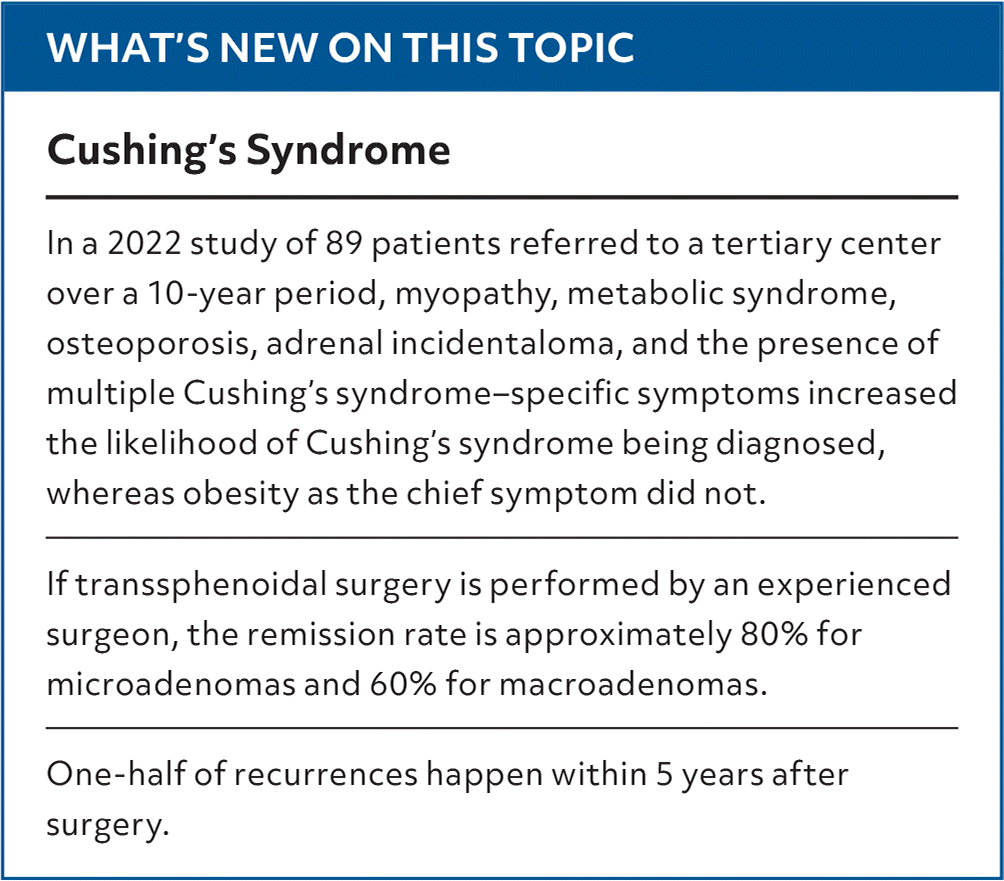
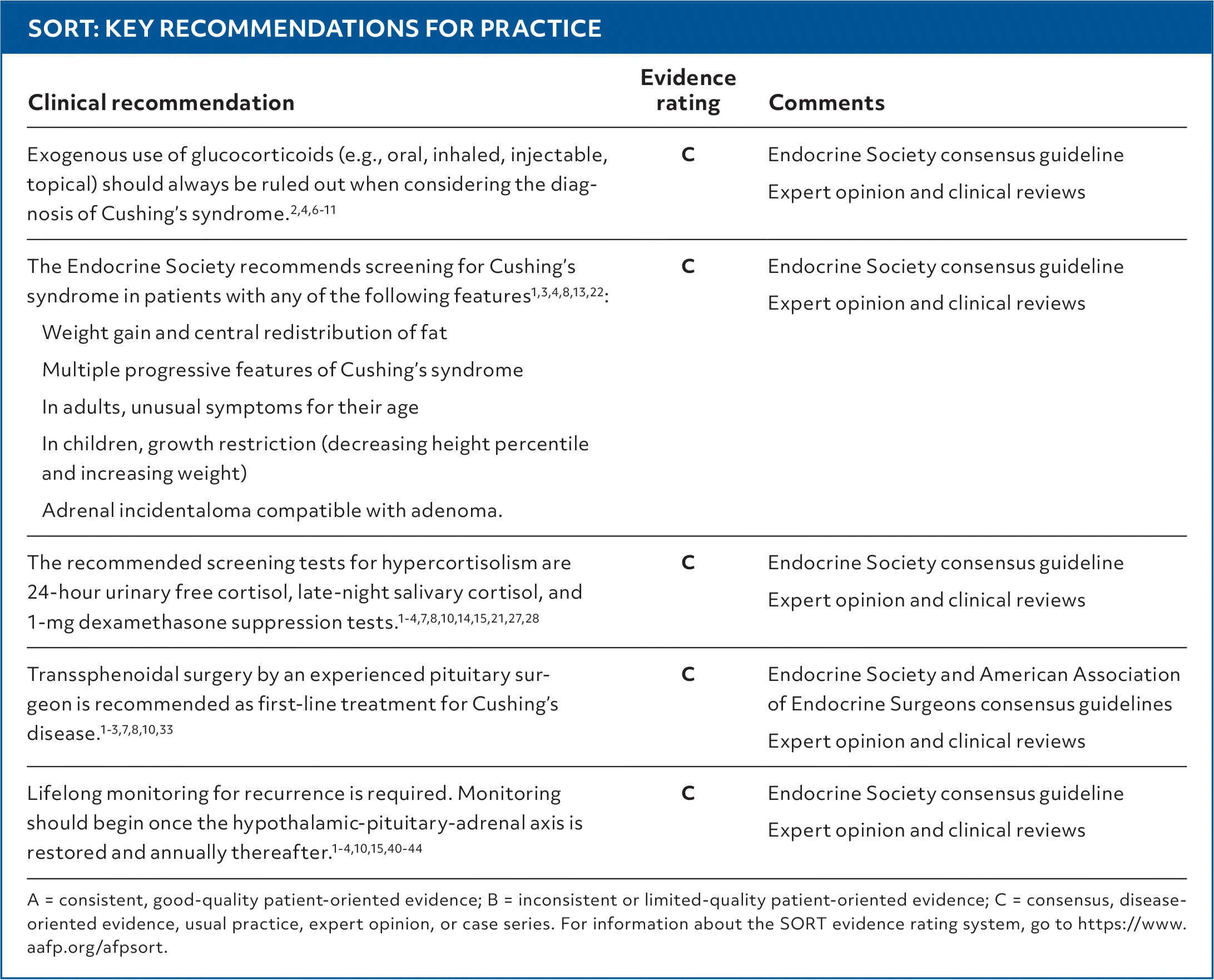
Cushing's syndrome is a rare, multisystemic disease caused by chronic exposure to supraphysiologic levels of cortisol. Prolonged hypercortisolism is associated with significant multisystem morbidity and mortality and decreased quality of life. Diagnosis of Cushing's syndrome is often delayed by several years due to its insidiously progressive course, diverse clinical presentation, overlap of symptoms with many common conditions, and testing complexity. Exogenous glucocorticoid use must be excluded as the primary etiology. Excessive endogenous cortisol production can be caused by an overproduction of adrenocorticotropic hormone (ACTH) through pituitary tumors or ectopic sources (ACTH-dependent cases), or it can be caused by autonomous cortisol overproduction by the adrenal glands (ACTH-independent cases). The recommended diagnostic approach includes appropriate screening, confirmation of hypercortisolism, and determination of etiology. First-line treatment is surgical removal of the source of cortisol overproduction. Lifelong posttherapy monitoring is required to treat comorbidities and detect recurrence.

DAVID L. MANESS, DO, MSS, FAAFP, is a retired U.S. Army colonel and a professor at the University of Tennessee Family Medicine Residency Program, Jackson.

GRANT STUDEBAKER, MD, FAAFP, is the program director of the Department of Family Medicine at the University of Tennessee Health Science Center, Jackson.

CHRISTOPHER M. KNIGHT, MD, FAAFP, is an assistant professor in the Department of Family Medicine at the University of Tennessee Health Science Center, Jackson.

Address correspondence to David L. Maness, DO, MSS, at dmaness@uthsc.edu.

Author disclosure: No relevant financial relationships.

  1. 1.Fleseriu M, Auchus R, Bancos I, et al. Consensus on diagnosis and management of Cushing’s disease: a guideline update. Lancet Diabetes Endocrinol. 2021;9(12):847-875.
  2. 2.Sharma ST, Nieman LK, Feelders RA. Cushing’s syndrome: epidemiology and developments in disease management. Clin Epidemiol. 2015;7:281-293.
  3. 3.Nieman LK, Biller BMK, Findling JW, et al. Treatment of Cushing’s syndrome: an Endocrine Society clinical practice guideline. J Clin Endocrinol Metab. 2015;100(8):2807-2831.
  4. 4.Braun LT, Vogel F, Zopp S, et al. Whom should we screen for Cushing syndrome? The Endocrine Society practice guideline recommendations 2008 revisited. J Clin Endocrinol Metab. 2022;107(9):e3723-e3730.
  5. 5.Sharma ST, Nieman LK, Feelders RA. Comorbidities in Cushing’s disease. Pituitary. 2015;18(2):188-194.
  6. 6.Hakami OA, Ahmed S, Karavitaki N. Epidemiology and mortality of Cushing’s syndrome. Best Pract Res Clin Endocrinol Metab. 2021;35(1):101521.
  7. 7.Yorke E, Atiase Y, Akpalu J, et al. Screening for Cushing syndrome at the primary care level: what every general practitioner must know. Int J Endocrinol. 2017;2017:1547358.
  8. 8.Savas M, Mehta S, Agrawal N, et al. Approach to the patient: diagnosis of Cushing syndrome. J Clin Endocrinol Metab. 2022;107(11):3162-3174.
  9. 9.Lacroix A, Feelders RA, Stratakis CA, et al. Cushing’s syndrome. Lancet. 2015;386(9996):913-927.
  10. 10.Reincke M, Fleseriu M. Cushing syndrome: a review. JAMA. 2023;330(2):170-181.
  11. 11.Kirk LF, Hash RB, Katner HP, et al. Cushing’s disease: clinical manifestations and diagnostic evaluation [published correction appears in Am Fam Physician. 2002; 65(3): 386]. Am Fam Physician. 2000;62(5):1119-1127.
  12. 12.Valassi E. Clinical presentation and etiology of Cushing’s syndrome: data from ERCUSYN. J Neuroendocrinol. 2022;34(8):e13114.
  13. 13.Balomenaki M, Margaritopoulos D, Vassiliadi DA, et al. Diagnostic workup of Cushing’s syndrome. J Neuroendocrinol. 2022;34(8):e13111.
  14. 14.Nieman LK. Recent updates on the diagnosis and management of Cushing’s syndrome. Endocrinol Metab (Seoul). 2018;33(2):139-146.
  15. 15.Lila AR, Sarathi V, Jagtap VS, et al. Cushing's syndrome: stepwise approach to diagnosis. Indian J Endocrinol Metab. 2011;15(suppl 4):S317-S321.
  16. 16.Piasecka M, Larsson M, Papakokkinou E, et al. Is ectopic Cushing’s syndrome underdiagnosed in patients with small cell lung cancer?. Front Med (Lausanne). 2022;9:954033.
  17. 17.Wengander S, Trimpou P, Papakokkinou E, et al. The incidence of endogenous Cushing’s syndrome in the modern era. Clin Endocrinol (Oxf). 2019;91(2):263-270.
  18. 18.Concepción-Zavaleta MJ, Armas CD, Quiroz-Aldave JE, et al. Cushing disease in pediatrics: an update. Ann Pediatr Endocrinol Metab. 2023;28(2):87-97.
  19. 19.Ferrigno R, Hasenmajer V, Caiulo S, et al. Paediatric Cushing’s disease: epidemiology, pathogenesis, clinical management and outcome. Rev Endocr Metab Disord. 2021;22(4):817-835.
  20. 20.Lodish MB, Keil MF, Stratakis CA. Cushing’s syndrome in pediatrics: an update. Endocrinol Metab Clin North Am. 2018;47(2):451-462.
  21. 21.Nieman LK. Diagnosis of Cushing’s syndrome in the modern era. Endocrinol Metab Clin North Am. 2018;47(2):259-273.
  22. 22.Nieman LK, Biller BMK, Findling JW, et al. The diagnosis of Cushing’s syndrome: an Endocrine Society clinical practice guideline. J Clin Endocrinol Metab. 2008;93(5):1526-1540.
  23. 23.Braun LT, Riester A, Oßwald-Kopp A, et al. Toward a diagnostic score in Cushing’s syndrome. Front Endocrinol (Lausanne). 2019;10:766.
  24. 24.Rubinstein G, Osswald A, Hoster E, et al. Time to diagnosis in Cushing’s syndrome: a meta-analysis based on 5367 patients. J Clin Endocrinol Metab. 2020;105(3):e12-e22.
  25. 25.Barbot M, Zilio M, Scaroni C. Cushing’s syndrome: overview of clinical presentation, diagnostic tools and complications. Best Pract Res Clin Endocrinol Metab. 2020;34(2):101380.
  26. 26.Erden F, Borlu M, Simsek Y, et al. Differences in skin lesions of endogenous and exogenous Cushing’s patients. Postepy Dermatol Alergol. 2019;36(3):272-275.
  27. 27.Elamin MB, Murad MH, Mullan R, et al. Accuracy of diagnostic tests for Cushing’s syndrome: a systematic review and metaanalyses. J Clin Endocrinol Metab. 2008;93(5):1553-1562.
  28. 28.Galm BP, Qiao N, Klibanski A, et al. Accuracy of laboratory tests for the diagnosis of Cushing syndrome. J Clin Endocrinol Metab. 2020;105(6):dgaa105.
  29. 29.Bashari WA, Gillett D, MacFarlane J, et al. Modern imaging in Cushing’s disease. Pituitary. 2022;25(5):709-712.
  30. 30.Wright K, van Rossum EFC, Zan E, et al. Emerging diagnostic methods and imaging modalities in Cushing’s syndrome. Front Endocrinol (Lausanne). 2023;14:1230447.
  31. 31.Grober Y, Grober H, Wintermark M, et al. Comparison of MRI techniques for detecting microadenomas in Cushing’s disease. J Neurosurg. 2018;128(4):1051-1057.
  32. 32.Hall WA, Luciano MG, Doppman JL, et al. Pituitary magnetic resonance imaging in normal human volunteers: occult adenomas in the general population. Ann Intern Med. 1994;120(10):817-820.
  33. 33.Yip L, Duh QY, Wachtel H, et al. American Association of Endocrine Surgeons guidelines for adrenalectomy: executive summary. JAMA Surg. 2022;157(10):870-877.
  34. 34.Feelders RA, Newell-Price J, Pivonello R, et al. Advances in the medical treatment of Cushing’s syndrome. Lancet Diabetes Endocrinol. 2019;7(4):300-312.
  35. 35.Pivonello R, Ferrigno R, De Martino MC, et al. Medical treatment of Cushing’s disease: an overview of the current and recent clinical trials. Front Endocrinol (Lausanne). 2020;11:648.
  36. 36.Ferriere A, Tabarin A. Cushing’s syndrome: treatment and new therapeutic approaches. Best Pract Res Clin Endocrinol Metab. 2020;34(2):101381.
  37. 37.Buliman A, Tataranu LG, Paun DL, et al. Cushing’s disease: a multidisciplinary overview of the clinical features, diagnosis, and treatment. J Med Life. 2016;9(1):12-18.
  38. 38.Broersen LHA, Jha M, Biermasz NR, et al. Effectiveness of medical treatment for Cushing’s syndrome: a systematic review and meta-analysis. Pituitary. 2018;21(6):631-641.
  39. 39.Gilis-Januszewska A, Bogusławska A, Rzepka E, et al. Individualized medical treatment options in Cushing disease. Front Endocrinol (Lausanne). 2022;13:1060884.
  40. 40.Santos A, Resmini E, Martínez Momblán MA, et al. Quality of life in patients with Cushing’s disease. Front Endocrinol (Lausanne). 2019;10:862.
  41. 41.Mc Bride M, Crespo I, Webb SM, et al. Quality of life in Cushing’s syndrome. Best Pract Res Clin Endocrinol Metab. 2021;35(1):101505.
  42. 42.Keil MF, Zametkin A, Ryder C, et al. Cases of psychiatric morbidity in pediatric patients after remission of Cushing syndrome. Pediatrics. 2016;137(4):e20152234.
  43. 43.Starkman MN. Neuropsychiatric findings in Cushing syndrome and exogenous glucocorticoid administration. Endocrinol Metab Clin North Am. 2013;42(3):477-488.
  44. 44.Clayton RN. Cardiovascular complications of Cushings syndrome: impact on morbidity and mortality. J Neuroendocrinol. 2022;34(8):e13175.

Copyright © 2026 by the American Academy of Family Physicians.

This content is owned by the AAFP. A person viewing it online may make one printout of the material and may use that printout only for his or her personal, non-commercial reference. This material may not otherwise be downloaded, copied, printed, stored, transmitted or reproduced in any medium, whether now known or later invented, except as authorized in writing by the AAFP. See permissions for copyright questions and/or permission requests.