Alzheimer Disease: Treatment of Cognitive and Functional Symptoms

Ecler Ercole Jaqua, MD, MBA
Mai-Linh N. Tran, MD
Mary Hanna, MD

American Family Physician. 2024;110(3):281-293.

Author disclosure: No relevant financial relationships.

This clinical content conforms to AAFP criteria for CME.

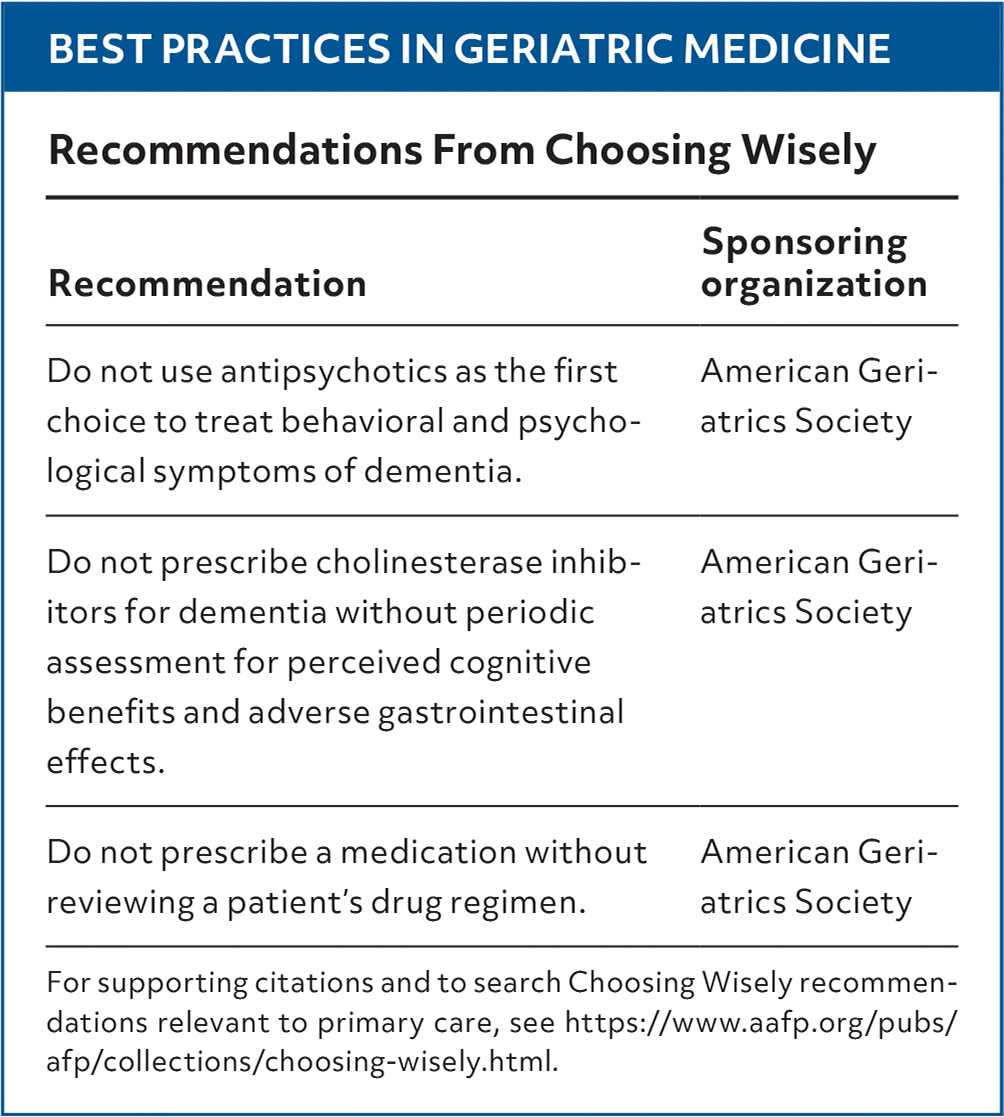
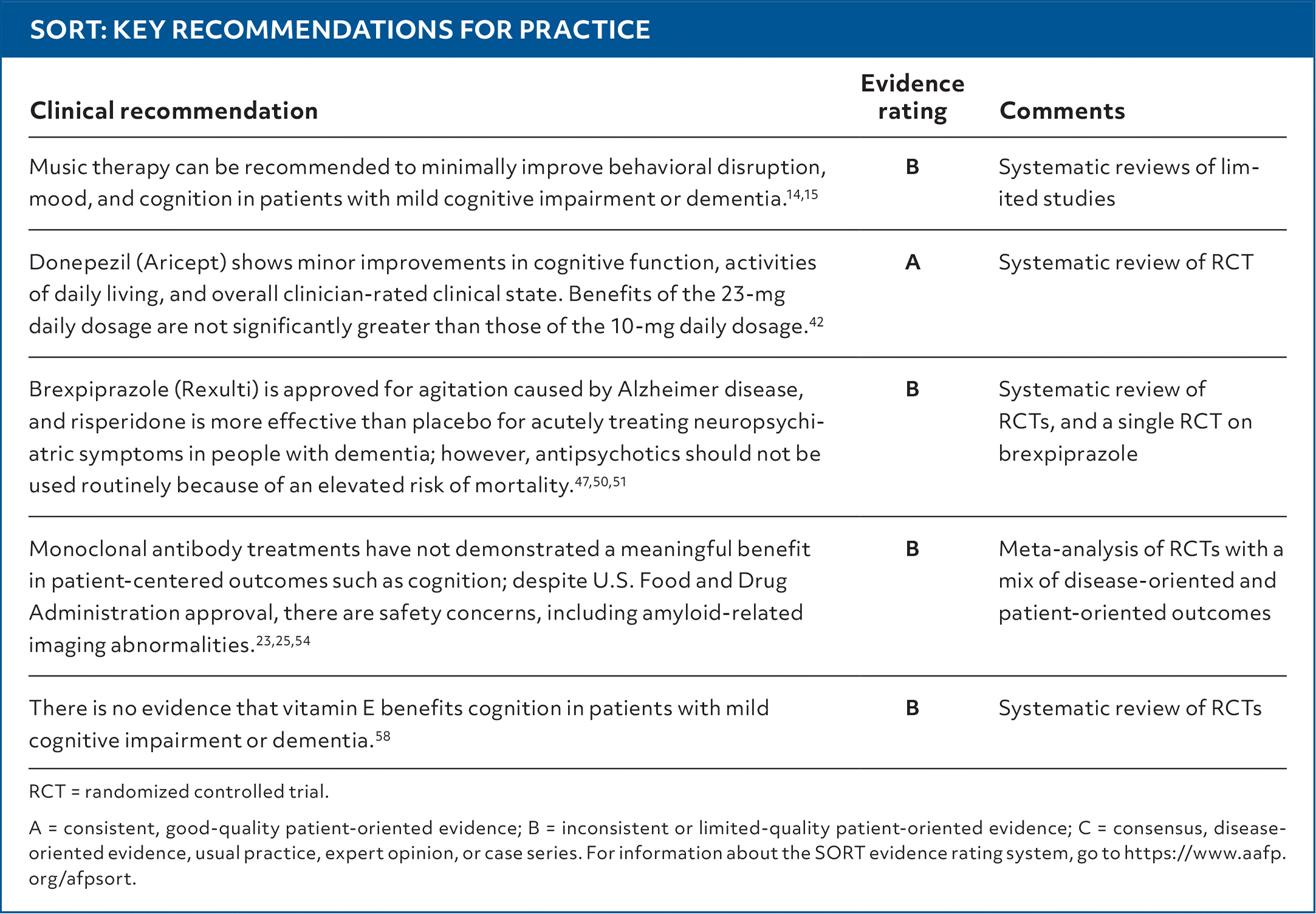
Alzheimer disease is a progressive, neurodegenerative disorder characterized by the accumulation of amyloid beta plaques and hyperphosphorylated tau proteins. Alzheimer disease affects cognitive function, leading to memory loss and impairment in activities of daily living. Approximately 6.9 million people in the United States 65 years and older live with Alzheimer disease, a number expected to double by 2060. Although there is no cure for Alzheimer disease, treatments are available to manage symptoms. Tools such as the Diagnostic and Statistical Manual of Mental Disorders, 5th ed., criteria aid in identifying major neurocognitive disorders. The evaluation involves a comprehensive medical history, cognitive examinations, and collateral information. Nonpharmacologic interventions focus on psychosocial approaches, with music, sensory stimulation, and validation therapies showing some evidence of reducing responsive behaviors. Pharmacologic management, such as acetylcholinesterase inhibitors (donepezil, galantamine, rivastigmine) and the N-methyl-d-aspartate receptor antagonist memantine, targets symptom relief and disease progression. Vitamin E does not improve cognition but may mitigate functional decline. Brexpiprazole has been approved in the United States for treating agitation associated with Alzheimer disease. Anti-amyloid monoclonal antibody treatments are approved for mild cognitive impairment and mild Alzheimer disease, but they are controversial and safety concerns exist. Ineffective therapies include ginkgo biloba, nonsteroidal anti-inflammatory drugs, omega-3 fatty acids, and statins.

ECLER ERCOLE JAQUA, MD, MBA, FAAFP, AGSF, FACLM, DipABOM, is an associate professor in the Department of Family Medicine at Loma Linda (Calif.) University School of Medicine.

MAI-LINH N. TRAN, MD, FAAFP, DipABLM, DipABOM, is an assistant professor in the Department of Family Medicine at Loma Linda University School of Medicine.

MARY HANNA, MD, FAAFP, is an assistant professor in the Department of Family Medicine at Loma Linda University School of Medicine.

Address correspondence to Ecler Ercole Jaqua, MD, MBA, at ejaqua@llu.edu.

Author disclosure: No relevant financial relationships.

  1. 1.Joe E, Ringman JM. Cognitive symptoms of Alzheimer’s disease: clinical management and prevention. BMJ. 2019;367:l6217.
  2. 2.Caselli RJ, Beach TG, Knopman DS, et al. Alzheimer disease: scientific breakthroughs and translational challenges. Mayo Clin Proc. 2017;92(6):978-994.
  3. 3.2024 Alzheimer’s disease facts and figures. Alzheimers Dement. 2024;20(5):3708-3821.
  4. 4.Fink HA, Jutkowitz E, McCarten JR, et al. Pharmacologic interventions to prevent cognitive decline, mild cognitive impairment, and clinical Alzheimer-type dementia: a systematic review. Ann Intern Med. 2018;168(1):39-51.
  5. 5.American Psychiatric Association. Diagnostic and Statistical Manual of Mental Disorders. 5th ed. American Psychiatric Association; 2013.
  6. 6.Arvanitakis Z, Shah RC, Bennett DA. Diagnosis and management of dementia: review. JAMA. 2019;322(16):1589-1599.
  7. 7.Falk N, Cole A, Meredith TJ. Evaluation of suspected dementia. Am Fam Physician. 2018;97(6):398-405.
  8. 8.Norris D, Clark MS, Shipley S. The mental status examination. Am Fam Physician. 2016;94(8):635-641.
  9. 9.Cummings-Vaughn LA, Chavakula NN, Malmstrom TK, et al. Veterans Affairs Saint Louis University Mental Status examination compared with the Montreal Cognitive Assessment and the Short Test of Mental Status. J Am Geriatr Soc. 2014;62(7):1341-1346.
  10. 10.Owens DK, Davidson KW, Krist AH, et al. Screening for cognitive impairment in older adults: US Preventive Services Task Force recommendation statement. JAMA. 2020;323(8):757-763.
  11. 11.American Academy of Family Physicians. Clinical preventive service recommendation. Dementia. Accessed May 28, 2024. https://www.aafp.org/family-physician/patient-care/clinical-recommendations/all-clinical-recommendations/dementia.html
  12. 12.Berg-Weger M, Stewart DB. Non-pharmacologic interventions for persons with dementia. Mo Med. 2017;114(2):116-119.
  13. 13.Scales K, Zimmerman S, Miller SJ. Evidence-based nonpharmacological practices to address behavioral and psychological symptoms of dementia. Gerontologist. 2018;58(suppl 1):S88-S102.
  14. 14.Dorris JL, Neely S, Terhorst L, et al. Effects of music participation for mild cognitive impairment and dementia: a systematic review and meta-analysis. J Am Geriatr Soc. 2021;69(9):2659-2667.
  15. 15.Meyer C, O’Keefe F. Non-pharmacological interventions for people with dementia: a review of reviews. Dementia (London). 2020;19(6):1927-1954.
  16. 16.O'Neil ME, Freeman M, Christensen V, et al. A Systematic Evidence Review of Non-pharmacological Interventions for Behavioral Symptoms of Dementia. Department of Veterans Affairs; 2011.
  17. 17.Epperly T, Dunay MA, Boice JL. Alzheimer disease: pharmacologic and nonpharmacologic therapies for cognitive and functional symptoms. Am Fam Physician. 2017;95(12):771-778.
  18. 18.Rabins PV, Blass DM. In the Clinic. Dementia. Ann Intern Med. 2014;161(3):ITC1-ITC16.
  19. 19.Zhao R, Han X, Zhang H, et al. Association of vitamin E intake in diet and supplements with risk of dementia: a meta-analysis. Front Aging Neurosci. 2022;14:955878.
  20. 20.Dysken MW, Sano M, Asthana S, et al. Effect of vitamin E and memantine on functional decline in Alzheimer disease: the TEAM-AD VA cooperative randomized trial [published correction appears in JAMA. 2014; 311(11): 1161]. JAMA. 2014;311(1):33-44.
  21. 21.Kuns B, Rosani A, Patel P, et al. Memantine. In: StatPearls [Internet]. StatPearls Publishing; January 31, 2024. Accessed July 21, 2024. https://www.ncbi.nlm.nih.gov/books/NBK500025/
  22. 22.Cummings J, Aisen P, Apostolova LG, et al. Aducanumab: appropriate use recommendations. J Prev Alzheimers Dis. 2021;8(4):398-410.
  23. 23.Jeong SY, Suh CH, Shim WH, et al. Incidence of amyloid-related imaging abnormalities in patients with Alzheimer disease treated with anti-β-amyloid immunotherapy: a meta-analysis [published correction appears in Neurology. 2023; 100(22): 1076]. Neurology. 2022;99(19):e2092-e2101.
  24. 24.Salloway S, Chalkias S, Barkhof F, et al. Amyloid-related imaging abnormalities in 2 phase 3 studies evaluating aducanumab in patients with early Alzheimer disease. JAMA Neurol. 2022;79(1):13-21.
  25. 25.van Dyck CH, Swanson CJ, Aisen P, et al. Lecanemab in early Alzheimer’s disease. N Engl J Med. 2023;388(1):9-21.
  26. 26.Lecanemab for Alzheimer’s disease: tempering hype and hope. Lancet. 2022;400(10367):1899.
  27. 27.Cummings J, Apostolova L, Rabinovici GD, et al. Lecanemab: appropriate use recommendations. J Prev Alzheimers Dis. 2023;10(3):362-377.
  28. 28.Honig LS, Barakos J, Dhadda S, et al. ARIA in patients treated with lecanemab (BAN2401) in a phase 2 study in early Alzheimer's disease. Alzheimers Dement (N Y). 2023;9(1):e12377.
  29. 29.Brexpiprazole (Rexulti) for agitation in Alzheimer’s dementia. Med Lett Drugs Ther. 2023;65(1679):99-101.
  30. 30.Lee D, Clark ED, Antonsdottir IM, et al. A 2023 update on the advancements in the treatment of agitation in Alzheimer’s disease. Expert Opin Pharmacother. 2023;24(6):691-703.
  31. 31.Eaves S, Rey JA. Brexpiprazole (Rexulti): a new monotherapy for schizophrenia and adjunctive therapy for major depressive disorder. P T. 2016;41(7):418-422.
  32. 32.Herring WJ, Ceesay P, Snyder E, et al. Polysomnographic assessment of suvorexant in patients with probable Alzheimer’s disease dementia and insomnia: a randomized trial. Alzheimers Dement. 2020;16(3):541-551.
  33. 33.Lucey BP, Liu H, Toedebusch CD, et al. Suvorexant acutely decreases tau phosphorylation and Aβ in the human CNS. Ann Neurol. 2023;94(1):27-40.
  34. 34.Coleman PJ, Gotter AL, Herring WJ, et al. The discovery of suvorexant, the first orexin receptor drug for insomnia. Annu Rev Pharmacol Toxicol. 2017;57:509-533.
  35. 35.GoodRx. Prescription prices, coupons & pharmacy information. Accessed March 20, 2024. https://www.goodrx.com
  36. 36.Biogen. Biogen to realign resources for Alzheimer’s disease franchise. January 31, 2024. Accessed March 20, 2024. https://investors.biogen.com/news-releases/news-release-details/biogen-realign-resources-alzheimers-disease-franchise
  37. 37.Tanne JH. Lecanemab: US Veterans Health Administration will cover cost of new Alzheimer's drug. BMJ. 2023;380:628.
  38. 38.U.S. Food and Drug Administration. FDA approves treatment for adults with Alzheimer's disease. Accessed August 13, 2024. https://www.fda.gov/drugs/news-events-human-drugs/fda-approves-treatment-adults-alzheimers-disease
  39. 39.Weiss BD, Fain MJ. Dementia care: more than just prescription drugs. Am Fam Physician. 2017;95(12):766-767.
  40. 40.Parsons C, Lim WY, Loy C, et al. Withdrawal or continuation of cholinesterase inhibitors or memantine or both, in people with dementia. Cochrane Database Syst Rev. 2021(2):CD009081.
  41. 41.Lanctôt KL, Herrmann N, Yau KK, et al. Efficacy and safety of cholinesterase inhibitors in Alzheimer’s disease: a meta-analysis. CMAJ. 2003;169(6):557-564.
  42. 42.Birks JS, Harvey RJ. Donepezil for dementia due to Alzheimer's disease. Cochrane Database Syst Rev. 2018(6):CD001190.
  43. 43.Cummings JL, Schneider L, Tariot PN, et al. Reduction of behavioral disturbances and caregiver distress by galantamine in patients with Alzheimer’s disease. Am J Psychiatry. 2004;161(3):532-538.
  44. 44.Birks JS, Chong LY, Grimley Evans J. Rivastigmine for Alzheimer's disease. Cochrane Database Syst Rev. 2015(9):CD001191.
  45. 45.Guo J, Wang Z, Liu R, et al. Memantine, donepezil, or combination therapy—what is the best therapy for Alzheimer’s disease? A network meta-analysis. Brain Behav. 2020;10(11):e01831.
  46. 46.Calhoun A, King C, Khoury R, et al. An evaluation of memantine ER + donepezil for the treatment of Alzheimer’s disease. Expert Opin Pharmacother. 2018;19(15):1711-1717.
  47. 47.Schneider LS, Tariot PN, Dagerman KS, et al.; CATIE-AD Study Group. Effectiveness of atypical antipsychotic drugs in patients with Alzheimer's disease. N Engl J Med. 2006;355(15):1525-1538.
  48. 48.Carrarini C, Russo M, Dono F, et al. Agitation and dementia: prevention and treatment strategies in acute and chronic conditions. Front Neurol. 2021;12:644317.
  49. 49.Neufeld KJ, Yue J, Robinson TN, et al. Antipsychotic medication for prevention and treatment of delirium in hospitalized adults: a systematic review and meta-analysis [published correction appears in J Am Geriatr Soc. 2016; 64(10):2171–2173]. J Am Geriatr Soc. 2016;64(4):705-714.
  50. 50.Lee D, Slomkowski M, Hefting N, et al. Brexpiprazole for the treatment of agitation in Alzheimer dementia: a randomized clinical trial. JAMA Neurol. 2023;80(12):1307-1316.
  51. 51.Huang YY, Teng T, Giovane CD, et al. Pharmacological treatment of neuropsychiatric symptoms of dementia: a network meta-analysis. Age Ageing. 2023;52(6):afad091.
  52. 52.Rahman A, Hossen MA, Chowdhury MFI, et al. Aducanumab for the treatment of Alzheimer’s disease: a systematic review. Psychogeriatrics. 2023;23(3):512-522.
  53. 53.Middleton J. Should the FDA have approved aducanumab? American Family Physician Community Blog. July 19, 2021. Accessed March 20, 2024. https://www.aafp.org/pubs/afp/afp-community-blog/entry/should-the-fda-have-approved-aducanumab.html
  54. 54.Ebell MH, Barry HC, Baduni K, et al. Clinically important benefits and harms of monoclonal antibodies targeting amyloid for the treatment of Alzheimer disease: a systematic review and meta-analysis. Ann Fam Med. 2024;22(1):50-62.
  55. 55.Sims JR, Zimmer JA, Evans CD, et al.; TRAILBRALZER-ALZ 2 Investigators. Donanemab in early symptomatic Alzheimer disease. The TRAILBLAZER-ALZ 2 randomized clinical trial. JAMA. 2023;330(6):512-527.
  56. 56.Si ZZ, Zou CJ, Mei X, et al. Targeting neuroinflammation in Alzheimer’s disease: from mechanisms to clinical applications. Neural Regen Res. 2023;18(4):708-715.
  57. 57.Lakhan R, Sharma M, Batra K, et al. The role of vitamin E in slowing down mild cognitive impairment: a narrative review. Healthcare (Basel). 2021;9(11):1573.
  58. 58.Farina N, Llewellyn D, Isaac MGEKN, et al. Vitamin E for Alzheimer’s dementia and mild cognitive impairment. Cochrane Database Syst Rev. 2017(4):CD002854.
  59. 59.Livingston G, Huntley J, Sommerlad A, et al. Dementia prevention, intervention, and care: 2020 report of the Lancet Commission [published correction appears in Lancet. 2023; 402(10408):1132]. Lancet. 2020;396(10248):413-446.
  60. 60.Oh ES, Rabins PV. Dementia. Ann Intern Med. 2019;171(5):ITC33-ITC48.
  61. 61.Winslow BT, Onysko MK, Stob CM, et al. Treatment of Alzheimer disease [published correction appears in Am Fam Physician. 2014; 90(4):209]. Am Fam Physician. 2011;83(12):1403-1412.
  62. 62.DeLaGarza VW. Pharmacologic treatment of Alzheimer's disease: an update. Am Fam Physician. 2003;68(7):1365-1372.
  63. 63.Cummings JL, Frank JC, Cherry D, et al. Guidelines for managing Alzheimer's disease: Part II. Treatment. Am Fam Physician. 2002;65(12):2525-2534.
  64. 64.Sloane PD. Advances in the treatment of Alzheimer's disease. Am Fam Physician. 1998;58(7):1577-1590.

Copyright © 2026 by the American Academy of Family Physicians.

This content is owned by the AAFP. A person viewing it online may make one printout of the material and may use that printout only for his or her personal, non-commercial reference. This material may not otherwise be downloaded, copied, printed, stored, transmitted or reproduced in any medium, whether now known or later invented, except as authorized in writing by the AAFP. See permissions for copyright questions and/or permission requests.