

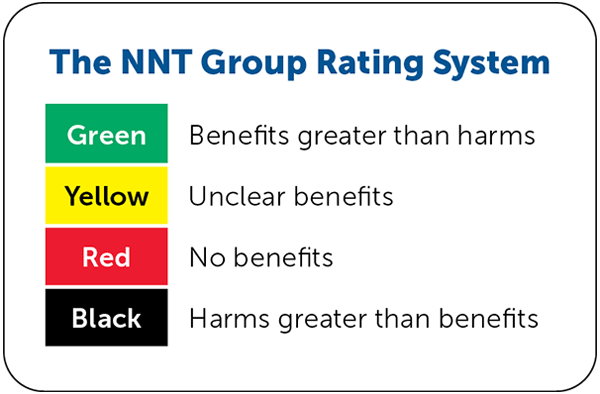
DETAILS FOR THIS REVIEW
Study Population: 15,412 adult patients (older than 40 years) in four randomized controlled trials (RCTs) with stable, symptomatic chronic obstructive pulmonary disease (COPD; most with a COPD Assessment Test score of 10 or higher), as defined by the international Global Initiative for Chronic Obstructive Lung Disease (GOLD) or American Thoracic Society/European Respiratory Society guidelines1
Efficacy End Points: Primary outcomes: acute COPD exacerbations, respiratory health–related quality of life; secondary outcomes: respiratory symptom score, lung function (pulmonary function testing), all-cause mortality
Harm End Points: Pneumonia; all-cause serious adverse events
THE NUMBERS
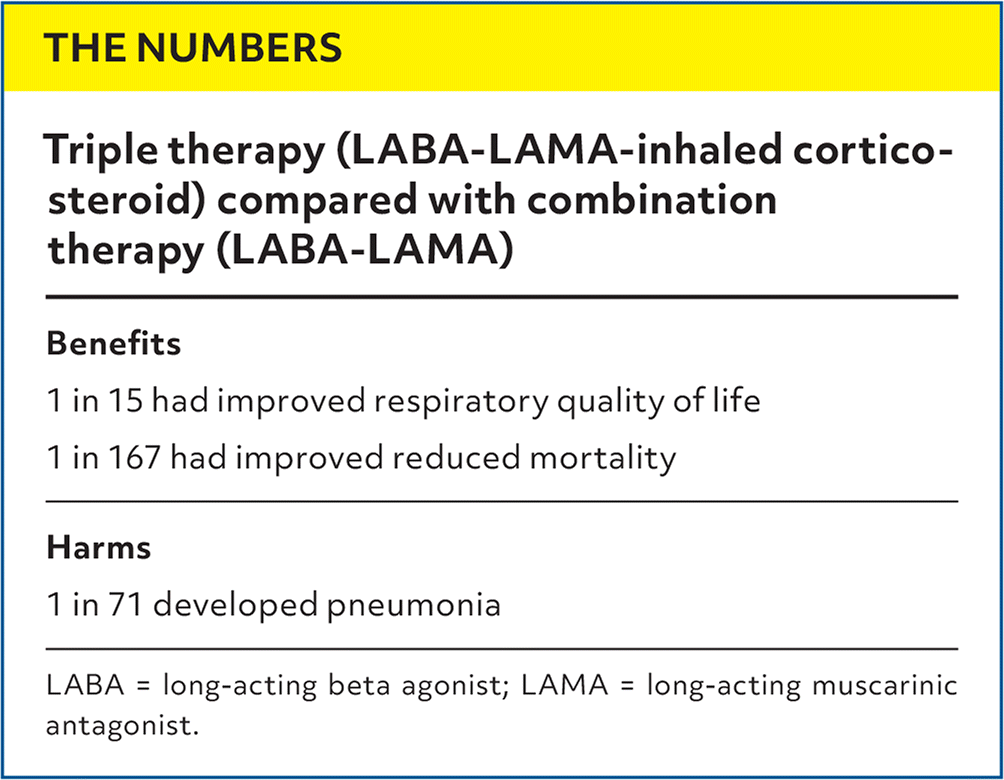
| Triple therapy (LABA-LAMA-inhaled corticosteroid) compared with combination therapy (LABA-LAMA) |
| Benefits |
| 1 in 15 had improved respiratory quality of life |
| 1 in 167 had improved reduced mortality |
| Harms |
| 1 in 71 developed pneumonia |
LABA = long-acting beta agonist; LAMA = long-acting muscarinic antagonist.
Narrative: COPD is characterized by persistent and progressive airflow obstruction caused by airway or alveoli abnormalities leading to respiratory symptoms. It has an estimated global prevalence of approximately 10% and was responsible for 3 million deaths in 2012, approximately 6% of all global deaths. A combination of a long-acting beta agonist (LABA) and a long-acting muscarinic antagonist (LAMA) is recommended for patients with stable, symptomatic COPD because the combination improves respiratory quality of life more than either agent used alone.
Although inhaled corticosteroids have demonstrated benefits in reducing acute COPD exacerbations and improving respiratory quality of life, the value of adding an inhaled corticosteroid to a LABA-LAMA regimen in patients with stable COPD remains uncertain. LABAs and LAMAs alleviate symptoms through bronchodilation, and inhaled corticosteroids reduce inflammation, which offers a potential additional benefit.
The Cochrane review considered here examined triple therapy (LABA-LAMA-inhaled corticosteroid) compared with combination therapy (LABA-LAMA) in outpatient adults with stable and symptomatic COPD over a mean follow-up of 52 weeks.2
Low-certainty evidence showed that LABA-LAMA-inhaled corticosteroid triple therapy likely reduced the rate of moderate to severe COPD exacerbations (defined as need for antibiotics, corticosteroids, or hospitalization) compared with LABA-LAMA therapy (risk ratio = 0.74; 95% CI, 0.67–0.81; n = 15,397; four RCTs).
High-certainty evidence showed likely improvement in respiratory quality of life (measured by improvement of 4 or more points on the St. George's Respiratory Questionnaire) with LABA-LAMA-inhaled corticosteroid compared with LABA-LAMA (odds ratio = 1.35; 95% CI, 1.26–1.45; absolute risk difference = 7.1%; number needed to treat = 15; n = 14,070; three RCTs).
Low-certainty evidence demonstrated that LABA-LAMA-inhaled corticosteroid triple therapy may reduce mortality compared with LABA-LAMA therapy (odds ratio = 0.70; 95% CI, 0.54–0.90; absolute risk difference = 0.6%; number needed to treat = 167; n = 15,397; four RCTs).
Respiratory symptom score and lung function showed some improvement but fell below the minimal clinically significant difference thresholds.
Moderate-certainty evidence demonstrated that risk for pneumonia was increased with LABA-LAMA-inhaled corticosteroid triple therapy compared with LABA-LAMA therapy (odds ratio = 1.74; 95% CI, 1.39–2.18; absolute risk difference = 1.4%; number needed to harm = 71; n = 15,412; four RCTs). There was no apparent difference between groups in all-cause serious adverse events.
Read the full article
Get immediate access, anytime, anywhere.
Choose a single article, issue, or full-access subscription.
Earn up to 14 CME credits per issue.
