

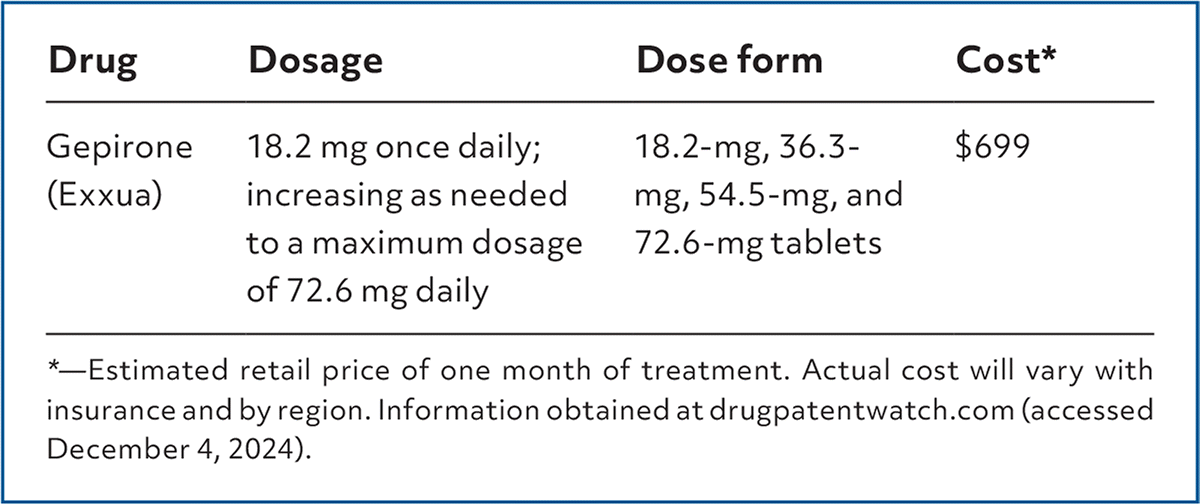
| Drug | Dosage | Dose form | Cost* |
|---|---|---|---|
| Gepirone (Exxua) | 18.2 mg once daily; increasing as needed to a maximum dosage of 72.6 mg daily | 18.2-mg, 36.3-mg, 54.5-mg, and 72.6-mg tablets | $699 |
*—Estimated retail price of one month of treatment. Actual cost will vary with insurance and by region. Information obtained at drugpatentwatch.com (accessed December 4, 2024).
Gepirone (Exxua) is used to treat major depressive disorder in adults. Although the mechanism of action is not fully understood, it is thought to work through selective agonist activity at 5-HT1A receptors. This differentiates gepirone from mainstays of therapy such as selective serotonin reuptake inhibitors (SSRIs).1
SAFETY
Gepirone may cause cardiac conduction abnormalities, suicidal thoughts and behaviors in children and adolescents, and serotonin syndrome; it can also activate mania. Gepirone may prolong the QT interval and should not be prescribed to patients with a prolonged QTc interval greater than 450 milliseconds. Patients taking additional medications that may prolong the QTc interval should be monitored regularly. All patients should undergo electrocardiography and be tested and treated for electrolyte abnormalities before beginning gepirone therapy.
As with all antidepressants, gepirone may be associated with an increased risk of suicidal thoughts and behaviors in children and young adults and is therefore not labeled for use in these groups.1 All patients should be monitored for the onset of suicidal thoughts and behaviors, as well as the onset of mania or hypomania.
Gepirone may precipitate serotonin syndrome when combined with SSRIs or tricyclic antidepressants. It should not be used by patients taking a monoamine oxidase inhibitor (MAOI). Evaluation by a physician for interactions with other serotonergic medications is critical.1
Gepirone is contraindicated with strong cytochrome P450 (CYP) 3A4 inhibitors such as ketoconazole, clarithromycin, and ritonavir, which may increase its serum concentration. The dosage of gepirone should be reduced by 50% when taken concomitantly with a moderate CYP3A4 inhibitor (eg, erythromycin, diltiazem, verapamil). Use of gepirone should be avoided with strong CYP3A4 inducers (eg, carbamazepine, phenytoin, rifampin) because these may reduce gepirone exposure. If gepirone therapy will be initiated following an MAOI, or if an MAOI will be initiated following gepirone, at least 14 days should be allowed between treatment with these medications.1
Gepirone is not contraindicated in pregnant patients, however data is insufficient on gepirone use during pregnancy. Animal studies have demonstrated adverse effects when it is given in high doses. Gepirone is likely excreted in breast milk. Adverse effects such as irritability, restlessness, excessive somnolence, decreased feeding, and weight loss in breastfed children have been reported.1
TOLERABILITY
Gepirone is well-tolerated, with discontinuation rates of 7% due to adverse effects in clinical trials.1 The most common adverse effects are dizziness (49%) and nausea (35%). In contrast with many first-line antidepressants, such as SSRIs, gepirone is less likely to cause sexual adverse effects and weight gain.
EFFECTIVENESS
Gepirone has been compared with placebo in two 8-week trials that included a total of 442 patients with moderate to severe depression.1,2 Gepirone lowered depression scores by 2.45 to 2.47 additional points out of a possible 52 when compared with placebo. Although statistically significant, this finding just meets the threshold for a minimal clinically important difference of 2 to 3 points.3 However, other studies have failed to demonstrate effectiveness or have produced negative results.4 The effect of gepirone on remission or relapse, or compared with other treatments, is not known.
Read the full article
Get immediate access, anytime, anywhere.
Choose a single article, issue, or full-access subscription.
Earn up to 14 CME credits per issue.
