

DETAILS FOR THIS REVIEW
Study Population: Adults 18 years and older who have type 1 or type 2 diabetes with symptomatic diabetic peripheral neuropathy (DPN) diagnosed on the basis of clinical symptoms or electrophysiological studies
Efficacy End Points: Change in neuropathy symptoms, change in impairment
Harm End Points: Adverse events leading to cessation of treatment
THE NUMBERS
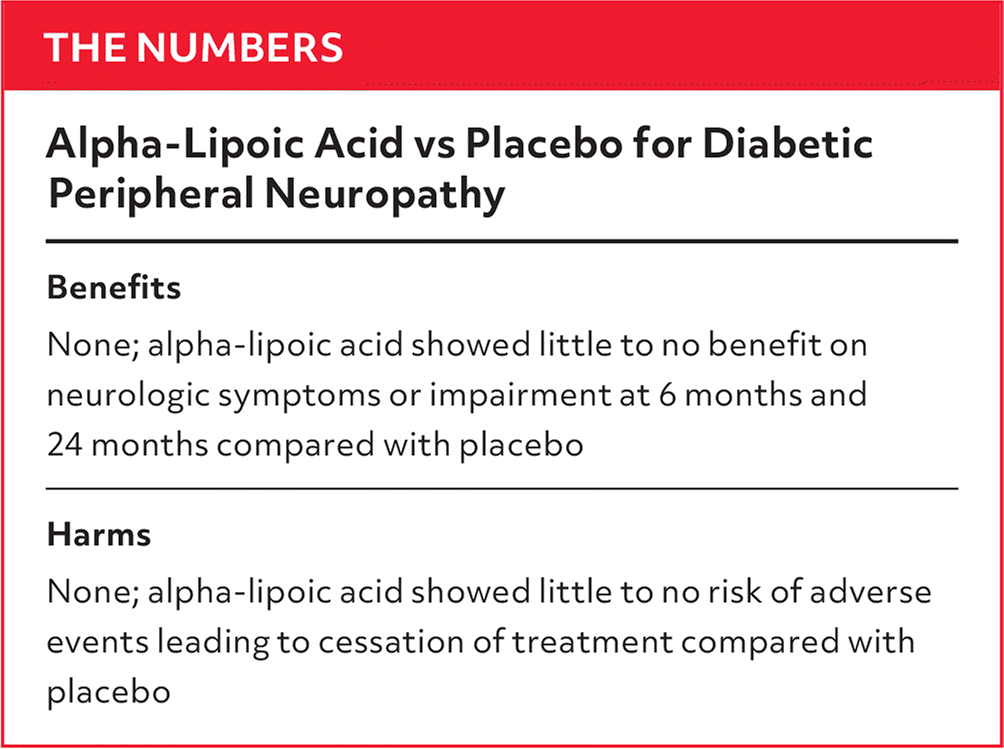
| Benefits |
| None; alpha-lipoic acid showed little to no benefit on neurologic symptoms or impairment at 6 months and 24 months compared with placebo |
| Harms |
| None; alpha-lipoic acid showed little to no risk of adverse events leading to cessation of treatment compared with placebo |
Narrative: Patients with diabetes have insufficient insulin production (type 1) or insulin resistance (type 2). Diabetes is a leading public health concern; its prevalence is estimated to increase to approximately 10% of the world's population by 2030 and approximately 11% by 2045.1 Around one-third of patients with diabetes experience DPN, the most common complication of diabetes.2 The pathophysiology of DPN is not well understood and likely multifactorial, including direct effects of hyperglycemia, inflammation, and oxidative stress. DPN is a major risk factor for the loss or decrease of protective sensation and a significant risk factor for diabetic foot ulcerations and nontraumatic amputations.3
Alpha-lipoic acid, also known as thioctic acid, is a natural thiol supplement with potent antioxidant and metal-chelating effects. Alpha-lipoic acid is postulated to regenerate endogenous antioxidants, stimulate glucose uptake within cells, and reduce inflammation.4
The 2024 Cochrane review discussed here evaluated the effectiveness of alpha-lipoic acid compared with placebo on DPN symptoms in adults.5 The systematic review included three studies that were placebo-controlled, parallel-group randomized controlled trials, enrolling 816 adult participants (mean age 57.8 years) who received treatment for at least 6 months. The primary outcome was reduction in neuropathy symptoms 6 months after randomization (as measured by Total Symptom Score or other validated instruments). Secondary outcomes included change in neuropathy symptoms at 24 months, impairment at 6 and 24 months (measured using validated scores such as the Neuropathy Impairment Score-Lower Limbs subscale), and adverse events that led to discontinuing the intervention.5
Moderate-certainty evidence showed that alpha-lipoic acid had little or no effect compared with placebo on diabetic peripheral neuropathy symptoms after 6 months (standard mean difference [SMD] = −0.16; 95% CI, −0.83 to 0.51; one randomized controlled trial, 330 participants) and 24 months (SMD = −0.23 points; 95% CI, −0.67 to 0.21; one randomized control trial, 421 participants).
Low-certainty evidence showed that alpha-lipoic acid had little or no effect on impairment after 6 months (SMD = −1.02; 95% CI, −2.93 to 0.89; one randomized controlled trial, 245 participants) or after 24 months (SMD = −0.07; 95% CI, −0.24 to 0.11; two studies, 486 participants).
Moderate-certainty evidence showed that alpha-lipoic acid resulted in little or no difference in adverse events at 6 months compared with placebo (risk ratio = 1.48; 95% CI, 0.50 to 4.35; three randomized control trials, 1,090 participants). No studies evaluated quality of life or complications of DPN. All studies and data were downgraded due to the risk of attrition bias.5
Read the full article
Get immediate access, anytime, anywhere.
Choose a single article, issue, or full-access subscription.
Earn up to 14 CME credits per issue.
