

An 18-month-old girl presented with a skin eruption that began 1 month earlier. The child's mother reported that 2 weeks before the eruption, the patient had an upper respiratory tract infection but has been asymptomatic since the rash's onset. Over-the-counter hydrocortisone cream has been ineffective.
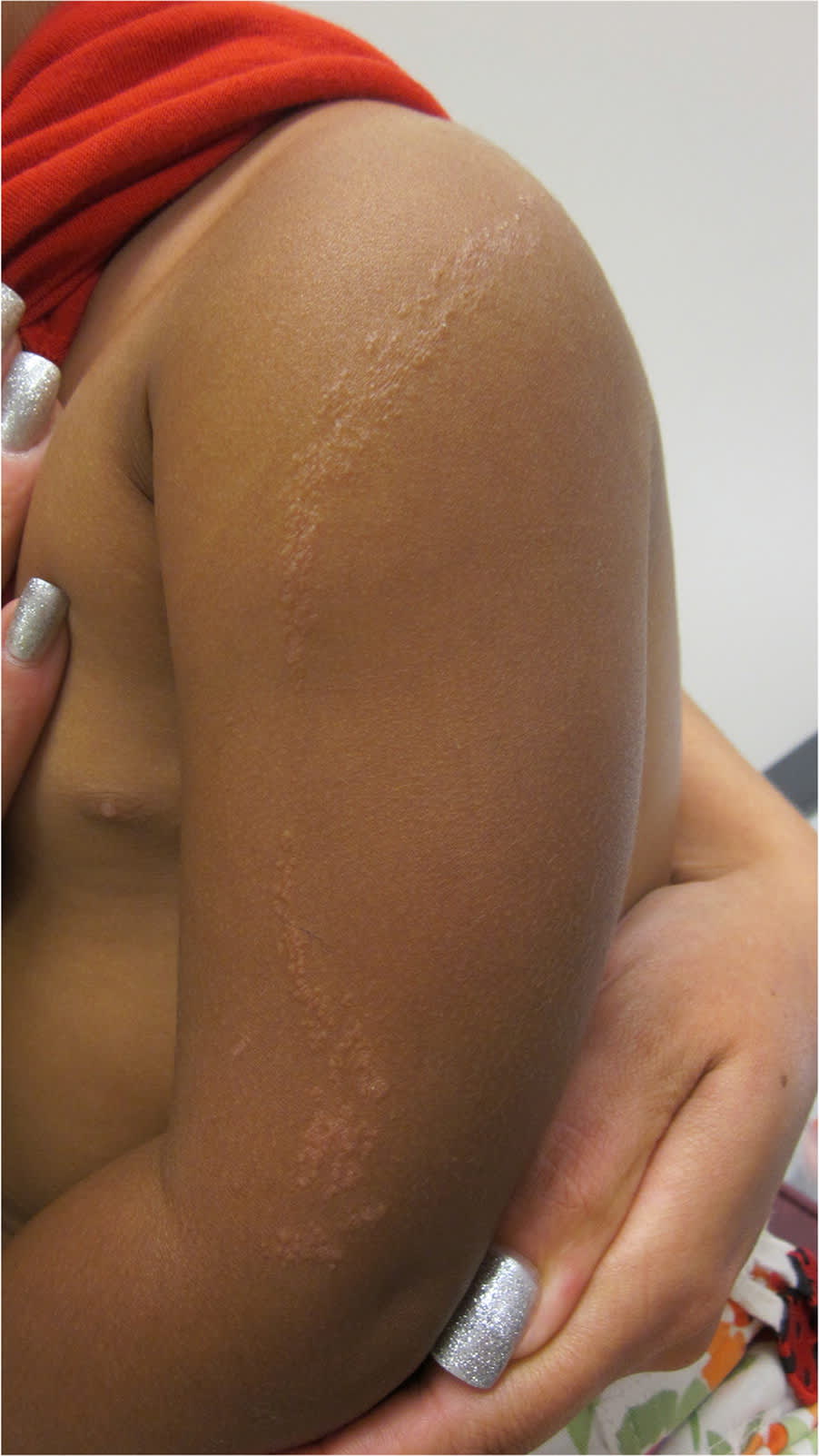
Physical examination revealed linear plaques of small, palpable, hypopigmented papules on the patient's dorsolateral left arm (Figure 1). No lymphadenopathy was noted.
FIGURE 1
QUESTION
Based on the patient's history and physical examination, which one of the following is the most likely diagnosis?
- A. Incontinentia pigmenti.
- B. Lichen striatus.
- C. Linear epidermal nevus.
- D. Linear morphea.
DISCUSSION
The correct answer is B: lichen striatus, which is consistent with the patient's presentation of small, unilateral papules along the Blaschko lines. Although lichen striatus is usually a straightforward clinical diagnosis, several presentations are possible and can vary based on skin tone. The condition typically occurs in children 5 months to 5 years of age and manifests unilaterally on the extremities, but it can appear on the trunk or, in rare cases, on the fingernails.1 Patients are usually otherwise asymptomatic, but the papules may be pruritic. Lichen striatus typically presents with a linear configuration, but color and palpability can vary. Although the papules are usually erythematous, this can appear more subtle in patients with darker skin tones, making the diagnosis more challenging.
Lichen striatus is also known as acquired Blaschkoid dermatitis due to the tendency of the rash to erupt along the Blaschko lines. Lichen striatus may be the result of epigenetic mosaicism.2 The etiology is unknown, but it is associated with pregnancy, viral infection, and autoimmune conditions. The eruption can be triggered by environmental or genetic factors.3
Histology of lichen striatus shows a pattern of lymphocytic inflammatory infiltration surrounding vasculature, eccrine glands, and hair follicles. The dermal infiltrate is composed of macrophages and lymphocytes.4 The diagnosis is usually made clinically, and biopsy is not typically performed. Lichen striatus is benign and requires no treatment, but patient education is necessary because the skin eruption can last for 1 to 2 years. Patients may benefit from emollients or low-dose corticosteroids. Despite the innocuous nature of this condition, changes in skin pigmentation may persist.
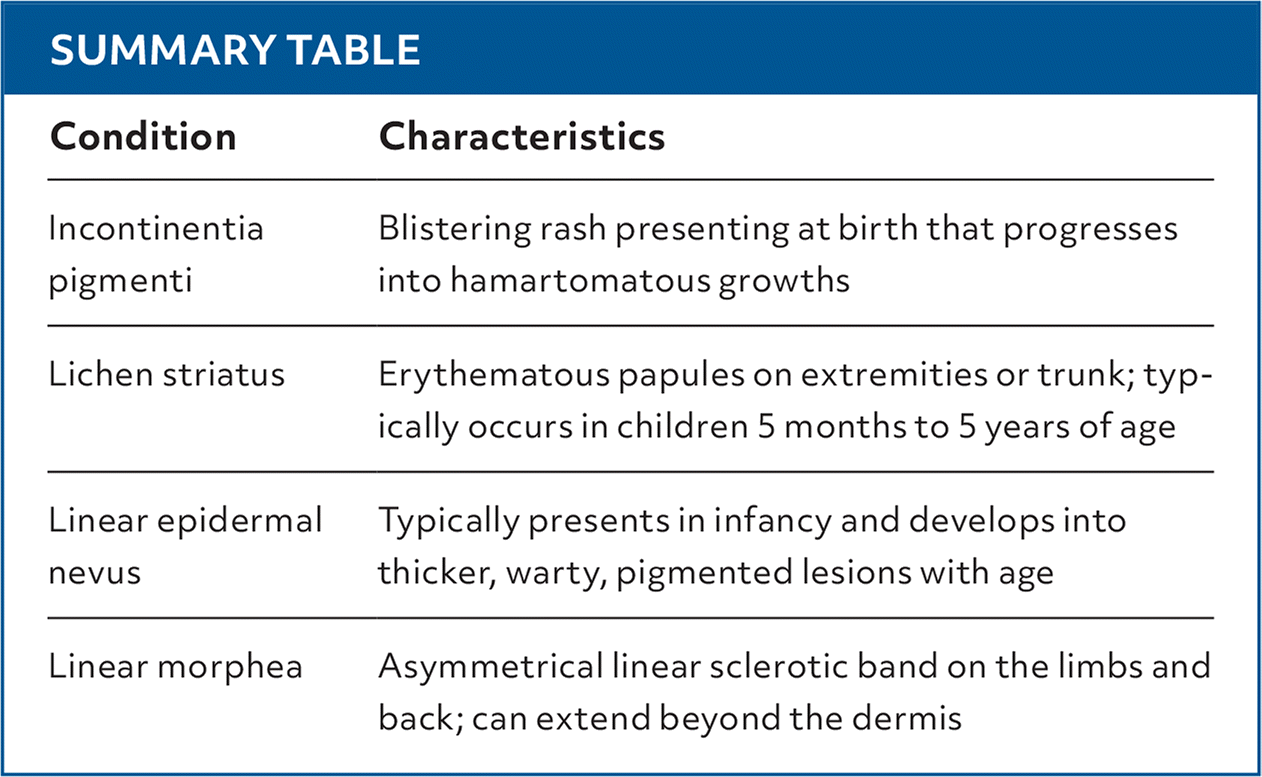
Incontinentia pigmenti is an inherited condition, presenting at birth with a blistering rash that progresses to hamartomatous growths. Patients also commonly have hair, teeth, and nail abnormalities.5
A linear epidermal nevus typically manifests in infancy and develops into thicker, warty, pigmented lesions with age. These lesions usually develop unilaterally on the limbs or trunk and follow the Blaschko lines.6
Linear morphea usually appears as an asymmetrical, linear, sclerotic band on the limbs and back. It can extend beyond the dermis, affecting muscle and bone.7
SUMMARY TABLE
| Condition | Characteristics |
|---|---|
| Incontinentia pigmenti | Blistering rash presenting at birth that progresses into hamartomatous growths |
| Lichen striatus | Erythematous papules on extremities or trunk; typically occurs in children 5 months to 5 years of age |
| Linear epidermal nevus | Typically presents in infancy and develops into thicker, warty, pigmented lesions with age |
| Linear morphea | Asymmetrical linear sclerotic band on the limbs and back; can extend beyond the dermis |
Read the full article
Get immediate access, anytime, anywhere.
Choose a single article, issue, or full-access subscription.
Earn up to 14 CME credits per issue.
