

A 68-year-old man presented with a lesion on the distal portion of his left thumb that had been painful for 6 months. He had a similar lesion in the same location 8 years prior but was not sure how it had been treated. The patient did not have any other lesions or symptoms.
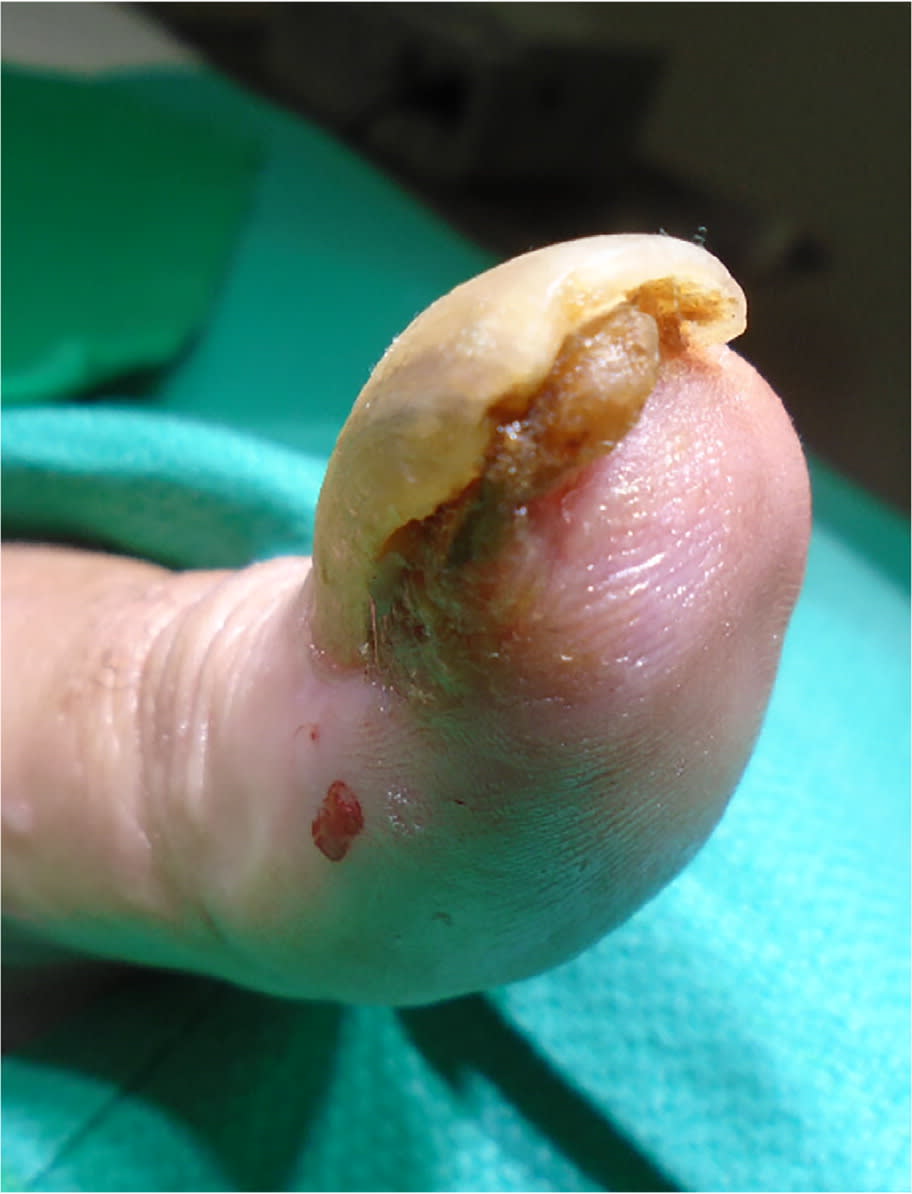
Physical examination revealed a hyperkeratotic subungual plaque on his left thumb (Figure 1).
FIGURE 1
QUESTION
Based on the patient's history and physical examination, which one of the following is the most likely diagnosis?
- A. Glomus tumor.
- B. Onychomycosis.
- C. Psoriatic nail dystrophy.
- D. Squamous cell carcinoma.
- E. Subungual verruca vulgaris.
DISCUSSION
The answer is D: squamous cell carcinoma (SCC) of the nail unit, which appears to be recurrent in this patient. SCC is the most common malignancy occurring in the nail unit. It most often affects older men. Risk factors include trauma, radiation, smoking, and infection with human papillomavirus types 16 and 18. SCC of the nail unit may present as hyperkeratosis, persistent onycholysis, nail plate dystrophy, or a subungual mass. It should be suspected when patients have verrucous or keratotic lesions of the lateral nail groove or fold that are persistent or recur after destructive treatments used for common warts, such as cryotherapy.
The management of SCC requires a careful balance of oncologic control and functional preservation. The first-line treatment for cases without bone involvement is Mohs surgery or excision.1 Physicians should assess subungual involvement and the patient's surgical candidacy and preferences regarding cosmesis and function vs curative treatment. Management of high-risk, recurrent SCC of the nail unit with bone invasion often necessitates aggressive surgical interventions, such as amputation.2
Glomus tumor is a rare soft tissue tumor typically seen in patients 20 to 40 years of age. Most cases present in subungual sites with a symptomatic triad of tenderness, cold sensitivity, and paroxysmal pain.3
Onychomycosis is a fungal infection of the fingernails or toe-nails. It presents with thickened and discolored nails. Patients may have pain or discomfort with walking.4
Psoriatic nail dystrophy usually involves several nails and occurs in up to 80% of patients with psoriasis. It can involve the nail matrix or the nail bed. It presents with pitting, splinter hemorrhages, and hyperkeratosis.5
Subungual verruca vulgaris presents with verrucous papules and plaques and small, thrombosed vessels that appear to be small black dots, known as seeds. It does not typically recur in the same location after treatment.6
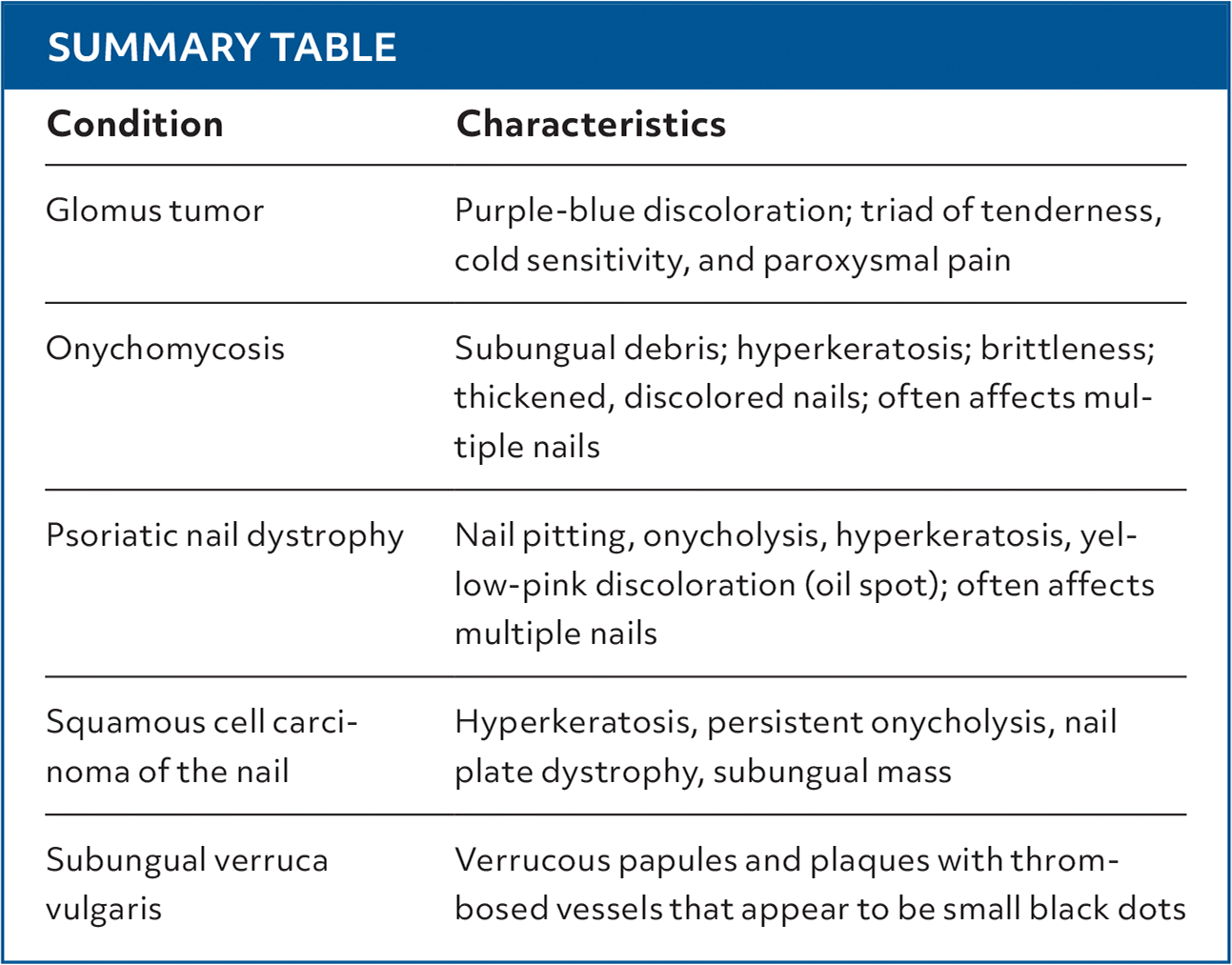
SUMMARY TABLE
| Condition | Characteristics |
|---|---|
| Glomus tumor | Purple-blue discoloration; triad of tenderness, cold sensitivity, and paroxysmal pain |
| Onychomycosis | Subungual debris; hyperkeratosis; brittleness; thickened, discolored nails; often affects multiple nails |
| Psoriatic nail dystrophy | Nail pitting, onycholysis, hyperkeratosis, yellow-pink discoloration (oil spot); often affects multiple nails |
| Squamous cell carcinoma of the nail | Hyperkeratosis, persistent onycholysis, nail plate dystrophy, subungual mass |
| Subungual verruca vulgaris | Verrucous papules and plaques with thrombosed vessels that appear to be small black dots |
Read the full article
Get immediate access, anytime, anywhere.
Choose a single article, issue, or full-access subscription.
Earn up to 14 CME credits per issue.
