

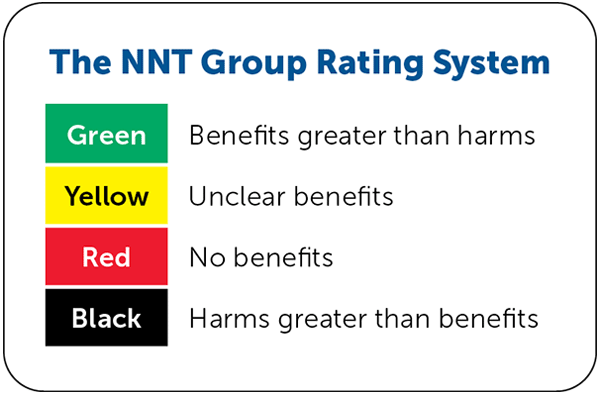
DETAILS FOR THIS REVIEW
Study Population: 1,962 adults with initial and recurrent Clostridioides difficile infection enrolled in 74 randomized controlled trials
Efficacy End Points: Sustained symptomatic cure
Harm End Points: Drug-related adverse events
THE NUMBERS
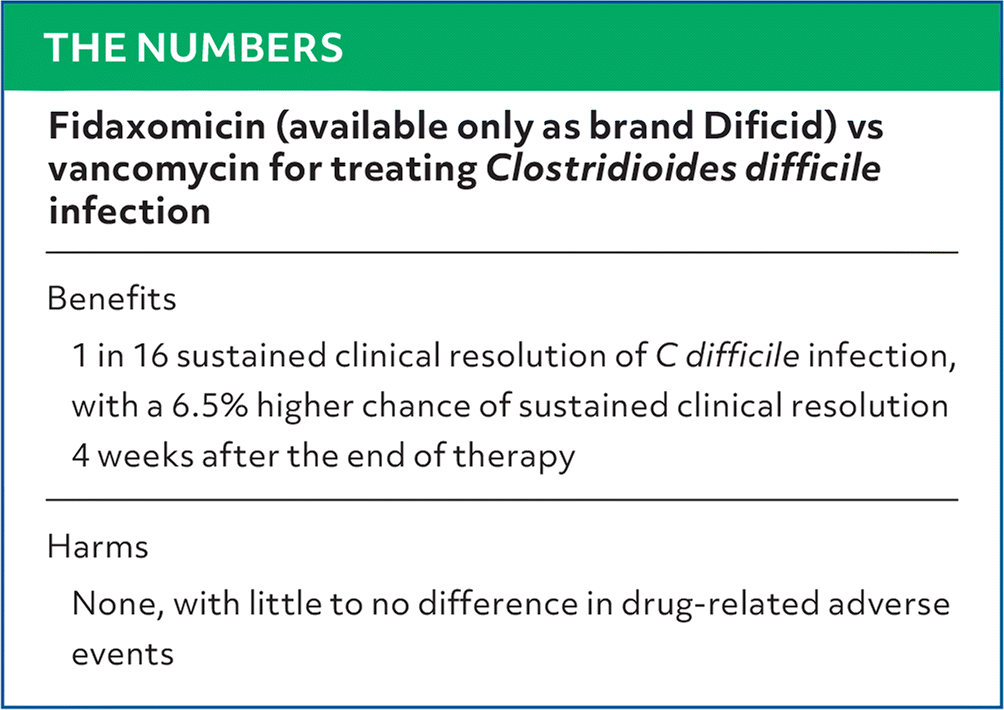
| Fidaxomicin (available only as brand Dificid) vs vancomycin for treating Clostridioides difficile infection |
| Benefits |
| 1 in 16 sustained clinical resolution of C difficile infection, with a 6.5% higher chance of sustained clinical resolution 4 weeks after the end of therapy |
Harms |
| None, with little to no difference in drug-related adverse events |
Narrative: The number of C difficile infections is rising globally, particularly in US health care settings, where these infections were responsible for 29,000 deaths in 2011 and cost $5.4 billion in 2014.1 Between 2001 and 2012, the incidence of C difficile infections increased by 46%, and recurrent infections rose by 189% in the United States. In 2020, the overall incidence of C difficile infections in the United States was 101.3 cases per 100,000 people.2 Despite decades of relying on metronidazole (Flagyl) and vancomycin as standard treatments, their limitations in achieving sustained cures and addressing the escalating severity of C difficile infections underscore the urgent need for innovative therapies.3
Fidaxomicin (available only as brand Dificid) was approved by the US Food and Drug Administration in 2011 and has demonstrated promising effectiveness in achieving sustained cure after C difficile infections. C difficile resistance to fidaxomicin is rare. Furthermore, fidaxomicin has a narrow spectrum of activity, with no other treatment indications. Current guidelines from the Infectious Diseases Society of America (IDSA) recommend fidaxomicin over vancomycin for the treatment of initial and recurrent C difficile infections.4
The systematic review and network meta-analysis discussed here compared the effectiveness of multiple antibiotics for treatment of C difficile infections.1 The primary outcome was sustained symptomatic cure, calculated as the number of patients with a primary cure (resolution of diarrhea, as defined by individual trial criteria) at the end of treatment minus the number of patients with recurrence (recurrence of diarrhea or requirement for additional treatment) or who died during the follow-up period.
This network meta-analysis reported that fidaxomicin was more effective than vancomycin, metronidazole, bacitracin, and tolevamer (not available in the United States) in achieving a sustained symptomatic cure. When compared with vancomycin (most commonly 125 mg orally four times daily for 10 days), fidaxomicin (most commonly 200 mg orally twice daily for 10 days) was associated with a higher sustained cure rate (odds ratio = 1.49; 95% CI, 1.22–1.81; absolute risk difference = 6.5%; number needed to treat = 16; moderate-quality evidence).1 The subgroup analysis, divided into patients younger than 65 years or 65 years and older, revealed that fidaxomicin was superior to vancomycin for mild to moderate C difficile infection and initial and recurrent C difficile infection. However, the drugs had similar effectiveness in the severe C difficile infection subgroup. The follow-up time for most trials was 21 to 30 days.
Similar to these findings, the IDSA guidelines share evidence that fidaxomicin significantly improves the chance of sustained clinical response 4 weeks after completion of treatment for initial and recurrent episodes of C difficile infections, as compared with vancomycin.1,4
Read the full article
Get immediate access, anytime, anywhere.
Choose a single article, issue, or full-access subscription.
Earn up to 14 CME credits per issue.
