

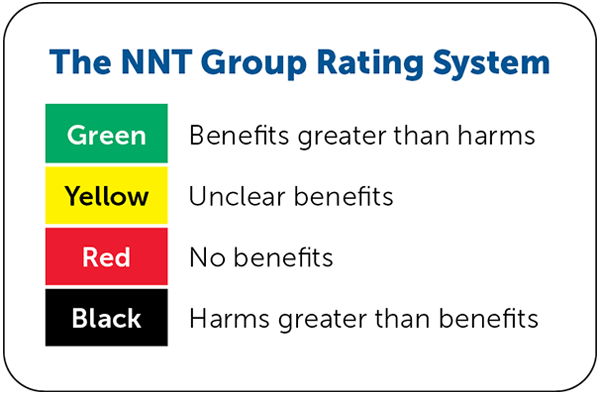
DETAILS FOR THIS REVIEW
Study Population: Adults 32 to 53 years of age; 84% women; varying severity of carpal tunnel syndrome; average duration of symptoms between 31 weeks and 3.5 years
Efficacy End Points: Primary outcomes: short-term (less than 3 months follow-up) and long-term (greater than 3 months follow-up) clinical improvement; secondary outcomes: symptoms, function, pain, and health-related quality of life; the Boston Carpal Tunnel Questionnaire was used in 8 of 14 studies to quantify symptoms and function
Harm End Points: Secondary outcomes: adverse effects (eg, painful neuroma, tender or hypertrophic scar, subluxation of flexor tendons, wound infection, complex regional pain syndrome, sectioning of motor branch of medial nerve) and need for surgery
THE NUMBERS
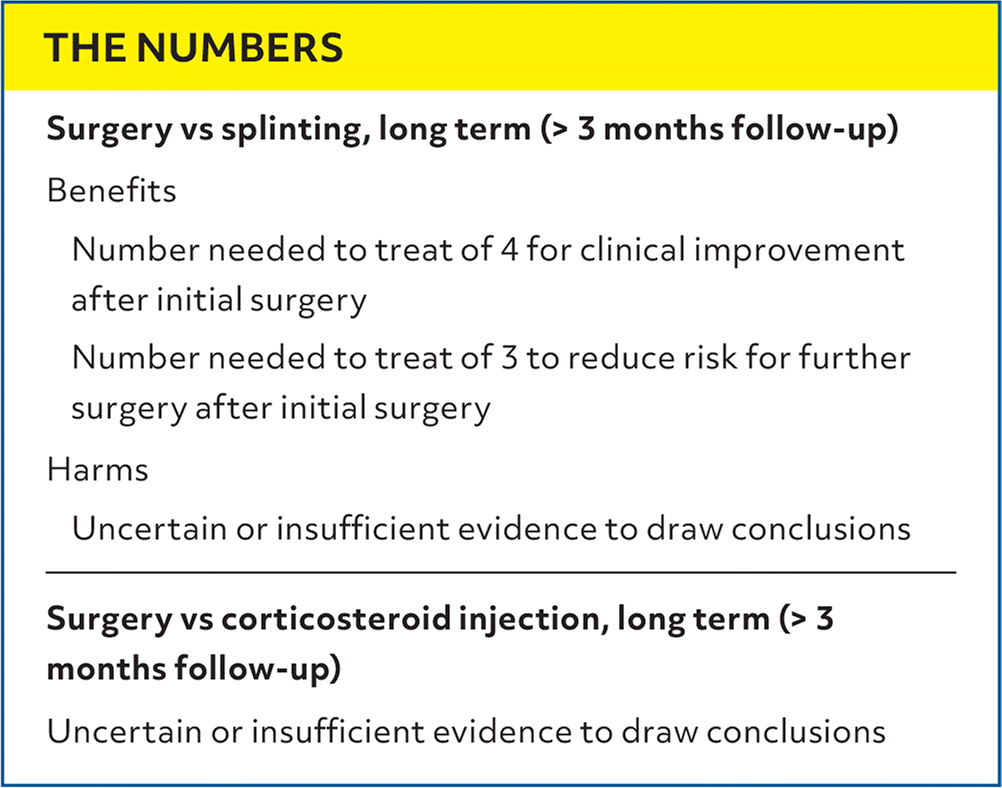
| Surgery vs splinting, long term (> 3 months follow-up) |
| Benefits |
| Number needed to treat of 4 for clinical improvement after initial surgery |
| Number needed to treat of 3 to reduce risk for further surgery after initial surgery |
| Harms |
| Uncertain or insufficient evidence to draw conclusions |
| Surgery vs corticosteroid injection, long term (> 3 months follow-up) |
| Uncertain or insufficient evidence to draw conclusions |
Narrative: Carpal tunnel syndrome (CTS) is the most prevalent mononeuropathy, occurring in 1% to 5% of the general population. It has a female to male ratio of 3:1.1,2 CTS is caused by compression and traction of the median nerve as it passes through the volar side of the wrist under the transverse carpal ligament in the carpal tunnel. Patients report pain, numbness, or paresthesia in the first three digits and radial half of the fourth digit. As severity increases, hand dexterity can decrease due to weakness of the thenar muscles, including the abductor pollicis brevis, flexor pollicis brevis, and opponens pollicis.3 Combining history, examination, and provocative test findings using the CTS-6 tool enhances clinical diagnosis.4 Electrodiagnostic studies of the median nerve can be obtained for moderate to severe disease or diagnostic uncertainty. Treatment is guided by shared decision-making, with consideration of disease severity and symptom duration. Clinical practice guidelines recommend surgical referral for patients with severe symptoms, thenar atrophy, or positive findings on electrodiagnostic testing.5 Mild to moderate CTS should be treated with splinting, injections, occupational therapy, or surgery.4
The 2024 Cochrane review discussed here evaluated the benefits and harms of surgical vs various nonsurgical treatments for CTS in adults.6 The systematic review found 14 randomized controlled trials (RCTs) comparing surgery vs splinting, corticosteroid injection, splinting plus corticosteroid injection, platelet-rich plasma injection, manual therapy, multimodal nonoperative treatment, and unspecified medical treatment and hand support. Studies comparing surgery vs surgery with corticosteroid injections were also included.
There were 1,231 total participants 32 to 53 years of age, of which 84% were women, resulting in 1,293 participating or symptomatic wrists. Symptom severity varied among the studies, and symptom duration ranged from 31 weeks to 3.5 years. The primary outcome of clinical improvement was defined as the patient reporting they were completely satisfied or almost satisfied with clinical response at less than 3 months (short term) and greater than 3 months (long term) of follow-up. Secondary outcomes included symptoms, function, pain, health-related quality of life, adverse effects, and need for surgery or reoperation.
Read the full article
Get immediate access, anytime, anywhere.
Choose a single article, issue, or full-access subscription.
Earn up to 14 CME credits per issue.
