

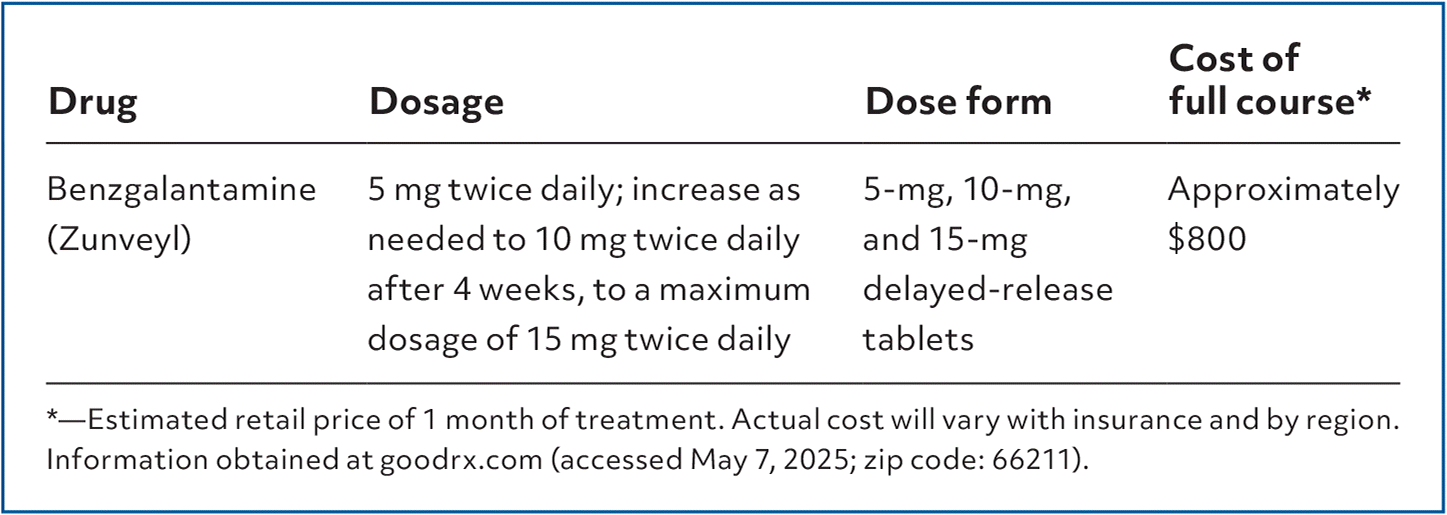
| Drug | Dosage | Dose form | Cost of full course* |
|---|---|---|---|
| Benzgalantamine (Zunveyl) | 5 mg twice daily; increase as needed to 10 mg twice daily after 4 weeks, to a maximum dosage of 15 mg twice daily | 5-mg, 10-mg, and 15-mg delayed-release tablets | Approximately $800 |
*—Estimated retail price of 1 month of treatment. Actual cost will vary with insurance and by region. Information obtained at goodrx.com (accessed May 7, 2025; zip code: 66211).
Benzgalantamine (Zunveyl) is labeled for the treatment of mild to moderate Alzheimer disease in adults. It is metabolized to galantamine, which is a competitive and reversible cholinesterase inhibitor. Benzgalantamine is thought to prevent degradation of acetylcholine and enhance cholinergic function.1 There are no published clinical trials of benzgalantamine. It was approved for marketing based on evidence from bioavailability studies comparing it with galantamine immediate-release tablets and extended-release capsules.
SAFETY
Benzgalantamine may cause rare, serious skin reactions, such as Stevens-Johnson syndrome and acute generalized exanthematous pustulosis, in less than 1% of patients. At the first sign of a rash, use of the drug should be discontinued until the patient can be evaluated by a physician. Other risks include bradycardia and heart block, reported in 1% or less of patients with and without known cardiac conduction issues. In general, cholinomimetics such as benzgalantamine can cause urinary outflow obstruction, bronchoconstriction, and increased gastric acid secretion; thus, it should be prescribed with caution in patients with known urinary hesitancy, chronic obstructive pulmonary disease, asthma, and those at risk for gastric ulcers or gastrointestinal bleeding.1,2
Additionally, benzgalantamine may inhibit the therapeutic effects and exacerbate adverse effects of other acetylcholinesterase inhibitors. It may also decrease the effectiveness of cholinergic medications such as bethanechol.1
Benzgalantamine is primarily metabolized by the liver; its use is not recommended in patients with severe hepatic impairment. Patients with moderate liver disease (Child-Pugh score of 7–9) or moderate kidney disease (creatinine clearance of 9–59 mL/min/1.73 m2) should not take more than 10 mg twice daily. Benzgalantamine is not recommended in patients with a creatinine clearance of less than 9 mL/min/1.73 m2. Kidney and liver function should be assessed at baseline and with any relevant clinical changes. Benzgalantamine has not been studied in people who are pregnant or lactating.1
TOLERABILITY
The most common adverse effects of galantamine are gastrointestinal related, including nausea (21%) and vomiting (11%).2 The modification of galantamine to benzgalantamine prevents binding of the drug to the enteric nervous system, with the goal of minimizing gastrointestinal adverse effects. Unpublished trial data suggest the rates of these adverse effects may be lower with benzgalantamine than galantamine. Due to the persistent risk of adverse gastrointestinal effects, weight should be monitored during therapy.1 Galantamine can also cause dizziness (8%) and headache (7%).2 In studies, participants taking galantamine discontinued treatment prematurely more often than those treated with placebo (odds ratio = 1.4).3
EFFECTIVENESS
Although benzgalantamine has not been directly evaluated, 21 studies of 10,990 participants with dementia due to Alzheimer disease or with mild cognitive impairment have investigated galantamine. On average, galantamine improves cognitive function, as assessed with the Alzheimer’s Disease Assessment Scale – Cognitive Subscale, improving scores by 2.86 points (95% CI, 2.43–3.29), which is a clinically noticeable difference. It also improves functional disability and behavioral function compared with placebo during the first 6 months of treatment, as assessed with the Disability Assessment for Dementia scale and Neuropsychiatric Inventory.3 No head-to-head clinical trials have yet been published comparing clinical outcomes between galantamine and benzgalantamine.
Read the full article
Get immediate access, anytime, anywhere.
Choose a single article, issue, or full-access subscription.
Earn up to 14 CME credits per issue.
