

Clinicians often need to differentiate between benign, self-limited variations of pubertal development and more serious underlying causes. Precocious puberty should be considered when thelarche occurs in female patients before 8 years of age or when testicular enlargement occurs in male patients before 9 years of age. Delayed puberty should be considered in female patients who lack breast development by 13 years of age or do not experience menarche by age 15 and in male patients who lack testicular growth by age 14. Assessment should focus on clinical and family history, growth, and pubertal examination to rule out benign pubertal variations. Further laboratory and radiographic workup may include early morning testing of luteinizing hormone, follicle-stimulating hormone, thyroid-stimulating hormone (thyrotropin), total testosterone (in male patients), and estradiol (in female patients), as well as left-hand bone age radiography. Neuroimaging with contrast-enhanced magnetic resonance imaging of the brain should be obtained in all patients with central precocious puberty who have neurologic signs or symptoms; are female and younger than 6 years; or are male and younger than 9 years. Specialist evaluation by pediatric endocrinology is often indicated when examination results are not consistent with a benign variation of puberty.
Variations of pubertal development are common and can result from a variety of disorders.1–5 Even when the underlying cause is benign, these characteristics can be distressing for patients and their families and impact social, sports, and school development, as well as adult height.1–3 This article helps clinicians differentiate benign, self-limited variations from concerning causes that require specialist evaluation.1–3
WHAT'S NEW ON THIS TOPIC
| Pubertal onset has been trending earlier over the past 50 years. |
| Although prior guidelines suggested race-based assessment for precocious puberty, with earlier age cutoffs in Black girls compared with White girls, such recommendations are no longer considered valid. Following these prior guidelines may contribute to inequity and the inaccurate assumption that early development is normal for Black children. |
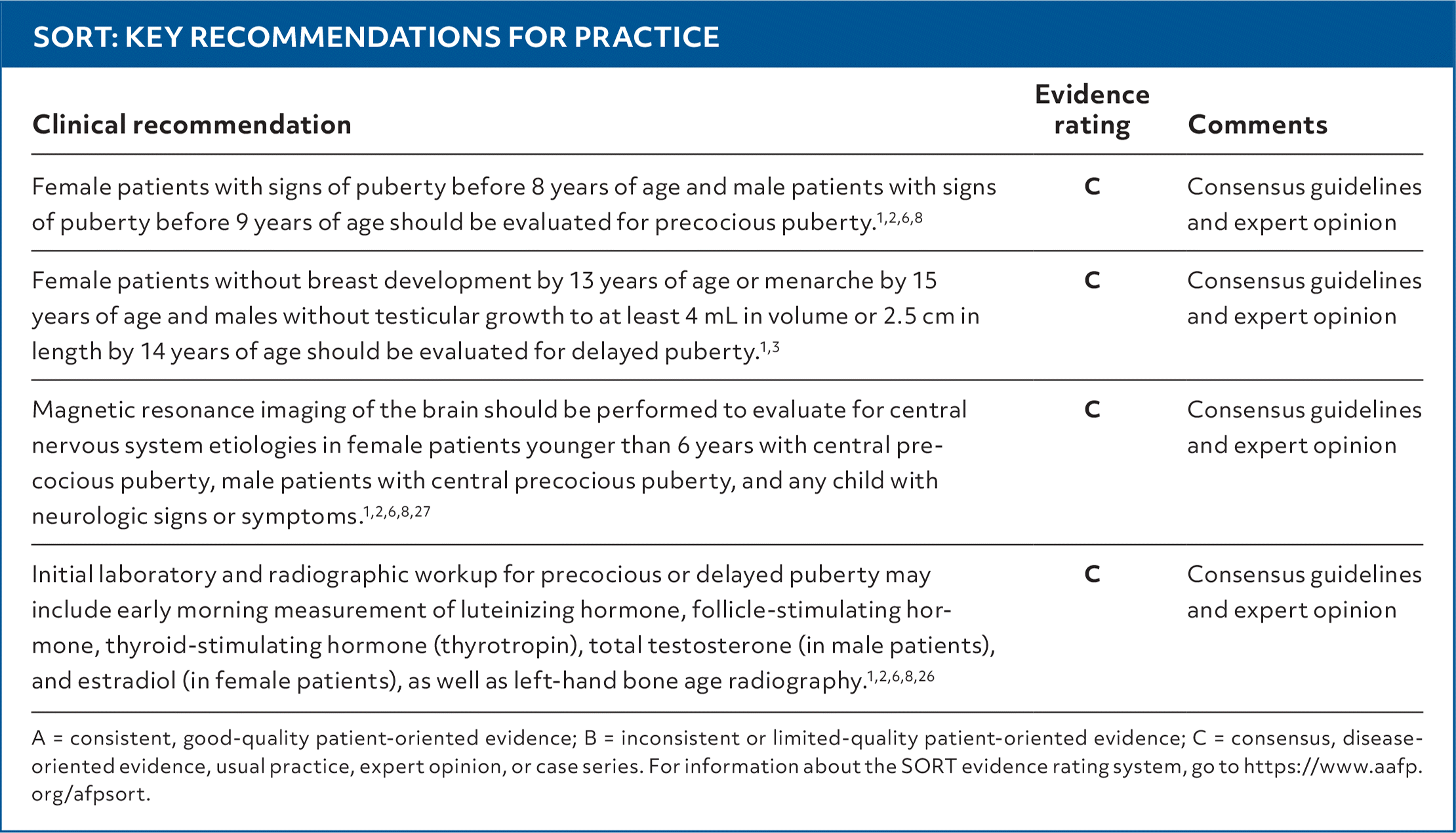
SORT: KEY RECOMMENDATIONS FOR PRACTICE
| Clinical recommendation | Evidence rating | Comments |
|---|---|---|
| Female patients with signs of puberty before 8 years of age and male patients with signs of puberty before 9 years of age should be evaluated for precocious puberty.1,2,6,8 | C | Consensus guidelines and expert opinion |
| Female patients without breast development by 13 years of age or menarche by 15 years of age and males without testicular growth to at least 4 mL in volume or 2.5 cm in length by 14 years of age should be evaluated for delayed puberty.1,3 | C | Consensus guidelines and expert opinion |
| Magnetic resonance imaging of the brain should be performed to evaluate for central nervous system etiologies in female patients younger than 6 years with central precocious puberty, male patients with central precocious puberty, and any child with neurologic signs or symptoms.1,2,6,8,27 | C | Consensus guidelines and expert opinion |
| Initial laboratory and radiographic workup for precocious or delayed puberty may include early morning measurement of luteinizing hormone, follicle-stimulating hormone, thyroid-stimulating hormone (thyrotropin), total testosterone (in male patients), and estradiol (in female patients), as well as left-hand bone age radiography.1,2,6,8,26 | C | Consensus guidelines and expert opinion |
A = consistent, good-quality patient-oriented evidence; B = inconsistent or limited-quality patient-oriented evidence; C = consensus, disease-oriented evidence, usual practice, expert opinion, or case series. For information about the SORT evidence rating system, go to https://www.aafp.org/afpsort.
Read the full article
Get immediate access, anytime, anywhere.
Choose a single article, issue, or full-access subscription.
Earn up to 14 CME credits per issue.
