

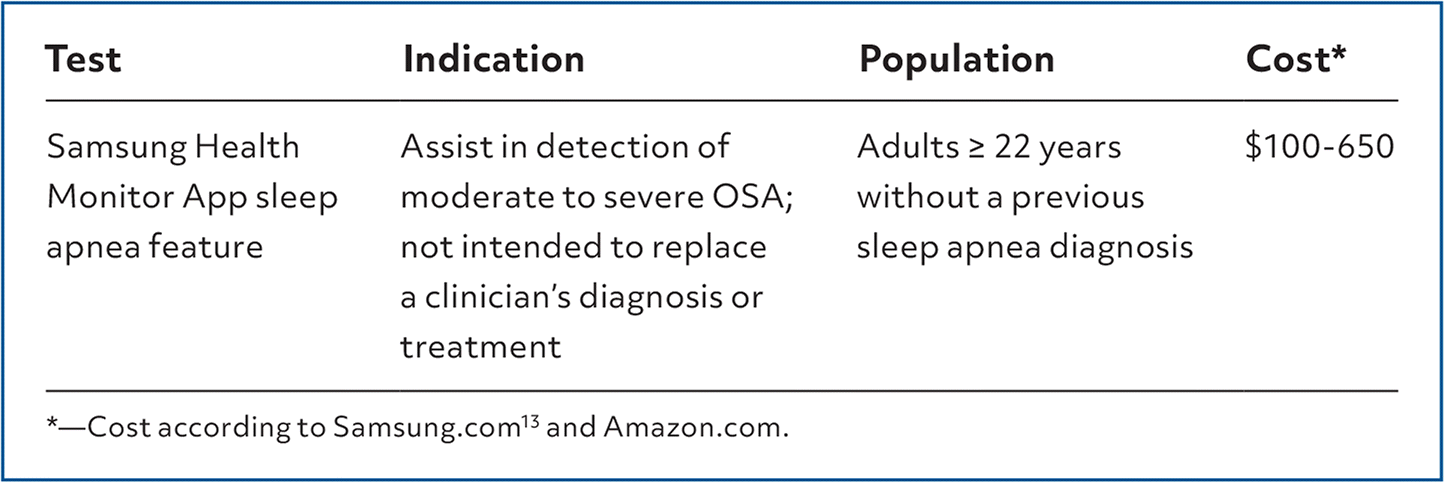
| Test | Indication | Population | Cost* |
|---|---|---|---|
| Samsung Health Monitor App sleep apnea feature | Assist in detection of moderate to severe OSA; not intended to replace a clinician's diagnosis or treatment | Adults ≥ 22 years without a previous sleep apnea diagnosis | $100–650 |
*—Cost according to Samsung.com13 and Amazon.com.
Consumer wearable devices, such as smart watches, equipped with photoplethysmography sensors can monitor heart rate and oxygen saturation, potentially helping detect sleep disorders.1–3 In the United States, approximately 5% of women and 14% of men ages 30 to 70 years meet the diagnostic criteria for at least mild obstructive sleep apnea (OSA), which increases with age and body mass index.1,4–6 Consumer sleep technologies have not been used to diagnose or treat sleep disorders. However, the American Academy of Sleep Medicine encourages clinicians to know the potential benefits and disadvantages of these technologies.7 In 2023, the US Food and Drug Administration authorized the marketing of Samsung Electronics' sleep apnea feature, a patented mobile app that uses photoplethysmography sensors within Samsung-brand smartwatches.8 The intent of this feature is to detect signs of moderate to severe OSA over 2 nights in adults 22 years and older without a previous sleep apnea diagnosis.9 This article reviews its accuracy.
ACCURACY
Consumer wearable devices are not validated and cannot be used to diagnose or treat sleep disorders.7 However, patient-generated data may help clinicians in the overall context of the evaluation.
The diagnosis of OSA depends on objective measures of airway obstruction (eg, respiratory disturbance index, which includes apnea and hypopnea) and respiratory effort–related arousals. A respiratory disturbance index of greater than 5 events per hour plus the presence of symptoms (eg, daytime sleepiness), or a respiratory disturbance index of more than 15 events per hour even in the absence of symptoms, is diagnostic of OSA.10
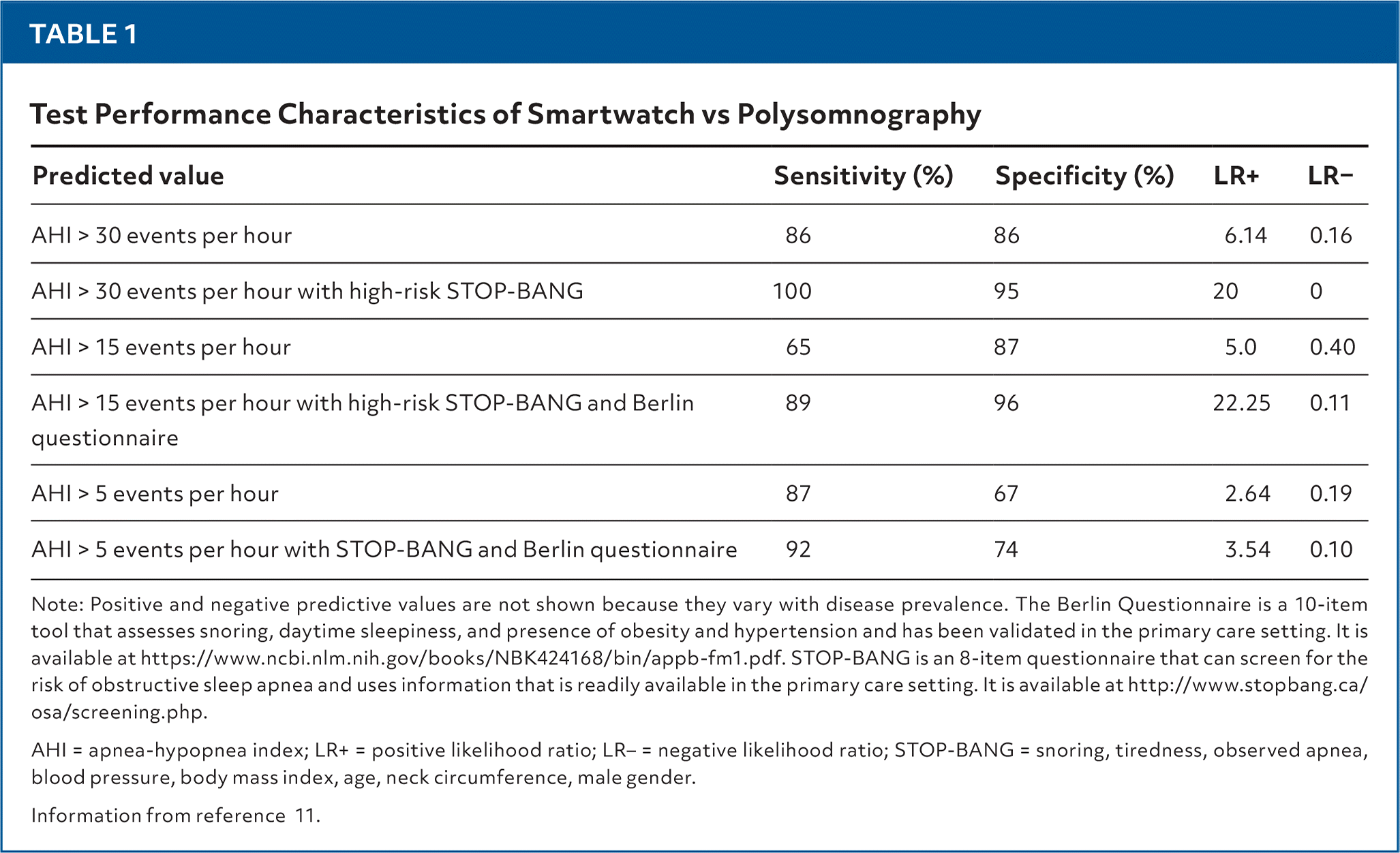
In a study (n = 51) comparing Samsung's technology with polysomnography, the smartwatch demonstrated an area under the curve of 0.882 for predicting an oxygen desaturation index of greater than 15 events per hour. The area under the curve was 0.803 for predicting an apnea-hypopnea index of greater than 5 events per hour, 0.800 for an index of greater than 15 events per hour, and 0.894 for an index of greater than 30 events per hour, indicating good overall accuracy in identifying moderate to severe OSA.11 The STOP-BANG (snoring, tiredness, observed apnea, blood pressure, body mass index, age, neck circumference, male gender) and Berlin questionnaires improved the test performance when positive but were not used as stand-alone tools in this study (Table 1).11
TABLE 1. Test Performance Characteristics of Smartwatch vs Polysomnography
| Predicted value | Sensitivity (%) | Specificity (%) | LR+ | LR− |
|---|---|---|---|---|
| AHI > 30 events per hour | 86 | 86 | 6.14 | 0.16 |
| AHI > 30 events per hour with high-risk STOP-BANG | 100 | 95 | 20 | 0 |
| AHI > 15 events per hour | 65 | 87 | 5.0 | 0.40 |
| AHI > 15 events per hour with high-risk STOP-BANG and Berlin questionnaire | 89 | 96 | 22.25 | 0.11 |
| AHI > 5 events per hour | 87 | 67 | 2.64 | 0.19 |
| AHI > 5 events per hour with STOP-BANG and Berlin questionnaire | 92 | 74 | 3.54 | 0.10 |
Note: Positive and negative predictive values are not shown because they vary with disease prevalence. The Berlin Questionnaire is a 10-item tool that assesses snoring, daytime sleepiness, and presence of obesity and hypertension and has been validated in the primary care setting. STOP-BANG is an 8-item questionnaire that can screen for the risk of obstructive sleep apnea and uses information that is readily available in the primary care setting.
AHI = apnea-hypopnea index; LR+ = positive likelihood ratio; LR− = negative likelihood ratio; STOP-BANG = snoring, tiredness, observed apnea, blood pressure, body mass index, age, neck circumference, male gender.
Information from reference 11.
Read the full article
Get immediate access, anytime, anywhere.
Choose a single article, issue, or full-access subscription.
Earn up to 14 CME credits per issue.
