

DETAILS FOR THIS REVIEW
Study Population: Eleven randomized controlled trials from six countries, including 852 newborns (preterm and term) undergoing painful procedures in the neonatal intensive care unit (NICU)
Efficacy End Points: Primary outcome: pain intensity assessed with validated scales (Premature Infant Pain Profile [PIPP]; Neonatal Infant Pain Scale [NIPS]; Neonatal Pain, Agitation and Sedation Scale [N-PASS]) during the procedure; secondary outcomes: pain up to 10 minutes after procedure, pain at 1 to 2 hours after procedure
Harm End Points: Any adverse effects, including infection, bleeding, bruising, needle-related tissue damage, stuck needle, or needle-related pain
THE NUMBERS
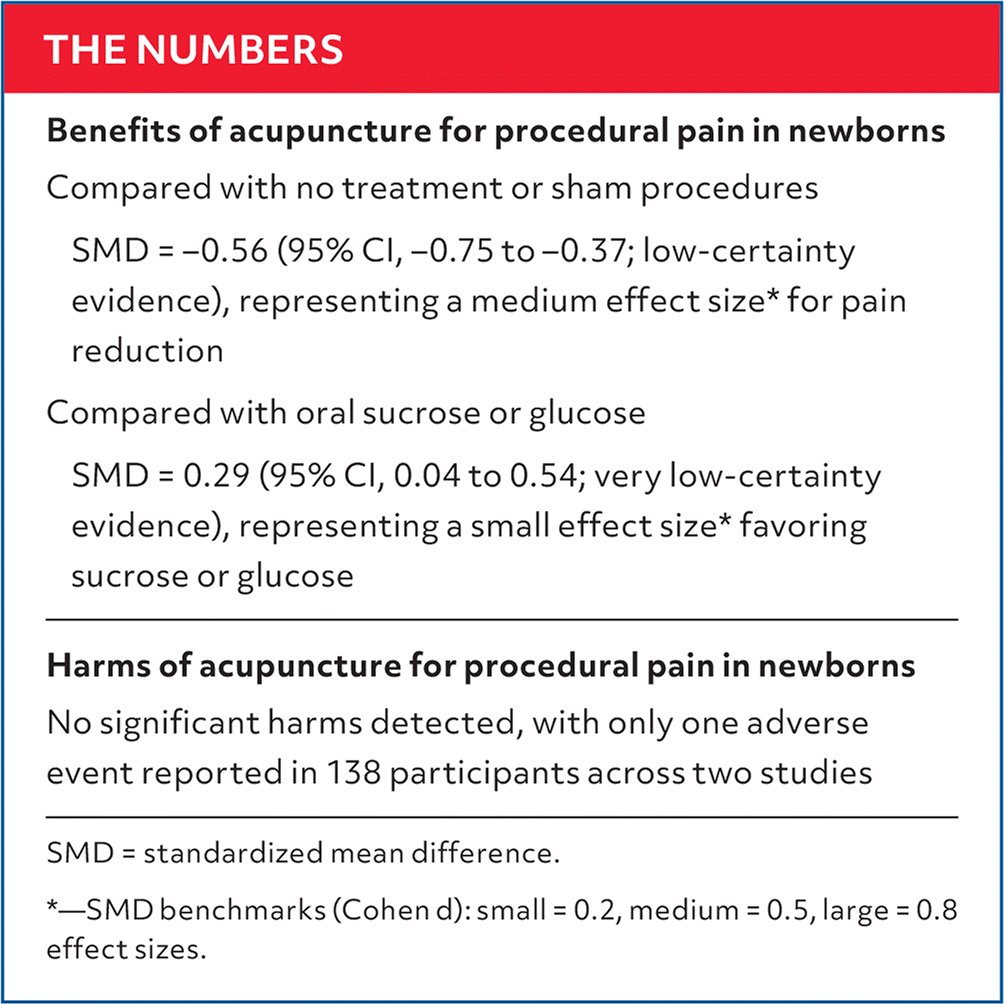
| Benefits of acupuncture for procedural pain in newborns |
| Compared with no treatment or sham procedures |
| SMD = −0.56 (95% CI, −0.75 to −0.37; low-certainty evidence), representing a medium effect size* for pain reduction |
| Compared with oral sucrose or glucose |
| SMD = 0.29 (95% CI, 0.04 to 0.54; very low-certainty evidence), representing a small effect size* favoring sucrose or glucose |
Harms of acupuncture for procedural pain in newborns |
| No significant harms detected, with only one adverse event reported in 138 participants across two studies |
SMD = standardized mean difference.
*—SMD benchmarks (Cohen d): small = 0.2, medium = 0.5, large = 0.8 effect sizes.
Narrative: Newborns in the NICU undergo an average of 14 painful procedures daily, with heel lancing among the most common.1 Newborns are particularly vulnerable to the adverse effects of pain because of their immature nervous systems. Repeated procedural pain–related stress in those born very preterm has been shown to affect neurodevelopment.2 Long-term consequences of untreated pain in infants and children can include altered pain processing, behavioral changes, and difficulties with attention, learning, and social adaptation.3 Standard care includes nonpharmacological interventions such as oral sucrose or glucose, which have established effectiveness.
This Cochrane review evaluated acupuncture techniques, including needle acupuncture, acupressure, laser acupuncture, and magnetic auricular stimulation, for managing procedural pain in newborns.4 The review included 852 newborns across 11 trials conducted in Turkey, Australia, Canada, Malaysia, Austria, and the United States. Reported comparisons examined acupuncture and no or sham therapy, acupuncture and nonpharmacologic therapies (eg, oral sucrose or glucose), and acupuncture or acupressure and alternative therapies such as reflexology or foot massage. Pain intensity was assessed with validated scales (ie, PIPP, NIPS, N-PASS) during the procedure, within 10 minutes of procedure completion, and 1 to 2 hours after completion.
For this review, only continuous outcomes in the form of pain scales are available. In contrast, number needed to treat (NNT) calculations require dichotomous outcomes with absolute risk differences. To better quantify this data into clinically meaningful terms, this review relied on standardized mean differences (SMDs), which allow comparisons between different pain scales. Using SMD benchmarks (Cohen d), a small effect is seen at an SMD of 0.2, medium effect at 0.5, and large effect at 0.8.
Compared with no treatment or sham procedures, acupuncture appeared to have moderate benefit in pain reduction (SMD = −0.56; 95% CI, −0.75 to −0.37; seven studies; 471 newborns; low-certainty evidence). Compared with standard nonpharmacological care (eg, oral sucrose or glucose), acupuncture appeared to have higher validated pain scores, favoring the standard treatment (SMD = 0.29; 95% CI, 0.04–0.54; four studies; 267 newborns; very low-certainty evidence). Comparing acupressure with other noninvasive techniques such as foot massage or reflexology, essentially no difference occurred in pain reduction during the procedure or up to 10 minutes after.
Read the full article
Get immediate access, anytime, anywhere.
Choose a single article, issue, or full-access subscription.
Earn up to 14 CME credits per issue.
